
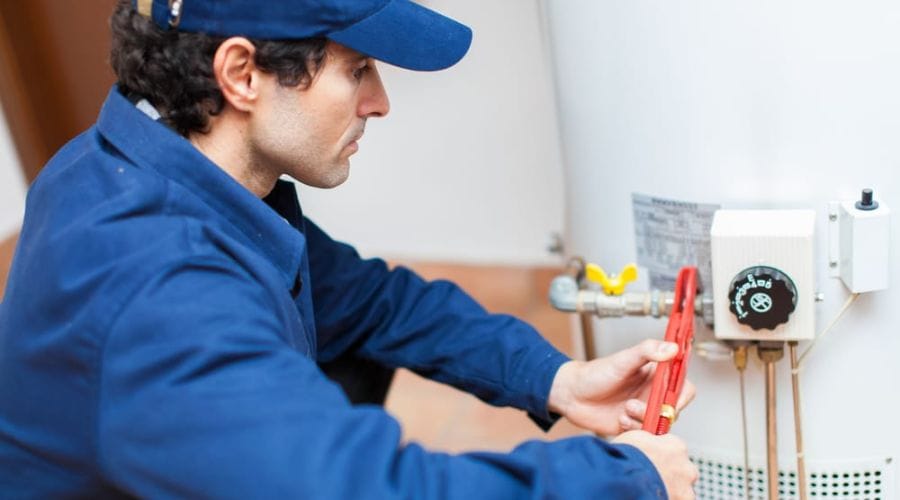
A puddle at the base of the tank is an unsettling thing to find in the basement. Still, a water heater leaking from the bottom does not always mean the tank has failed. In Kaysville homes, that water can come from startup condensation, the drain valve, the relief valve or a loose fitting higher up. Here is how to tell them apart.
Why Water Collects at the Bottom of the Tank
A standard tank heater is a steel pressure vessel lined with glass, then wrapped in insulation and a metal jacket. Cold water enters through a dip tube that carries it to the bottom, and hot water leaves from the top. A sacrificial anode rod hangs inside to draw corrosion away from the steel.
The cold inlet, hot outlet and anode port sit on top. The temperature and pressure relief valve sits on the top or upper side, and a drain valve sits near the bottom. Connections up top can loosen over time from heating cycles and wear.
Water from any fitting above can run down the pipes or the jacket and pool on the floor. So a water heater leaking at the base only shows where the water ended up. Good water heater service starts by tracing it upward.
Condensation on Startup or a Real Leak?
Not every drip is a leak. Burning natural gas produces water vapor. When the tank is full of cold water, that vapor can condense on the cool flue and tank surfaces, then drip onto the burner or the floor.
One manufacturer's leak guide says gas heaters may condense when cold water enters the tank or when the burner fires after a period of inactivity, and calls it typically temporary. That often follows long showers or laundry. It can become more noticeable later in the fall, as incoming water gets colder.
The test is time. Wipe the floor dry and check again after the tank has fully reheated. Condensation fades as the water warms, while a water heater leaking for real keeps producing water. On electric models, the same guide notes condensation is generally not seen because of the tank insulation.
Drain Valve Drips and Relief Valve Discharge
The drain valve lets the tank be emptied and flushed, and the Utah Plumbing Code requires one at the bottom of every tank-type heater. After a flush, grit can keep its washer from sealing. Water then beads at the outlet or seeps around the threads.
The relief valve protects the tank from too much temperature or pressure. When it opens, water runs down its discharge pipe, which usually ends a few inches above the floor or a drain pan. That makes relief valve discharge look like a leak at the bottom.
A common cause is thermal expansion. Heated water expands, and if a check valve or pressure-reducing valve keeps it from backing into the main, pressure climbs. A technical bulletin on thermal expansion describes a relief valve that drips while the heater recovers and no water is being used. A properly sized expansion tank is the usual answer.
When the Tank Itself Has Failed
Inside the tank, the anode rod slowly dissolves as it protects the steel. Once it is used up, corrosion attacks the tank wall. Hard water is common in northern Utah, and its minerals settle as sediment on the tank bottom, where they can trap heat against the steel.
When the wall rusts through, water seeps out from under the jacket or insulation rather than from a fitting. You may also notice rusty hot water, or rumbling and popping while the tank heats.
This kind of water heater leaking cannot be patched. The guide linked above says tank corrosion cannot be repaired. At that point, compare a new tank with a tankless water heater, which heats water as it flows and has no storage tank.
What You Can Check Safely
Start with dry surfaces and paper towels, since one drop leaves a clear mark.
- Wipe everything dry: dry the floor, the base, the drain valve and the pipes on top.
- Check the top: press a towel to the cold inlet, the hot outlet and any flexible connectors. Look for crusty white or green deposits.
- Check the relief valve pipe: look for a drop hanging at the open end. Leave the test lever alone, since an old valve may not reseat.
- Check the drain valve: hold a towel under the outlet and around the threads.
- Watch the timing: note whether water appears after the burner fires, after heavy hot water use, or all the time.
If every fitting stays dry and water still spreads, the water heater leaking may not be the source. A nearby supply line, floor drain or wall pipe calls for leak detection.
A Kaysville Scenario You Might Recognize
Picture a family in Kaysville whose basement water heater leaves a small puddle by morning. The floor is dry at dinner. The towels on the top fittings and drain valve stay dry overnight, but a drop hangs from the end of the relief valve pipe. The hot water pipes also creak after the last evening shower.
That pattern points away from the tank and toward the relief valve. Water shows up after heavy use, while the tank reheats and nobody runs a tap. That matches thermal expansion in a closed system, where pressure builds until the valve lets some water out. The next step is checking household water pressure and whether an expansion tank is present and working.
Safety Notes
- Shut off the cold water: close the valve on the cold line into the heater.
- Turn off the energy source: on a gas model, set the gas control on the heater to off. On an electric model, switch off its breaker at the panel.
- If you smell gas: get everyone outside, then call 911 or the gas utility's emergency line from outside.
- Keep clear of hot water: water from the relief valve or drain valve can be very hot.
- Do not cap or plug the relief valve pipe: that valve protects the tank from dangerous pressure.
- Dry the area quickly: the EPA guide to mold and moisture says drying wet areas within 24 to 48 hours usually keeps mold from growing.
- Add a water alarm: a battery leak sensor beside the heater sounds an alert when water reaches it.
When to Call a Professional
Call when water seeps from under the jacket, when the hot water turns rusty, or when you cannot tell which fitting is wet. Call as well if the relief valve discharges steadily, or keeps dripping after an expansion tank is added. Replacing either valve means draining the tank with the water and energy off, and the new part has to match the heater.
A water heater leaking from the tank body will get worse over time, so plan for replacement rather than waiting. On a gas heater, water around the burner compartment should be checked by a technician before the heater is relit. Towers Plumbing can also trace water that is not coming from the heater, including leaks inside a wall.
Frequently Asked Questions
Can a water heater leaking from the bottom be repaired?
It depends on the source. A drain valve, relief valve or loose connection can usually be replaced or resealed. Water seeping from the tank wall means corrosion has gone through the steel, and that tank needs replacement.
Why does my gas water heater drip only after long showers?
That timing points to condensation. A tank full of cold water cools the flue, and moisture from combustion condenses there until the water warms. If the floor is still wet after the tank fully reheats, look for a real leak.
Do I need a drain pan under my water heater?
The Utah Plumbing Code calls for a pan where leakage from the tank would cause damage, with a drain line to a floor drain or another approved spot. It also says a replacement heater does not need a new pan drain where none existed before. A pan still helps near finished basement rooms.
Your Next Step in Kaysville
Before you reach out, write down where you found water and when it appears: after the burner fires, after heavy use, overnight, or all the time. Note which towel got wet first, and whether the water looked clear or rusty.
Take a photo of the data label on the heater, which lists the model and serial number, plus the top connections and the end of the relief valve pipe.
Then reach Towers Plumbing through our contact page. We serve homes across Kaysville and nearby Layton. With your notes in hand, a technician can confirm whether your water heater leaking is a simple valve or a tank that needs replacing, and explain the options before any work begins.