
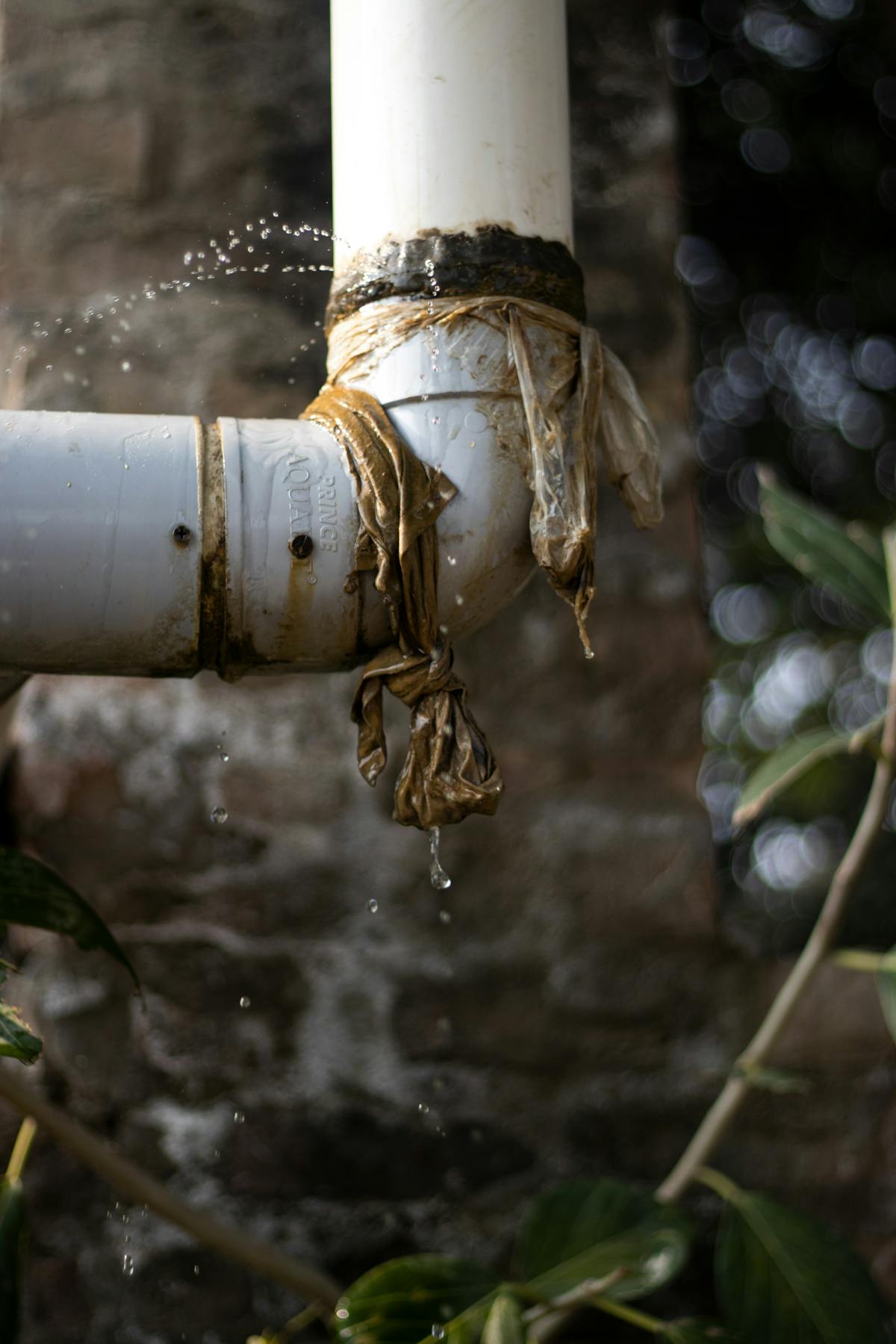
Most people never look behind the washer until water appears on the floor. The two washing machine hoses back there carry water from the supply valves to the appliance, and they stay pressurized around the clock. Many Salt Lake City homes have basements, and a failed hose on a washer downstairs can soak carpet and drywall before anyone notices. Here is how these hoses fail, what to inspect, and when replacement makes sense.
How Washing Machine Hoses Actually Fail
Each fill hose is a flexible tube with a threaded coupling on both ends. One end connects to the hot or cold supply valve in the wall, and the other connects to the washer's water inlet valve. A rubber washer inside each coupling creates the seal, and a metal ferrule is crimped over the hose where it meets the coupling.
Between loads, the inlet valve is closed, but the hoses stay full and pressurized while the wall valves are open. Over the years, rubber hardens and loses flexibility. The hose bends most sharply just behind the crimped ferrule, so cracks and bulges usually develop there first. Pushing the washer tight against the wall can kink a hose and concentrate that stress.
On the coldest nights, a washer in an unheated garage can freeze, and expanding ice can split a hose or valve.
Rubber vs Braided Stainless Washing Machine Hoses
Plain rubber hoses are the traditional option, and some washers still include them. The outer surface is the same material that contains the water, so deterioration appears as surface cracking, a chalky texture or a soft bulge. Oatey's article on when to change a washing machine hose identifies bulges and bubbles as warning signs in rubber hoses.
Braided stainless hoses surround an inner tube with a woven metal jacket that resists bursting and abrasion much better. The inner tube is still rubber or plastic, though, and it deteriorates out of sight. On braided washing machine hoses, watch for frayed wires, rust on the braid and corrosion at the crimp. Neither type lasts indefinitely. When hoses are replaced, each coupling should thread on straight and seat squarely, because a cross-threaded fitting can weep from the first load.
What You Can Check Safely
Turn the washer off, unplug it only if the floor and your hands are dry, and ease it forward so both hoses are visible.
- Couplings: start where a plumber would, since weak spots tend to show at the ends. Look for drips, green corrosion or white crust. Hard water is high in dissolved minerals, so a slow weep can dry and leave deposits behind.
- Near the fittings: gently flex each hose close to the coupling and look for cracks, blisters or a bulge.
- Valves: check the wall valves and outlet box for moisture around the stems.
- Age: many hoses carry a printed date, and a missing date suggests they are old.
For a closer test, wrap dry paper towels around each coupling and run a short cycle. The EPA's Fix a Leak Week page also suggests reading your water meter before and after a two-hour period with no water use.
How Often to Replace Washing Machine Hoses
Recommendations on hose age vary, so treat these numbers as reference points rather than firm limits. Whirlpool's support page on checking washer fill hoses states that fill hoses should be replaced every five years. The Insurance Institute for Business and Home Safety, a research organization supported by property insurers, takes a looser position in its winter weather guide. It recommends changing washer supply hoses that are more than 10 years old, noting that rubber gaskets can degrade and leak.
Your washer's manual and your insurance policy may include their own guidance. A sensible approach is following the shorter interval, replacing both hoses together, and swapping any hose immediately if it shows damage. Label the installation date so the next inspection is simple.
Shutoff Valves, Leak Sensors and Drain Pans
The valves behind the washer determine how quickly you can stop a leak. Older laundry setups often use two multi-turn valves that resemble small outdoor spigots, and mineral buildup can make them stiff. A quarter-turn ball valve, or an outlet box with one lever for hot and cold, closes in a single motion.
A few simple additions can limit damage if something fails:
- Leak sensors: a battery-powered water alarm behind the washer sounds when it gets wet.
- Automatic shutoff valves: some systems pair a sensor with a valve that closes the supply when water is detected.
- Drain pans: a pan piped to a floor drain catches drips, though it cannot contain a full burst.
- Clearance behind the washer: leave a few inches of space so washing machine hoses curve gently instead of kinking.
A Salt Lake City Scenario You Might Recognize
Picture a family whose washer sits in a basement laundry room, pushed tight against the wall. The rubber hoses came with the house, and nobody knows their age. On a cold February morning, the carpet near the laundry room feels damp, and there is a faint musty odor. Behind the washer, the cold hose has a soft bulge just past the crimped fitting, and the concrete beneath it looks dark.
That pattern points to a hose weeping at its weakest spot, near the coupling, where it has been bent against the wall for years. A bulge means the inner layers are failing, so the hose could split under normal pressure. The damp carpet suggests water has been reaching the floor for a while. The sensible next steps are closing both valves, replacing both washing machine hoses and drying the affected area.
Safety Notes
- Close both valves first: turn off the hot and cold supply valves before loosening a coupling. If a valve will not close, shut off the main water valve.
- Mind the power: unplug the washer only when the floor and your hands are dry.
- Electrical danger: if water has reached an outlet, cord or power strip, get everyone outside, then call 911 from outside.
- Keep towels and a bucket ready: each hose still holds water after the valves close.
- Do not force a stuck valve: an old valve stem can break and release water at full pressure.
- Tighten with care: overtightening a coupling can crush the rubber washer or crack the fitting.
- Dry wet areas quickly: the EPA guide to mold and moisture says to dry water-damaged areas and items within 24 to 48 hours to prevent mold growth.
When to Call a Professional
Call when a supply valve leaks at the stem, will not close fully, or is too corroded to turn. The same applies to an outlet box that is cracked, loose or leaking inside the wall cavity, since repairs there may require opening the wall.
A professional visit also makes sense when the water does not trace back to a hose. Damp drywall, a ceiling stain below the laundry room, or a meter that moves with everything off can indicate a hidden leak that needs professional leak detection. If a supply line froze and split along an exterior wall, burst pipe repair is the right service. Towers Plumbing works with homeowners throughout the Salt Lake City service area.
Frequently Asked Questions
How often should washing machine hoses be replaced?
Recommendations vary. Whirlpool says every five years, while IBHS recommends changing hoses older than 10 years. Replace any damaged hose sooner.
Are braided stainless hoses better than rubber?
For most homes, yes. The metal braid resists bursting and abrasion better than plain rubber. The inner tube still ages, so braided hoses need the same inspections and replacement schedule.
Should I turn off the washer valves between loads?
Closing them relieves pressure on the hoses, but frequent turning can wear an older multi-turn valve. At minimum, close them before traveling.
Can a hose leak without a visible drip?
Yes. A slow weep can dry or soak into nearby materials before it pools, leaving only mineral crust or a dark spot under the washer. A leak sensor can catch these early signs.
Plan Your Washing Machine Hose Check
Before you call, pull the washer forward and take a few notes. Record whether your washing machine hoses are rubber or braided, any printed date, and where you notice bulges, cracks, rust or drips. Note whether the valves are multi-turn or quarter-turn and whether they close completely. Photos of the hoses, couplings and wall box help a technician prepare for the visit and bring suitable parts.
If water is actively leaking, close both washer valves or the main shutoff first. Then reach Towers Plumbing through our contact page to schedule a visit. With your notes in hand, a technician can confirm the condition of the hoses and valves and explain the options before any work begins.