
When a pipe splits or a supply line lets go, the first few minutes decide how much water reaches the floor. That is when you need the main water shutoff, and the worst moment to start searching for it. September in Ogden is still mild, with heating season approaching, so it is a good month to find the valve, identify its type and confirm it closes.
Where the Main Water Shutoff Usually Sits in an Ogden Home
Start where the water line enters the house. The service pipe usually comes through the foundation on the street side, since it runs from the meter near the curb. In a basement, look low on that front wall, including unfinished corners and utility rooms. EPA WaterSense notes the meter is usually underground near the curb but can also sit inside, such as in a basement.
Without a basement, check these spots:
- Crawlspace: check near the access hatch or where the pipe enters the foundation.
- Garage: slab homes often bring the line up through the garage floor near the water heater.
- Utility closet: some newer homes put it beside the water heater.
The main water shutoff is the first valve after the line enters, before any branch splits off. If you cannot find one, Towers Plumbing in Ogden can help.
The Curb Stop: The Valve on the Utility Side
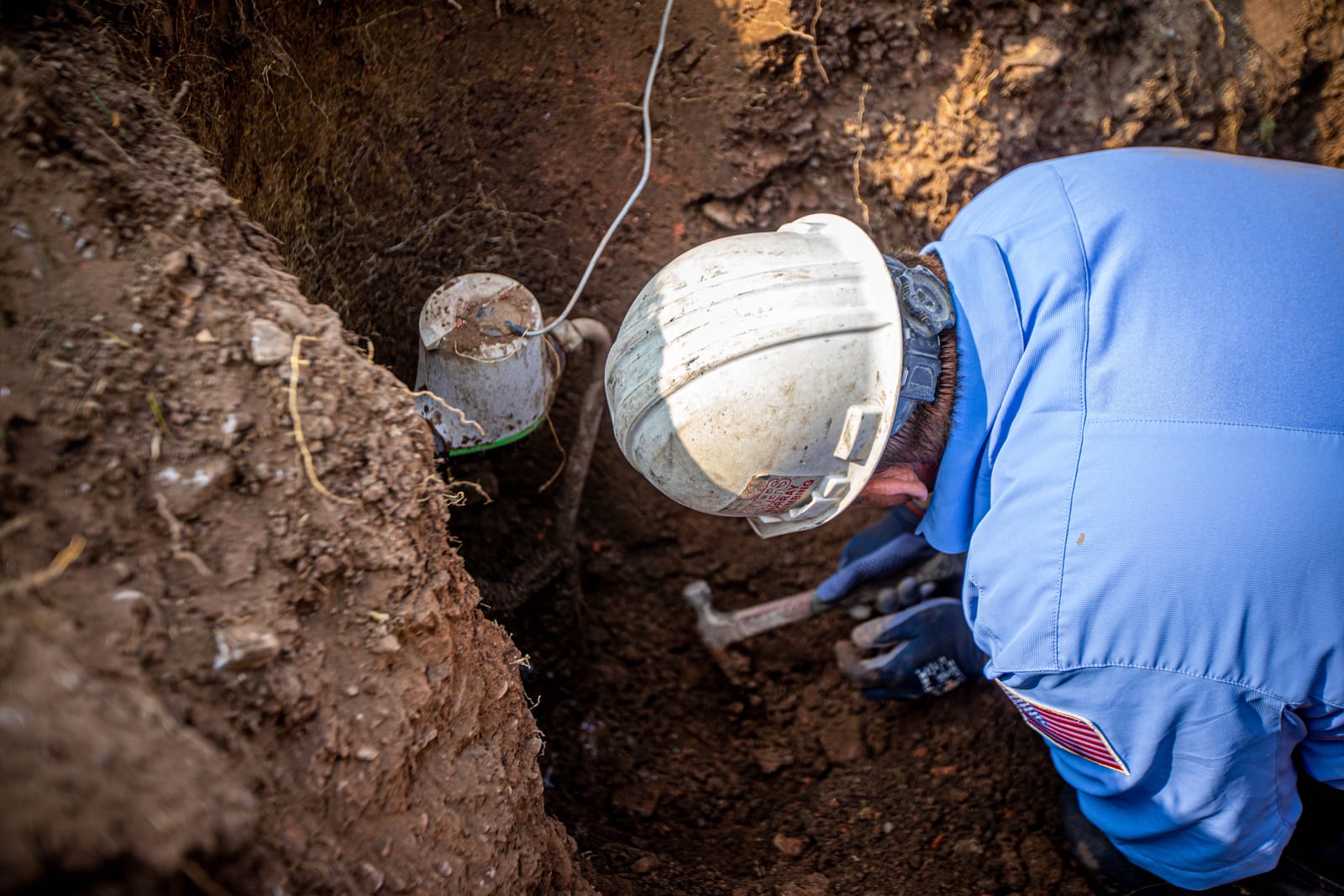
A second valve sits outside near the street. Called the curb stop, it sits in a small buried box, sometimes inside the meter box, and a long tool called a curb key turns it. The Utah plumbing code requires a full-open valve on the service pipe near the curb and another at the entrance into the structure.
The curb stop matters when the inside main water shutoff fails, or when the leak is in the buried line between the street and the house. In many cities the curb stop belongs to the water provider, which may ask homeowners not to operate it, so check first.
If the curb box is buried under sod or gravel, do not dig it out. The Blue Stakes of Utah FAQ says to call no matter how deep you plan to dig, because many cables and pipes lie at shallow depths.
Gate Valves, Ball Valves and Why Old Valves Seize
A gate valve has a round wheel handle, and turning it clockwise drives a threaded stem that lowers a metal wedge, called the gate, into a seat across the pipe. A ball valve has a lever handle and a ball with a hole bored through it, so a quarter turn rotates the opening away from the flow. When the lever runs parallel to the pipe, the valve is open.
Valves seize because they sit untouched for years. Hard water leaves mineral scale on metal, and the USGS describes scale accumulating inside supply pipes. On a gate valve, that scale can cement the stem threads and gate edges in place, while the stem packing dries out and hardens.
An old gate valve can also fail invisibly when the gate separates from the stem, so the handle turns but water keeps flowing. Ball valves usually turn more easily, but their seats can stick after years in one position.
How to Test Your Main Water Shutoff Safely
Testing a valve is often called exercising it. Pick a time when nobody needs water.
- Turn the handle slowly by hand, clockwise, without a wrench or extra leverage.
- If it resists firmly, stop, because forcing it can snap the stem or crack the valve body.
- Once closed, open a faucet on the lowest floor and confirm the flow fades to a stop.
- Reopen the valve slowly, and back a gate valve off about a quarter turn from fully open.
- Watch the stem for several minutes for drips.
A steady trickle at the faucet means the valve is not sealing, and a drip at the stem points to worn packing. Either one deserves attention before winter. Afterward, hang a bright tag on the valve, photograph it and keep the path to it clear.
An Ogden Scenario You Might Recognize
Picture a family whose basement valve has not moved since they bought the house. It is an old wheel-handle gate valve, half hidden behind storage bins. On a mild September weekend they decide to test it, and the handle turns stiffly for a few rotations before spinning with almost no resistance. When they open the laundry sink faucet, water still runs at full pressure.
That pattern points to a gate that has separated from its stem, or one that cannot seat because of scale. The valve appears to work, yet it would do nothing during a burst pipe. The sensible move is to return the handle to where it started, note what happened and plan a replacement before the first hard freeze. A full-port ball valve is a common choice.
What to Do When a Pipe Bursts
A burst pipe releases water quickly, so work in this order.
- Close the main water shutoff: turn a gate valve clockwise until it stops, or turn a ball valve lever a quarter turn so it crosses the pipe.
- Drain the lines: open the lowest faucet so trapped water exits there instead of through the break, as USU Extension advises when a frozen pipe may leak as it thaws.
- Consider the water heater: the same guide says that when a hot water line or the main line freezes, it is often necessary to turn the water heater off.
- Avoid electrical hazards: if water is reaching outlets, cords or the electrical panel, do not walk through it. Get everyone outside, then call 911 from outside.
Once the water is off and the area is safe, burst pipe repair can locate the break and restore service.
Safety Notes
A shutoff test is simple, but a few hazards deserve respect.
- No extra leverage: a wrench or cheater bar on a stuck handle can snap the stem and turn a stiff valve into an active leak.
- Older pipe: some older homes still have galvanized steel supply pipe, which can crack at threaded joints if the valve is twisted hard.
- Standing water: do not step into water that may reach outlets, cords or the panel.
- Curb stop: leave it to your water provider unless the provider has told you otherwise.
- Gas odor: if you smell gas in a basement or utility room, get everyone outside, then call 911 or the gas utility's emergency line from outside.
- Buried boxes: do not dig for a curb box without a locate request.
When to Call a Professional
Call when the valve will not turn by hand, spins without closing, still passes water when closed or drips at the stem after testing. Call as well if you cannot find an inside valve at all, or the only one you can locate is the curb stop.
Some problems sit beyond the valve. If the meter keeps moving with every fixture off, the leak may be in the buried service line, which is where main water line repair comes in. A damp wall, a warm spot on a floor or a steady hiss with no visible water can indicate a hidden leak, and leak detection can pinpoint it without opening walls at random. Replacing an old gate valve is a plumber's job too.
Frequently Asked Questions
How often should I test my main water shutoff?
Once a year is a sensible habit, and early fall works well because the valve is ready before freezing weather. If the valve is already stiff, have it inspected instead of forcing it.
Should I close the valves to my outdoor faucets too?
Before the first freeze, the American Red Cross recommends closing the inside valves that supply outdoor hose bibs and keeping the outside valve open, so leftover water can expand without breaking the pipe.
What if my home has no main water shutoff inside?
Some older homes have only the curb stop, or the inside valve ended up behind a finished wall. Without an accessible inside valve, there is no fast way to stop a leak, so have one added where the line enters.
Next Step: Find It, Test It and Write It Down
This week, find your main water shutoff and note three things: where it is, whether it is a gate or ball valve, and whether it closed fully during your test. USU Extension recommends teaching adults and older children where the main shutoff is and how to turn the water off, so walk the household through it.
If the valve stuck, dripped or let water through, Towers Plumbing can inspect it and plan a replacement before winter. Send your notes and a photo through the Towers Plumbing contact page, and mention whether the handle is a wheel or a lever. That way, the visit starts with the right details.