Some summers, a hazy sky and a campfire smell settle over Park City for days. The fire may be burning in another state, yet wildfire smoke still finds its way inside. How much gets in depends on how tight the house is, which fans run and what filter sits in your furnace. Here is what helps, and when to upgrade.
How Wildfire Smoke Gets Inside a Closed House
Utah's Division of Air Quality describes smoke as a mix of gases and fine particles from burning wood and other organic material. The EPA's particulate matter basics page says fine particles, called PM2.5, pose the greatest risk to health. They are small enough to drift through gaps you cannot see.
The state agency lists the main paths in: open windows and doors, bath and kitchen fans that vent outside, systems with a fresh air intake, and small cracks around closed windows.
Exhaust fans are the path people overlook. A bath fan, range hood or dryer pushes air out, and the same amount has to come back in. On a smoky day, that replacement air leaks through every gap, carrying wildfire smoke with it. A return duct with loose joints in an attic or garage can also let the blower pull outside air into the system.
Seal Up and Recirculate on Smoky Days
When wildfire smoke rolls in, stop pulling outdoor air inside and clean the air already there. Close windows and doors first. In a mountain town like Park City, summer evenings often cool off, and opening windows is the easy way to cool the house. On smoky days, that habit has to wait.
Next, look at what moves air in and out:
- Fresh air intake: AirNow's guidance for smoky days says to close the intake if your system has a fresh air option. That may be a motorized damper or an energy recovery ventilator.
- Exhaust fans: run the bath fan and range hood only as long as you need them.
- Evaporative cooler: it pulls outdoor air through wet pads, so it brings smoke in with it.
- Central air: a standard split system sends heat outdoors through the condenser but recirculates indoor air.
Run the HVAC Fan With a MERV 13 Filter That Fits
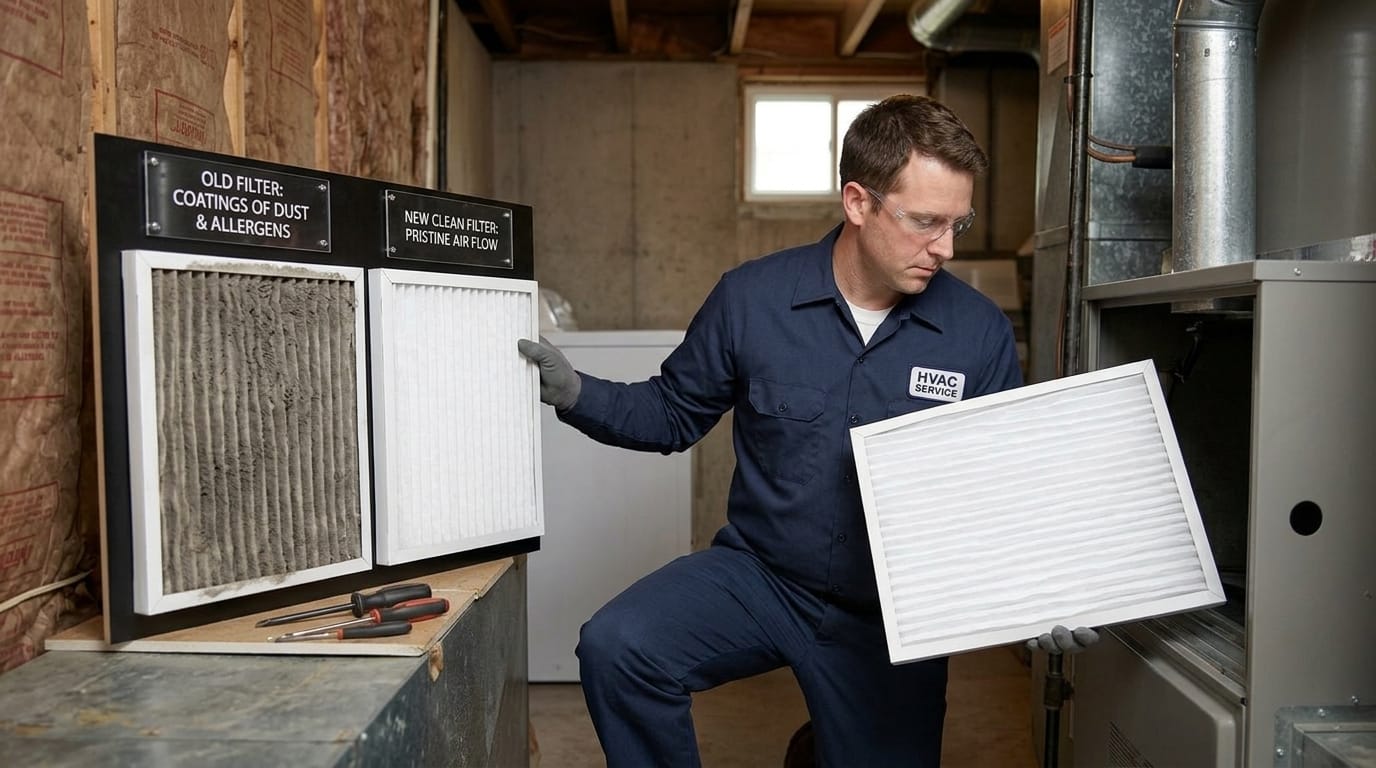
Your furnace filter only cleans air while the blower runs. With the thermostat fan on "Auto," the blower stops once the house reaches its set temperature, and filtration stops with it. AirNow recommends the "Recirculate" and "On" settings during smoke events, with filters rated MERV 13 or higher.
The EPA's explanation of MERV ratings adds an important limit. Choose MERV 13, or as high a rating as your system fan and filter slot can accommodate. A denser filter resists airflow, and in a thin slot it can starve the blower.
Fit matters as much as rating. A filter that is too small, bent or forced into the slot leaves a gap, and air takes the easy path around it. Air filter replacement with the correct size keeps air moving through the filter, not around it.
Portable HEPA Cleaners, Clean Rooms and Whole-Home Purifiers
A portable air cleaner treats one room. Many units use a HEPA filter, a pleated mechanical filter that the EPA describes as common in air purifiers.
A clean room gives that unit a small, sealed space to work in. Pick one room, often a bedroom, and keep its door and windows shut. AirNow notes that portable air cleaners work best when run continuously with doors and windows closed. Size the unit to the room using its clean air delivery rate, or CADR.
For whole-house coverage, the EPA page on air cleaners and air filters in the home explains that central filters clean air throughout the home, though neither type removes all pollutants.
A common upgrade is a deeper media filter cabinet, which catches fine particles with less airflow resistance than a thin filter. An activated carbon stage can target some of the gases behind smoke odor. Towers Plumbing offers air purifier installation matched to your blower and ductwork.
A Park City Scenario You Might Recognize
Picture a family whose house smells faintly of smoke each afternoon during a hazy week, even with every window shut. The bath fan runs for long stretches. They set the thermostat fan to "On" and slide a new high-MERV filter into the thin slot beside the furnace.
Two days later, air from the supply registers feels weak, and upstairs rooms stay warm. Frost forms on the larger insulated copper line near the indoor unit.
That pattern points to restricted airflow. A filter too dense for that blower cuts the air moving across the evaporator coil. The coil runs below freezing, and its moisture turns to ice, which blocks even more air. The smoke smell points to a second issue: the bath fan pulls outdoor air in through leaks.
What You Can Check Safely Before and After Wildfire Smoke
Set the thermostat to off before you open the filter door, then check a few things.
- Filter size and rating: read the size and MERV printed on the frame and compare them to the slot.
- Airflow arrow: the arrow on the frame should point toward the blower.
- Fresh air duct: some homes have a duct from outside to the return side of the furnace, often with a damper.
- Outdoor unit: look for ash or debris on the condenser fins.
When the air clears, AirNow's after-a-fire guidance says to replace filters in your HVAC system and portable air cleaners, then keep filtering until the smoke odor fades. A filter that caught days of wildfire smoke can load up well ahead of schedule. An AC maintenance visit is a good time to have both coils checked, since particles that slip past a filter can coat the evaporator coil.
Safety Notes
- Power off first: set the thermostat to off before changing a filter, and shut off the outdoor disconnect before rinsing the condenser.
- Burning smell from equipment: if smoke or a burning smell comes from the furnace, air handler or outdoor unit, get everyone outside, then call 911 from outside.
- Fire nearby: follow local emergency alerts. Filters and closed windows do not replace an evacuation order.
- No ozone generators: Utah's air quality agency advises against air cleaners that generate ozone.
- Heat in a sealed house: if the house gets too hot, treat it as urgent and review the National Weather Service heat safety page.
- Keep a filter in place: running without one carries smoke particles and dust straight onto the blower and evaporator coil.
When to Call a Professional
Call before moving to a denser filter if you are unsure your system can handle it. EPA notes that you may need an HVAC technician to find the highest-efficiency filter your system can take. A technician can measure static pressure to see how much resistance the blower tolerates.
Also call when:
- Supply airflow drops or frost forms on the refrigerant lines after a filter change.
- The filter bows, collapses or gets pulled out of its slot.
- You cannot find or close the fresh air intake or damper.
- Smoke odor lingers after new filters and several clean-air days.
- You want a whole-home air purifier sized to your system.
Towers Plumbing can check filter fit, airflow and duct connections, then explain your options before any work begins.
Frequently Asked Questions
Does my central air conditioner bring wildfire smoke inside?
A standard split system does not. The outdoor condenser releases heat outside, and the indoor unit recirculates the air already in the house. Smoke comes in through leaks, exhaust fans or a fresh air intake, so close that intake on smoky days.
Should the furnace fan run all day during smoke events?
AirNow recommends setting the fan to "On" rather than "Auto" so the filter works continuously. The blower uses more electricity that way, so switch back once the air clears.
Will a MERV 13 filter hurt my system?
Many systems handle it, but not all. EPA advises choosing MERV 13 or as high a rating as your fan and filter slot can accommodate. A deeper filter usually adds less resistance than a thin one with the same rating.
Get Ready for the Next Wildfire Smoke Day in Park City
Before you call, note the size, thickness and MERV rating printed on your current filter. Check whether your system has a fresh air intake and whether the thermostat fan sits on "Auto" or "On." List the rooms that smell smoky first and any portable air cleaners you use.
You can read more about local service on our Park City service area page. Then reach Towers Plumbing through our contact page to talk through filter upgrades or a whole-home air purifier. With your notes in hand, a technician can check how your system handles airflow and suggest options that fit your home before the next wildfire smoke day.