Water pressure too high in a Draper home rarely looks dramatic at first: a thump in the wall, a toilet that refills on its own, a damp spot under the water heater. Most homes depend on a pressure-reducing valve, or PRV, to hold city pressure in check. Here is how that valve works, how to test safely, and when a plumber should take over. For local service details, visit our Draper service area page.
Signs of Water Pressure Too High in Your Home
High pressure shows up as small, scattered problems that seem unrelated at first.
- Banging pipes: a thump when the washer, dishwasher or a quick faucet shuts off. That is water hammer, and higher pressure makes each shock harder.
- Running toilets: a fill valve that hisses or refills on its own can struggle to seal against high pressure.
- Dripping relief valve: water at the discharge pipe of the water heater's temperature and pressure relief valve.
- Burst or bulging hoses: washing machine, dishwasher or ice maker supply hoses that swell or split.
- Spitting faucets: aerators that spray hard and cartridges that start dripping early.
Any one of these can have another cause. Several at once point to water pressure too high for your plumbing. The EPA's WaterSense service water pressure sheet notes that high pressure can damage piping, fixtures and appliances and raise the risk of leaks.
How a Pressure-Reducing Valve Works, and How It Wears Out
City mains carry enough pressure to reach every home, and homes lower in a pressure zone see more of it. The WaterSense sheet notes that main pressure can reach 100 psi or more.
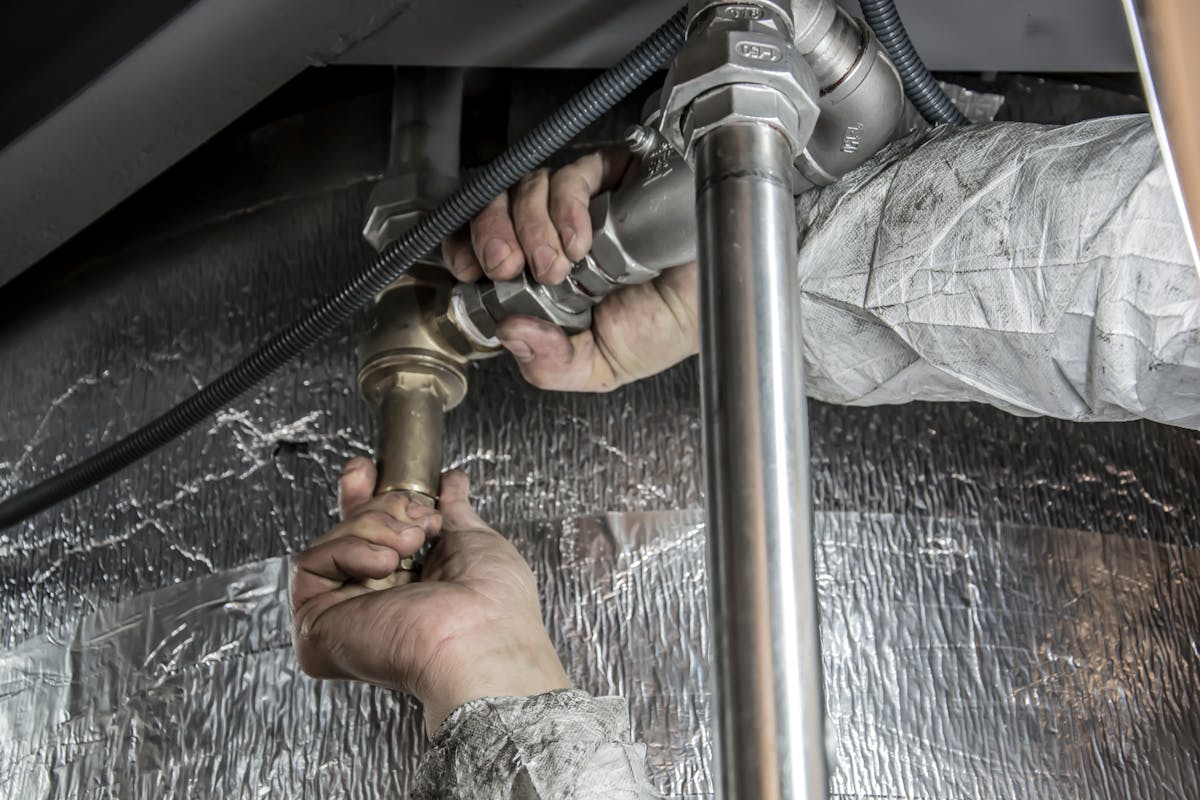
A PRV usually sits near the main shutoff, where the water line enters the house. Inside its bell-shaped top, a spring pushes a rubber diaphragm to hold the valve open while house-side pressure pushes back. When a faucet opens, house pressure drops and the valve opens wider. When everything closes, a disc presses against the seat.
That seat is where trouble starts. Over the years the disc wears, the diaphragm stiffens, and grit or hard water minerals collect on the strainer. A worn seat cannot seal when no water is flowing, so pressure creeps past it toward the main's pressure, often overnight.
The 80 PSI Code Limit and the PRV Requirement
Section 604.8 of the International Plumbing Code, chapter 6, requires a pressure-reducing valve with a strainer wherever static pressure inside a building exceeds 80 psi. The valve must bring distribution piping down to 80 psi or less. The International Residential Code, chapter 29, sets the same 80 psi ceiling for homes.
Two more code details matter to homeowners. A PRV must be designed to fail open, so a failed valve keeps the water on but passes full main pressure into the house. The code also calls for thermal expansion control on the water heater's cold supply when a PRV is installed.
WaterSense goes further, recommending incoming pressure between 45 and 60 psi for efficient water use. Your local building department decides which code edition and amendments apply.
How to Test Pressure With a Hose-Bib Gauge
A water pressure gauge that threads onto a hose bib lets you check pressure yourself. A model with a red maximum-reading needle, sometimes called a tattletale needle, also records the highest pressure reached.
- Stop all water use: make sure no faucets, appliances or sprinklers are running, so you read static pressure.
- Pick the test point: the EPA sheet suggests a hose bib, the washing machine's cold tap or a first-floor cold faucet.
- Thread it on by hand: open the tap fully and read the gauge.
- Leave it overnight: reset the red needle before bed and check it in the morning.
Some homes feed outdoor spigots ahead of the PRV, which the code allows, so test at the washer's cold tap too. A steady reading between 45 and 60 psi falls in the WaterSense range. A reading above 80 psi, or a needle that climbs overnight, signals water pressure too high for your fixtures.
Thermal Expansion and Your Water Heater
Water expands as it heats. In an open system, that extra volume pushes back into the city main. A PRV blocks that path, and the EPA sheet notes that installing one creates a closed system. Pressure then rises each time the water heater runs.
An expansion tank gives the expanding water somewhere to go: a cushion of air behind a rubber bladder. Over time that air charge can leak down, and the tank stops absorbing anything.
When that happens, the temperature and pressure relief valve on the water heater becomes the only outlet, and it drips after heating cycles. These pressure spikes also strain the tank, connectors and supply hoses. If your relief valve drips or the expansion tank is aging, our water heater service covers both.
A Draper Scenario You Might Recognize
Picture a family whose Draper home has a PRV and an expansion tank in the basement near the water heater. Lately the upstairs toilet refills for a few seconds in the middle of the night. The pipes thump when the washing machine finishes filling, and the drain pipe under the relief valve has a white mineral crust at its tip.
A hose-bib gauge gives a normal afternoon reading, but by morning the red needle sits well above 80 psi.
That pattern points to water pressure too high at night, building while the house is quiet. Two causes fit: a worn PRV seat letting main pressure creep in, or thermal expansion with a waterlogged expansion tank. The crusted relief valve leans toward expansion, though both can happen together.
Safety Notes
- Do not cap the relief valve: a dripping temperature and pressure relief valve is doing its job. Plugging it removes the heater's last line of protection.
- Keep clear of the discharge pipe: relief valve water can be very hot.
- Do not adjust the PRV blind: turning the adjusting screw without a gauge can push pressure higher.
- Know your main shutoff: find it now, so you can close it quickly if a hose bursts or a fitting starts leaking.
- Thread gauges by hand: snug is enough on a hose bib or washer tap, and a wrench can damage the threads.
- Dry leaks quickly: the EPA's guide to mold and moisture says to dry water-damaged areas within 24 to 48 hours to prevent mold growth.
When to Call a Professional
If you suspect water pressure too high, call when your gauge reads above 80 psi or the red needle climbs overnight. Call as well when the relief valve drips or you cannot find a PRV at all. Towers Plumbing can check the valve and expansion tank together.
Adjustment is a job for a pro. Most PRVs have an adjusting screw and locknut on the bell, but a worn seat will not hold any setting. A plumber confirms the valve's condition, sets it with a gauge, and rebuilds or replaces it if needed.
If water appears in a ceiling, wall or floor with no visible source, leak detection comes first. If older galvanized steel pipe is leaking in several places, whole-home repiping may be the longer-term answer.
Frequently Asked Questions
What water pressure should a house have?
WaterSense recommends incoming pressure between 45 and 60 psi, and the ICC codes set 80 psi static as the ceiling. A reading between 60 and 80 psi is within code but above the WaterSense range.
Why is my water pressure too high only at night?
Demand on the city main drops at night, so main pressure can rise. A PRV with a worn seat lets that rise into the house. Thermal expansion after the water heater runs can also push pressure up while nobody uses water.
Can I adjust my PRV myself?
The adjusting screw is easy to reach, but a worn valve may not respond, or it may drift back up later. Have a plumber test it with a gauge first.
What to Note Before You Contact Towers Plumbing
A few details help a technician go straight to the likely cause of water pressure too high.
- Your readings: write down the afternoon reading, the overnight maximum and where you tested.
- Your symptoms: note banging pipes, toilets that refill on their own or burst hoses, and when each one happens.
- The relief valve: note whether its drain pipe drips or shows a white mineral crust.
- The equipment: take photos of the PRV, the expansion tank and the water heater's data label.
- Recent work: mention any water heater, fixture or valve installed in the past year.
If a hose bursts or water spreads, close the main shutoff first. Then reach Towers Plumbing through our contact page with your notes. A technician can confirm the cause and explain the repair before work begins.