
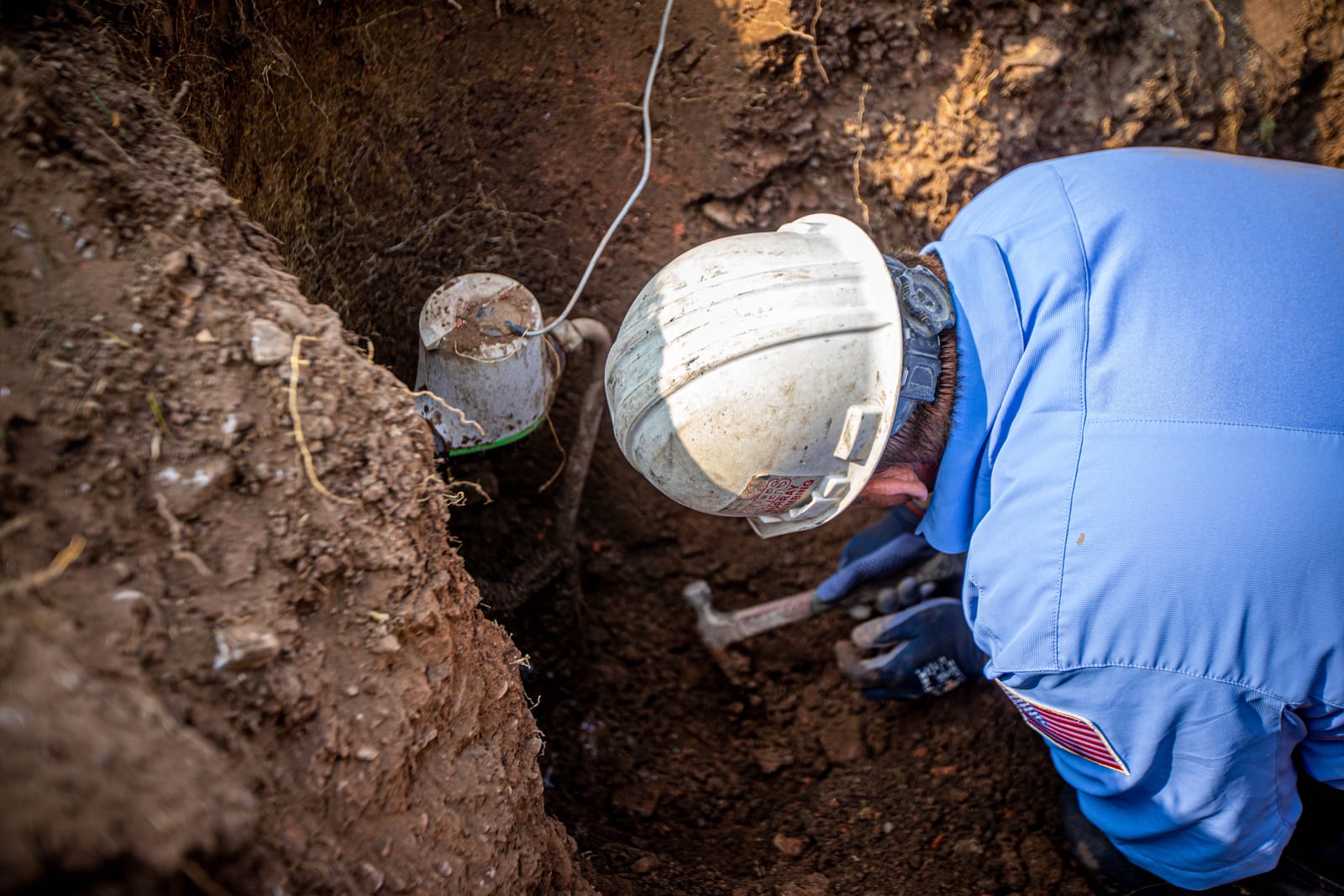
A water reading that keeps climbing, a toilet that refills on its own, or a soggy patch of lawn can all hint at a hidden leak. A water meter leak test is the simplest way to know for sure. In a Layton home, early spring is a good time to run one, after winter freezes and before heavy sprinkler use. Here is how to read the meter, run the test and narrow down the source.
How a Hidden Leak Moves the Meter
Your water meter measures every gallon your home draws from the public supply. The pipes past the meter stay under pressure all day, even with every tap closed. That pressure pushes water out through any opening it can find: a worn toilet flapper, a pinhole in a copper line, a cracked fitting or a split sprinkler pipe.
Escaping water has to be replaced, so the meter turns to supply it. That is the whole idea behind a water meter leak test. If nothing in the house is using water and the meter still moves, water is going somewhere you cannot see.
A burst pipe spins the dial fast, while a slow drip barely moves the register. That is why the leak indicator matters.
Finding and Reading Your Water Meter
Most meters sit in a covered box near the curb. Home Water Works notes that in cold climates the meter may be inside the home instead, usually in the basement.
The face of the meter, called the register, shows a running total in gallons or cubic feet, and a large sweep hand tracks small amounts. Look for the low-flow indicator, often a small triangle that spins whenever water passes through. Home Water Works says this indicator can be useful in leak detection, since it reacts to flows too small to move the sweep hand quickly.
A digital register may need a flashlight to wake up. Either way, write down every digit before you start.
How to Run a No-Use Water Meter Leak Test
The goal is simple: stop every planned use of water, then see whether the meter moves anyway.
- Stop all water use: close every faucet, and hold off on flushing, dishes and laundry.
- Pause automatic users: turn off the irrigation controller, and make sure a water softener is not regenerating and the ice maker is not filling.
- Watch the indicator: steady movement over a few minutes points to a leak.
- Record and wait: the EPA WaterSense Fix a Leak Week page says to check the meter before and after a two-hour period when no water is being used.
- Compare the readings: EPA adds that if the meter changes at all, you probably have a leak.
Running this water meter leak test while everyone sleeps or is away makes it easier to keep water use at zero.
Using the Main Shutoff to Split the Service Line From the House
A moving meter tells you water is leaving. The main shutoff, usually where the water line enters the home, helps show where it is going. Close it and watch the leak indicator again.
- Indicator stops: the leak is inside the house plumbing, so the fixture checks below apply.
- Indicator keeps moving: water is escaping between the meter and the shutoff, which usually means the buried service line.
Two cautions keep this water meter leak test honest. An older main valve may not seal fully, so a slow crawl could be the valve itself. Also, some sprinkler systems tee off the service line before the house shutoff, so close the irrigation supply valve too. A true service line problem calls for main water line repair rather than an indoor fix.
Common Hidden Leaks Inside and Around the Home
Once the leak is on the house side, work through the usual suspects.
- Toilets: a worn flapper lets tank water seep into the bowl. EPA suggests a few drops of food coloring in the tank; color in the bowl after 10 minutes means a leak. Utah's Slow the Flow indoor tips recommend the same dye check.
- Water heaters: look for water under the tank, a weeping drain valve or a dripping temperature and pressure relief valve discharge pipe.
- Irrigation lines: EPA advises checking an in-ground system each spring before use for frost or freeze damage. A soggy patch or heads that barely pop up point to a break.
- Slab and under-floor lines: a warm spot on the floor or running water sounds with everything off can signal a pipe leaking under concrete.
If a toilet also clogs often, our clogged toilet service handles the drain side.
A Layton Scenario You Might Recognize
Picture a family whose water use has crept up this spring, even though their routine has not changed. They run a water meter leak test before bed, and the low-flow indicator creeps along with every tap closed. When they close the main shutoff in the basement, the indicator keeps turning. The sprinkler valve is already off, and dye tests in both toilets leave the bowls clear.
That pattern points away from the fixtures and toward the buried service line between the meter and the house. A strip of lawn that stays soggy after dry days would support that idea. A main valve that does not fully seal is the other possibility, so the next step is a professional check before anyone digs.
Safety Notes
- Lift meter lids with a tool: lids are heavy, and insects or small animals sometimes shelter in the box.
- Leave the meter alone: read it, but do not open or adjust the meter or curb valve, which usually belong to your water provider.
- Do not force the main shutoff: an old valve can break or start leaking at the stem. If it will not turn, stop and call.
- Respect the relief valve: never cap or plug a dripping water heater discharge pipe.
- Call before any digging: Utah's 811 call-before-you-dig center encourages anyone excavating to click or call 811 first so buried lines get marked.
- Dry wet areas quickly: the EPA guide to mold and moisture says to dry water-damaged areas and items within 24 to 48 hours to prevent mold growth.
When to Call a Professional
Call when the meter moves during a no-use test and a quick check of the fixtures does not reveal the source. Call as well when the indicator keeps turning with the main shutoff closed, since that points to the service line or the valve.
Other signs deserve a prompt call: water pooling around the meter box, a soggy strip across the yard, a warm spot on the floor, or running water sounds inside a wall. A relief valve that keeps discharging also needs attention.
The goal of leak detection is to narrow a hidden leak down to one spot before any wall, floor or lawn is opened. Towers Plumbing works on homes across Layton and nearby northern Utah communities, and your water meter leak test results give that work a head start.
Frequently Asked Questions
How long should a water meter leak test take?
EPA suggests comparing readings before and after a two-hour period with no water use. Watching the low-flow indicator for a few minutes gives a quicker hint, and an overnight test can catch very slow leaks.
Can a water softener make the meter move?
Yes. A softener uses water while it regenerates, and many are set to run at night. Check its schedule, or put it in bypass during the test.
My meter moves only a little. Is that urgent?
A slow leak is rarely an emergency, but it will not fix itself. Water escaping inside walls or under floors can soak materials for weeks before it shows, so find the source soon.
Should I test the meter if my lawn has a soggy spot?
Yes. Run the test with the sprinklers off and their supply valve closed. If the meter still moves, the service line or an irrigation line under that spot may be leaking.
Next Steps After Your Water Meter Leak Test
Before you call, gather a few notes. Write down each meter reading, the time you took it and whether the low-flow indicator moved. Note what happened when you closed the main shutoff and the results of any toilet dye tests. Photos of the meter face, a soggy lawn or a damp floor help too.
Mention recent changes, such as the first sprinkler startup of the season, a new water heater or digging in the yard. If water is visibly spreading, close the main shutoff first.
Then reach Towers Plumbing through our contact page. With your notes in hand, a technician can start at the most likely spot and confirm the source before any repair begins.