
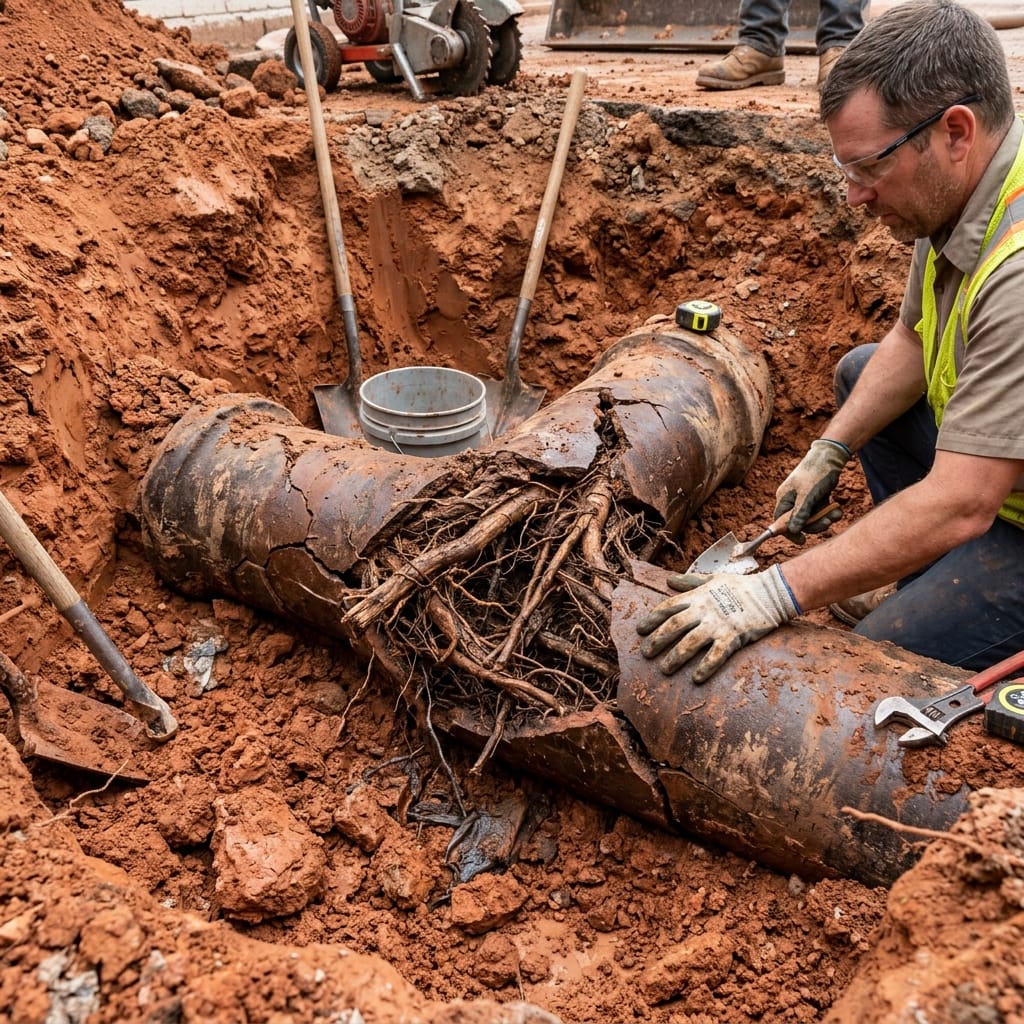
A single clogged drain is an annoyance. When several fixtures back up together, the problem is almost never in the fixture. It is farther down the line, in the main pipe that carries all of your household wastewater out to the municipal sewer. Understanding what that pipe is going through, and what your repair choices are, helps you respond before a backup floods a basement.
This guide is about sewer line repair in Salt Lake City and how homeowners can tell a serious problem from an ordinary clog.
How to tell a sewer line problem from a clog
A clog affects one drain, while a sewer line problem affects the whole house or the lowest fixtures first. Watch for these patterns.
- Multiple drains running slowly at once
- A toilet that gurgles when the washing machine drains
- Sewage odor in the yard, basement or around floor drains
- Water backing up into the lowest tub or floor drain when you run a fixture upstairs
- Lush patches of grass or soft, damp ground above the path of the line
If you notice these signs, stop using water heavily and have the line inspected. Continued use pushes more wastewater into a restricted pipe.
What damages a sewer line
Several things go wrong with buried pipes, and they rarely happen in isolation.
Root intrusion. Tree roots seek out moisture and can enter through joints, growing into a dense mass that blocks flow.
Pipe age and material. Older clay, cast iron and Orangeburg pipe can crack, corrode, flake or deform with time.
Shifting ground. Settling soil can pull joints apart or create low spots where waste collects.
Grease and debris. Fats, wipes and other items that should never go down a drain build up on pipe walls.
A camera inspection tells you which of these you are dealing with. Towers Plumbing provides sewer camera inspection so that the recommendation rests on what is actually in the pipe.
Need someone to look at it? Call Towers Plumbing at (801) 266-3529 to schedule an inspection. Towers Plumbing is a licensed and insured, family owned company, and its team can explain the inspection before you schedule it.
Sewer line repair in Salt Lake City, the options
Once the camera shows the problem, the repair method depends on location, severity and what sits above the pipe.
- Cleaning. If the line is intact but restricted by roots or buildup, hydro jetting can clear the pipe walls, and the camera can confirm the pipe is sound afterward.
- Spot repair. A single broken section can be exposed and replaced, leaving the rest of the line in service.
- Trenchless repair. In some cases the pipe can be repaired or relined from small access points, which spares driveways, patios and landscaping.
- Full replacement. When the line has failed in many places or has lost its shape, replacement gives a reliable pipe for the long term.
Towers Plumbing handles main sewer line repair, and the right option is the least invasive one that actually solves the problem.
What to expect during the visit
A technician will first ask about the symptoms and the history of the home. Then a camera is fed through a cleanout or access point to view the interior of the pipe, noting its condition and the location of any defect. You should be shown the footage and have the findings explained in plain language, including how deep the problem is and what choices exist.
If the line has a bellied section, a break or a blockage that cannot be cleared, the plumber will outline the repair approach and what the work involves, including excavation and restoration of the area.
Why delay makes sewer problems harder
A sewer line that is only partly blocked can seem tolerable for weeks, which is exactly what makes it dangerous. Wastewater that cannot move freely leaves solids behind, and those solids narrow the pipe a little more with every flush. Roots that have found a joint keep growing.
A small crack lets soil wash into the pipe, and the void it leaves behind can let the line sag further. By the time sewage appears in a basement drain, the underlying condition has usually been developing for a long time.
Early inspection gives you more choices. A pipe that is merely coated with buildup may only need cleaning, while the same pipe after months of neglect may need a section replaced. Acting at the first slow drain is nearly always the more manageable path, and it protects flooring, drywall and stored belongings in the lowest level of the home.
Protecting your sewer line going forward
Prevention is easier than repair, and small habits help.
- Keep grease, wipes, paper towels and hygiene products out of drains and toilets
- Use drain screens in tubs and showers
- Be careful about planting trees with aggressive roots near the line
- Schedule an inspection if your home is older and has never had the line checked
- Know where your cleanout is, so a plumber can reach the line quickly
Call Towers Plumbing for sewer line repair in Salt Lake City
If your drains are slow, sewage odors are lingering or backups keep returning, do not wait for the next flood. Call Towers Plumbing at (801) 266-3529 and ask about a camera inspection. You can also see how Towers Plumbing serves Salt Lake City.