
Most homeowners never think about the sewer cleanout until a drain backs up. In a Taylorsville home, that capped pipe is the main access point to the line that carries every drain's wastewater to the street. Knowing where it sits and what shape it is in makes the next drain problem faster and cleaner to solve.
What a Sewer Cleanout Is and How Plumbers Use It
Every drain in the house feeds the building drain, the large pipe under the basement floor or in the crawl space. Past the foundation wall, it becomes the building sewer, which runs by gravity to the public sewer main. A sewer cleanout is a capped branch fitting on that line, usually a wye or a tee. Remove the threaded plug, and a technician has a straight path into the pipe.
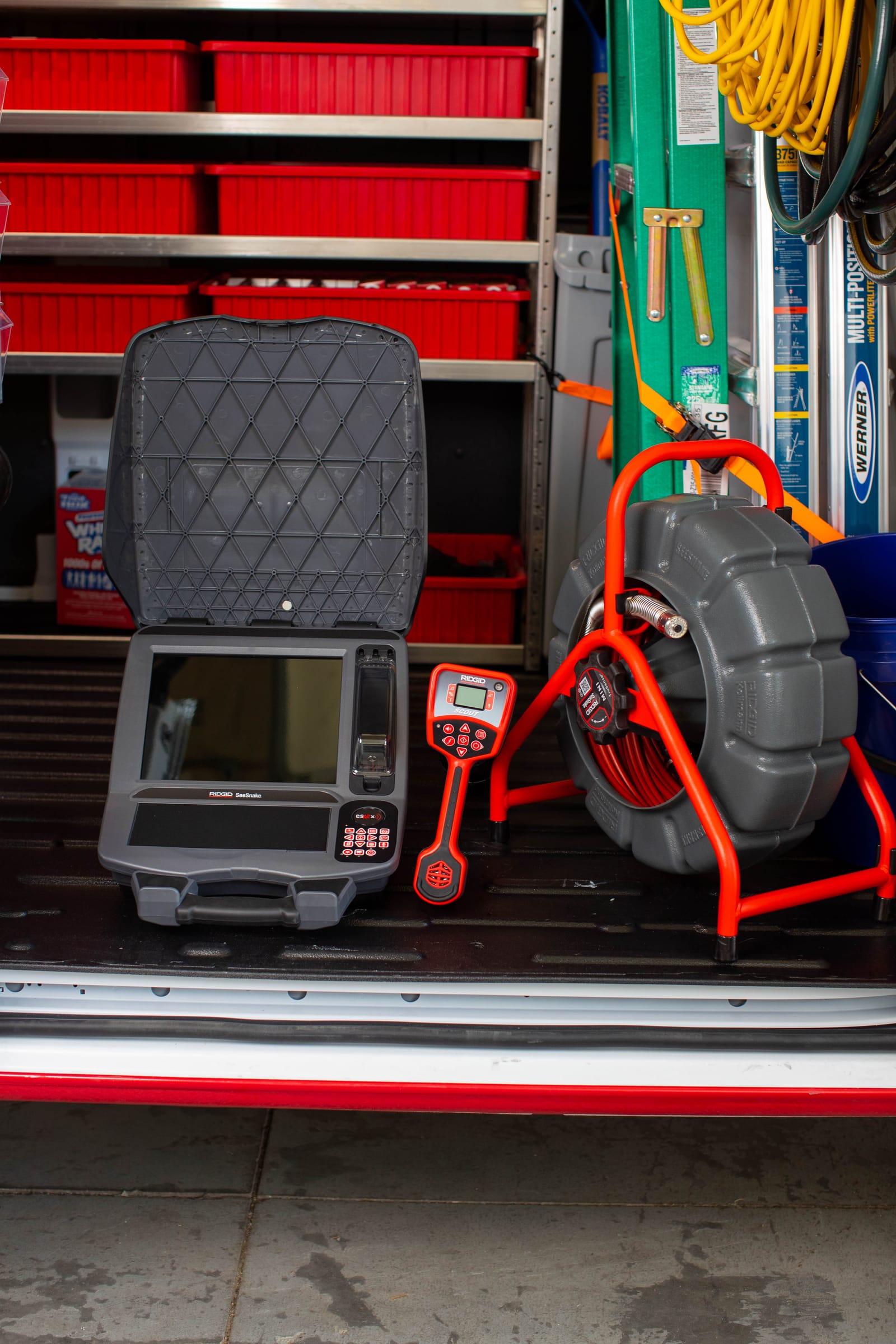
That access makes most sewer work possible. Drain cleaning cables go in through the cleanout and spin down the line toward the blockage. A sewer camera inspection sends a waterproof camera through the same opening to find roots, cracks, sags and offset joints. Hydro jetting hoses use it too, scouring grease and scale off the pipe wall. Without a cleanout, each job gets slower and messier.
Where to Find the Cleanout in a Taylorsville Home
Start with where the main drain leaves the house. It usually exits on the side facing the street. Then check these spots:
- Yard near the foundation: a white or black plastic pipe, often 3 or 4 inches wide, standing a few inches above the soil with a threaded cap. Two caps side by side are often a two-way cleanout, with one opening pointed toward the house and one toward the street.
- Basement floor: a round plug set flush with the concrete, sometimes under a flat trim cover.
- Basement wall: a capped fitting low on the main stack or where the drain passes through the foundation.
- Crawl space or garage: common in homes without a basement, near where the drain exits.
Older homes may have a cast-iron fitting with a brass or iron plug. If you find more than one, the one closest to where the pipe leaves the house is usually the main one.
What the Plumbing Code Requires, in General Terms
Utah's plumbing rules come from the Utah Plumbing Code, which adopts the 2021 International Plumbing Code with state amendments. The cleanout rules sit in Section 708 of the ICC International Plumbing Code, Chapter 7. In general terms, the model code calls for:
- A cleanout near the junction: where the building drain meets the building sewer, at the junction or within 10 feet upstream of it.
- Cleanouts at sharp turns: where a horizontal drain or building sewer turns more than 45 degrees.
- Open access: required cleanouts are not to be hidden inside walls or below grade. An outdoor cleanout is extended up to grade.
- Working room: at least 18 inches of clear space in front of the opening for 6-inch and smaller piping.
- No permanent covers: plugs may not be covered with mortar, plaster or similar material.
Code editions change, and existing homes generally reflect the rules in force when they were built. The local inspector makes the final call on new work.
How Cleanout Caps Get Damaged or Buried
A yard cleanout sticks out of the ground, so it is easy to hit. Mower blades, string trimmers and snow shovels can crack a plastic cap or snap the riser below it. Cast-iron plugs indoors can corrode over decades and seize in the fitting.
Cleanouts also get buried. Spring and early summer often bring yard projects, and new sod, rock beds or pavers can cover a cap without anyone noticing. Soil also shifts with northern Utah freeze and thaw cycles, which can tilt a riser or crack the fitting below.
A broken cap matters because the cleanout opens straight into the sewer. Dirt and gravel can fall in and build into a blockage. Sanitary sewers are designed for wastewater and only limited stormwater. The EPA lists sewer defects that let stormwater and groundwater in among the causes of sewer overflows. An open cleanout gives snowmelt and storm runoff a direct path into the line, and it lets sewer gases escape.
What You Can Check Safely
You can learn a lot about your sewer cleanout without opening it. Walk the likely spots and look for these signs:
- The cap: it should be present, intact and snug, with no cracks across the top.
- The riser: it should stand upright and reach grade, not lean or sit below the soil.
- Wet ground or odor: damp soil or a sewer smell around the cap can point to a leak or a blocked line.
- Clear access: nothing heavy should sit on it, such as planters or pavers.
Take a photo and note the distance from a corner of the house. If you think a yard cleanout is buried, do not start digging. The Blue Stakes of Utah FAQ says to request a locate no matter how shallow the dig. It also notes that private lines, including sewer laterals, usually are not marked.
A Taylorsville Scenario You Might Recognize
Picture a family whose basement shower drains slowly and whose downstairs toilet gurgles when the washer empties. They know the house has a sewer cleanout somewhere, but a new rock bed went in along the side yard this spring. Raking back the stones near the front corner, they find a plastic cap cracked across the top, with gravel in the opening.
That pattern points to the main line rather than one fixture, because the lowest drains react together. The cracked cap suggests stones and dirt have been dropping into the pipe, where they catch waste and narrow the line. The next step is to leave the fitting alone, cut back on water use and have the line cleared and camera-checked through that cleanout. A new cap and a riser raised to grade would follow.
Safety Notes
- Do not open it during a backup: a full line holds wastewater against the plug, and loosening it can release a sudden surge.
- Keep the cap on: an open cleanout lets sewer gases out and lets dirt and runoff in.
- Do not force a stuck plug: a seized cast-iron plug or old fitting can crack, turning a simple visit into a pipe repair.
- Do not tie into it: the code prohibits using a threaded cleanout opening to add a fixture unless another cleanout of equal size is installed.
- Call before any digging: request a locate first, even for a short trench to reach a buried cap.
- Keep it reachable: do not build decks, patios or planters over the sewer cleanout.
When to Call a Professional
Call when the cap is cracked, missing or sunk below the soil, or when you cannot find a cleanout at all. Call as well when several drains slow down together, when water seeps around the cap, or when a sewer smell lingers there. Planning a patio or new landscaping near the foundation? Have the cleanout found and raised to grade first.
Towers Plumbing serves homes across Taylorsville and can locate the sewer cleanout, clear the line through it and run a camera down the line. If the camera shows a broken, sagging or root-filled pipe, main sewer line repair may be the next step.
Frequently Asked Questions
Can I open the sewer cleanout to relieve a backup?
It is not a safe step for a homeowner. When the line is full, wastewater presses against the plug and can rush out as it loosens. A technician opens it slowly with the area prepared, then clears the blockage.
What if my house does not seem to have a cleanout?
It may be buried in the yard, hidden behind a finished wall or covered by flooring. A plumber can trace the line with a camera and locator. A cleanout can often be added where the building drain leaves the house.
Why is the cap tilted in my lawn?
Soil settles and shifts, especially where the ground freezes and thaws. A tilted riser can crack at the fitting below, so have it checked rather than pushing it back into place.
Keep Your Sewer Cleanout Ready Before You Need It
Before you call, write down what you found. Note where the cleanout sits, what the cap is made of and whether it is cracked, loose or buried. List any drains that run slowly or gurgle, and mention recent yard work near the foundation. A photo of the cap and the ground around it helps too.
Then reach Towers Plumbing through our contact page. With the location and your notes in hand, a technician can go straight to the access point and explain what the line needs before work begins.