
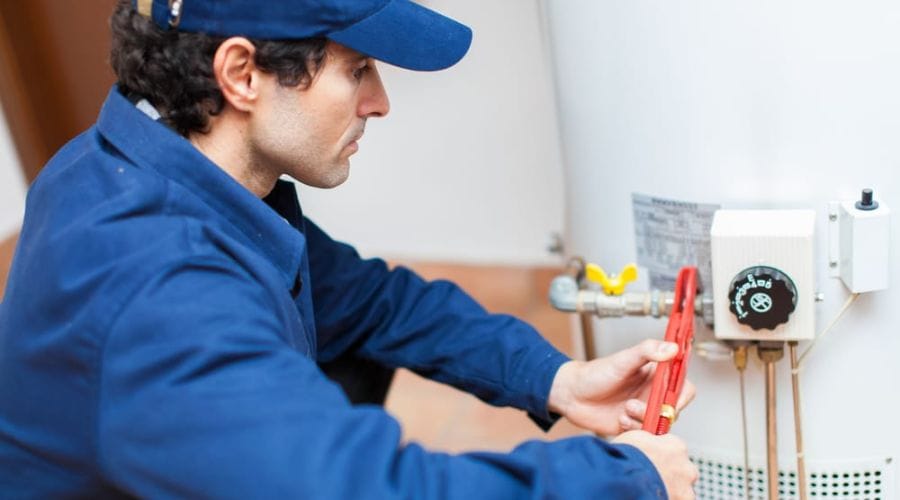
When the water heater pilot light keeps going out in a Kaysville home, the first sign is usually a cold shower on a February morning. You relight it, the hot water returns, and a few days later it happens again. A pilot that will not stay lit is a symptom, not a diagnosis. Here is how a standing pilot works, what makes it fail, what you can safely check, and when Towers Plumbing should take a look.
How a Standing Pilot Stays Lit
Many gas tank water heaters use a standing pilot: a small blue flame that burns around the clock beside the main burner. When the thermostat calls for heat, the gas control valve sends gas to the burner, and the pilot lights it. The A.O. Smith relighting guide explains that the whoosh you hear is the burner lighting, not the pilot.
The pilot also has a safety job. Its flame heats a thermocouple, or a thermopile on many newer valves, which produces a tiny electrical current. That current holds a safety magnet open inside the gas control. If the flame goes out, the current fades, the magnet drops closed, and gas to the pilot and burner shuts off.
So when a pilot light keeps going out, something is weakening the flame, starving it of air or breaking that safety circuit. The timing of the outage tells you which one.
Thermocouple, Pilot Orifice and Gas Control Problems
Bradford White's FVIR water heater service manual separates two patterns, and the difference matters. If the pilot lights but dies the moment you release the pilot button, the trouble sits in the flame sensing circuit.
- Thermocouple or thermopile: a weak sensor, or one that has slipped out of its bracket, cannot make enough current to hold the valve open.
- Dirty pilot orifice: the orifice is a pinhole. Dust or debris there can shrink the flame until it no longer wraps the sensor tip.
- Loose connection: the thermocouple nut at the gas control can loosen and interrupt the circuit.
- Gas control valve: the manual also lists an open ECO, the high-temperature cutoff, and a failed magnet inside the control.
A.O. Smith notes that a failed control valve generally means a service visit and a replacement valve. All of these repairs involve gas fittings, so they belong with a qualified technician.
Drafts, Combustion Air and Flammable Vapor Shutdowns
In the second pattern, the pilot light keeps going out hours or days after a good relight. The Bradford White manual lists three causes for that: too little combustion air, a clogged or incorrect vent, and inconsistent gas pressure.
- Drafts: an open door, a window or a fan aimed at the heater can blow out a small flame.
- Combustion air: a heater boxed in by storage, or a utility room sealed tight for winter, can starve the flame. The State Water Heaters FVIR service handbook warns that without enough air, a heater will have frequent pilot outages.
- Lint and dust: many FVIR heaters draw air through a base filter and flame arrestor, and the State handbook says heaters near lint may need that filter checked more often.
- Flammable vapor shutdown: a thermal switch shuts off the pilot and burner if vapors burn inside the chamber or airflow is badly restricted.
- Gas pressure: A.O. Smith says ongoing pressure trouble points outside the heater, perhaps to the gas lines, where gas line services come in.
What You Can Check Safely
If you smell gas, skip this list and follow the Safety Notes below. If there is no gas smell, these checks are safe for most homeowners.
- Look for the flame: most heaters have a small sight window near the bottom. Note whether the pilot is out, or small and yellow instead of steady and blue.
- Read the status light: some gas controls have a light that flashes a code. Write down the pattern for the technician.
- Clear the space: move boxes, laundry and stored items away from the heater, and vacuum lint from the floor around its base.
- Move flammables: gasoline, paint thinner and solvents do not belong in the same room as a gas appliance.
- Relight once: follow the lighting label on the heater exactly. A.O. Smith says to turn the gas control off and wait at least 10 minutes first, so leftover gas can clear.
If the pilot light keeps going out after that one relight, stop. Repeated relighting hides the cause instead of finding it.
A Kaysville Scenario You Might Recognize
Picture a family whose basement water heater goes cold every few days during a February cold snap. Each time, the pilot relights easily and holds when the button is released. Then, a few days later, the showers turn cold again. The heater sits in a small utility room beside the laundry, and the family recently added weatherstripping to that door to block winter drafts.
When a pilot light keeps going out on a schedule like this, the pattern says a lot. A pilot that holds after the button is released makes a failed thermocouple less likely, since that fault usually shows up right away.
A pilot that dies periodically fits the combustion air and venting causes in the manufacturer's chart. The sealed door and nearby dryer lint both point toward a heater that is short on clean air. A technician would check the air openings, the flame arrestor and the vent draft before replacing parts.
Safety Notes
- Gas smell: get everyone outside, then call 911 or the gas utility's emergency line from outside.
- Carbon monoxide alarm: if it sounds, get everyone outside, then call 911 from outside. The EPA lists back-drafting from gas water heaters among indoor carbon monoxide sources.
- Relight once only: follow the label, and do not keep relighting a pilot that will not stay lit.
- Leave a tripped thermal switch alone: the State handbook says the cause must be found and corrected before the heater returns to service.
- Keep air openings clear: do not enclose the heater or stack items against its base.
- Store flammables elsewhere: keep the snowblower gas can, paint and solvents out of the room.
- Leave gas fittings to a pro: thermocouples, pilot assemblies and gas controls all connect to the gas supply.
- Watch for soot: dark marks around the burner access door are a reason to stop and call.
When to Call a Professional
Call when the pilot light keeps going out after one careful relight, or when it will not stay lit once you release the button. Call as well if the status light shows an error code, the thermal switch has tripped, or the flame looks yellow and lazy.
A technician can test the thermocouple or thermopile output, clean the pilot orifice, inspect the flame arrestor, and check the vent draft and gas pressure. Bradford White's manual says a heater shut down by an actual flammable vapor incident should be replaced.
If your heater is older or the gas control has failed, it may be time to weigh repair against replacement. Towers Plumbing's water heater services cover both paths. Some homeowners also ask about tankless water heaters, most of which light electronically on demand instead of keeping a standing pilot.
Frequently Asked Questions
Is it safe to keep relighting my water heater pilot?
Relight it once, following the label on the heater. If your pilot light keeps going out after that, stop. Some causes, like poor combustion air or a vent problem, are safety issues rather than nuisances.
Is a bad thermocouple the usual reason a pilot light keeps going out?
It is a common one, but timing tells you more. A pilot that dies the moment you release the button points to the thermocouple, its connection or the gas control. A pilot that runs for days and then goes out points more toward drafts, combustion air, venting or gas pressure.
What does FVIR mean on my water heater label?
FVIR stands for flammable vapor ignition resistant. These heaters are built so vapors from spilled gasoline or solvents burn inside the combustion chamber instead of the room. A thermal switch then shuts the heater down, and it also trips if airflow is badly restricted.
Next Steps for Your Kaysville Water Heater
Before you reach out, write down what the pilot does. Does it die the moment you release the button, or run for hours or days first? Note any status light pattern, the model and serial number from the label, and roughly how old the heater is. Mention recent changes too, such as new weatherstripping or items stored around the heater. If the furnace shares the room, say so, since both appliances draw combustion air from that space.
Towers Plumbing serves homes across Kaysville, and our Kaysville service area page has local details. Send your notes through our contact page. With that history, a technician can go straight to the likely cause and explain the repair before work begins.