
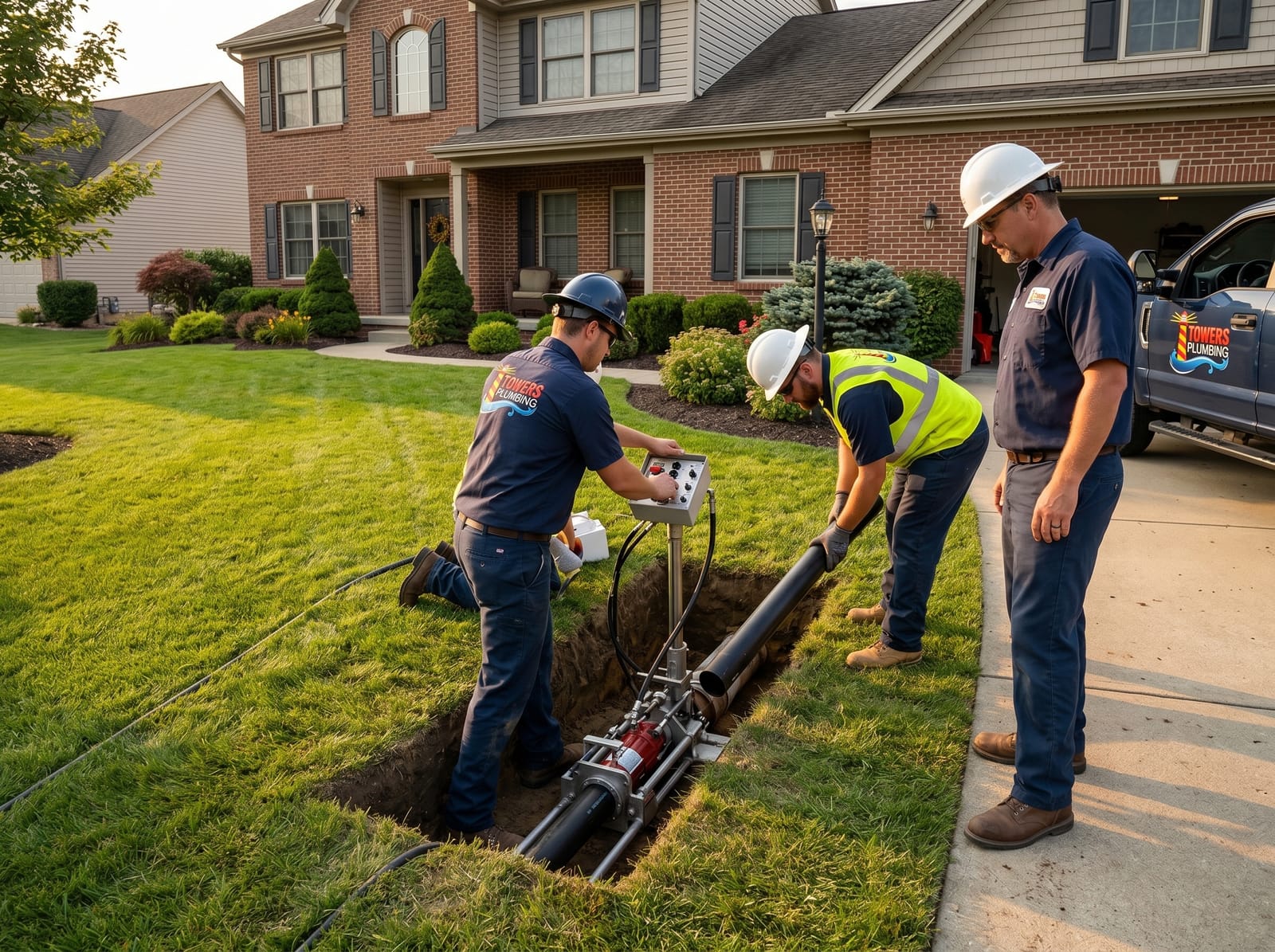
Late July is peak patio season in Holladay, and a grill that runs without propane tank swaps is a tempting upgrade, as is a fire pit that lights with the turn of a knob. Each one needs an outdoor gas line: buried piping that carries gas from your home's system to the patio. Here is what a proper installation involves, and where Towers Plumbing fits in for homes in Holladay.
Why an Undersized Gas Line Starves a Grill or Fire Pit
Gas loses pressure as it moves through pipe. Friction along the pipe walls takes a little with every foot, and each elbow and fitting takes more, so a longer run carrying more gas loses more pressure. An outdoor gas line that is too small for its load delivers less gas than the appliance is rated to burn.
So sizing starts with the total load, not just the new grill. The Utah Fuel Gas Code sizes piping on the combined maximum input of every appliance it serves, as if all ran at full capacity at once. A patio branch may share pipe with the furnace, water heater, range and dryer.
When supply falls short, flames look short and weak, the grill is slow to heat, and a fire pit flame may drop when another appliance fires. Matching pipe size and length to that load is the core of gas line services work.
Burial Depth, Pipe Type and Tracer Wire
Most outdoor gas line runs go underground, and Chapter 4 of the code is specific. Underground piping must sit at least 12 inches below grade. A single line to an outdoor light, grill or other appliance may be allowed at 8 inches, but only where it is approved and not likely to be damaged.
- Coated steel: buried steel needs corrosion protection, such as a factory-applied insulating coating. The code says galvanizing alone does not count.
- Plastic pipe: polyethylene gas pipe is allowed outdoors and underground only, not inside or under a building or slab. It comes above ground through an anodeless riser.
- Tracer wire: an electronic locator cannot detect plastic pipe by itself, so the code calls for a yellow insulated copper tracer wire or other approved conductor beside it.
The trench bottom should be graded so the pipe rests on firm, even soil. Some July afternoons bring monsoon storms that turn an open trench to mud, so avoid long gaps before backfill. That digging falls under excavation work.
Shutoff Valves and Connections at the Appliance
At the end of the outdoor gas line, each appliance needs its own shutoff valve. The code places it within 6 feet of the appliance, with access, and upstream of the connector or quick-disconnect it serves.
A rolling grill usually connects through a quick-disconnect fitting and a hose connector listed for outdoor use. Whatever the connection, the appliance must match the fuel. A propane grill has orifices and a regulator sized for propane, so it needs a conversion kit approved by its maker, or a natural gas model.
Chapter 6 of the Utah Fuel Gas Code also calls for permanently installed grills to be listed, and for fixed fire pits to be listed as outdoor decorative appliances. Both go in per the maker's instructions, which set clearances to the house and overhangs.
Blue Stakes, Permits and Inspection
Before any trench is dug, underground utilities need marking, which in Utah means contacting Blue Stakes through 811 or online. The Blue Stakes of Utah FAQs say to submit the request no later than three business days before digging, and the party doing the digging submits it.
Operators mark only the lines they own, usually up to the meter. Private lines, such as sprinkler pipes or power to a lamppost, may not be marked.
Permits come next. The Holladay Building Division FAQ lists gas plumbing installations among the work that requires a permit. A typical job then runs in this order:
- Locate and plan: mark utilities, confirm the load and pick the route.
- Trench and lay pipe: set the pipe, riser and tracer wire.
- Test and inspect: the code requires new piping to be inspected and pressure tested before use.
- Backfill and connect: close the trench, connect the appliance and leak check each joint.
What You Can Check Safely Before Work Starts
You can do useful homework without touching a single gas fitting.
- Fuel type: confirm whether the grill or fire pit is built for natural gas or propane.
- Input ratings: find each appliance's BTU per hour rating on its rating plate or in its manual, indoor appliances included.
- Distance: measure roughly from where gas piping leaves the house to the patio spot.
- Private lines: map sprinkler lines, valve boxes and lighting wires, since 811 marking may skip them.
- Placement: read the manual's clearance section before choosing a spot near the house or a pergola.
- Existing line: if a gas line already reaches the yard, note where it leaves the house. Leave its valve alone.
A Holladay Scenario You Might Recognize
Picture a family in Holladay whose built-in grill has run on its own gas line for a few summers. This year they add a fire pit, teed into the same buried line. Now, with the grill on high and the fire pit lit, the grill takes far longer to heat. Its flames look short and soft, and the fire pit flame sinks when the water heater fires inside.
Each appliance works fine alone, so the pattern points to supply, not a bad burner. The branch was likely sized for the grill only, and the added fire pit pushes demand past what that pipe can carry over its length.
A licensed tech would compare the total load to the pipe size and length, then check pressure with everything running. A failing regulator or kinked connector can mimic these symptoms, and that pressure check tells them apart.
Safety Notes
- Gas smell: get everyone outside, then call 911 or the gas utility's emergency line from outside.
- Damaged line while digging: get everyone outside and away from the area, then call 911 or the gas utility's emergency line from outside.
- No DIY gas work: cutting, joining, burying or testing gas piping belongs with a licensed professional, even for a short run.
- No flame testing: leak checks use a gas detector or leak detection fluid brushed on each joint, not a match or lighter.
- Dig only after marking: wait for Blue Stakes marks, and remember private lines may not be marked.
- Keep the valve reachable: do not bury the appliance shutoff under pavers, mulch or patio furniture.
When to Call a Professional
Every outdoor gas line is a job for a licensed professional, from sizing through the final leak check. Call before you buy an appliance if you are not sure the house piping can carry another load, or if the patio spot means a long run.
Call as well if an existing grill or fire pit shows weak flames or slow heating, or if a shovel or fence post may have struck a buried line, even if nothing smells wrong.
Towers Plumbing runs and tests gas piping for outdoor appliances and handles the trench when one is needed, so the load check, burial depth, valve and pressure test are covered before the first flame is lit.
Frequently Asked Questions
How deep does an outdoor gas line need to be buried?
The Utah Fuel Gas Code sets 12 inches below grade for underground gas piping. A single line to one outdoor appliance may be approved at 8 inches where it will not be damaged. The inspector has the final word.
Can plastic pipe be used for a gas line to a fire pit?
Yes, outdoors and underground only, with tracer wire laid beside it so it can be located later.
Do I need a permit for a gas grill or fire pit line in Holladay?
The city's building division lists gas plumbing installations among the work that requires a permit. Your installer should confirm it and plan the inspection so the pipe is seen before backfill.
Can I run the line myself?
Gas piping is not a DIY job. Sizing, joints, burial, pressure testing and the final leak check all carry code requirements.
Planning Your Outdoor Gas Line Project
First, gather a few details. List each appliance you want on the patio, now or later, with its fuel type and BTU per hour rating. Measure the rough distance from the house, and sketch any sprinkler lines or lighting wires in the way.
Note whether you want a quick-disconnect for a rolling grill or a fixed connection, and take photos of where gas piping leaves the house.
Then reach Towers Plumbing through our contact page. With that list, a technician can size the outdoor gas line for the full load, plan the route and line up the marking, permit and inspection steps.