
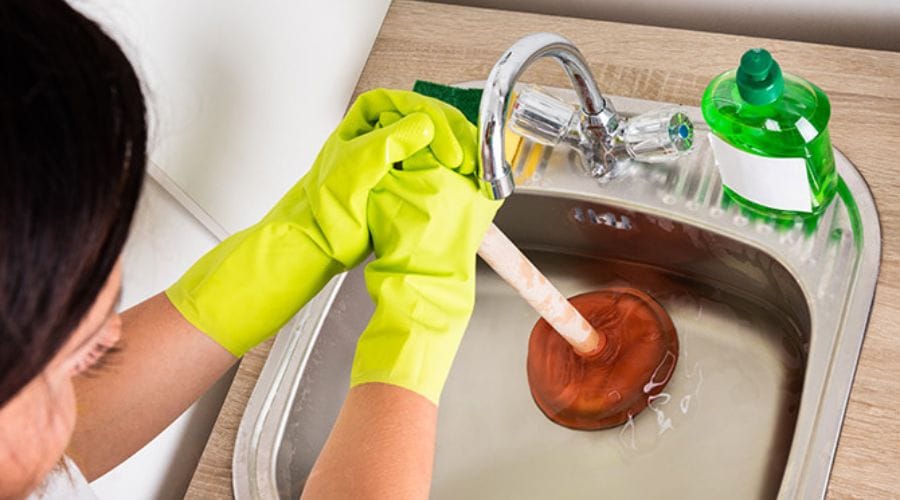
A kitchen drain clog in Orem rarely starts on the day the sink backs up. It builds for months, one pan of bacon grease and one pot of pasta at a time. Late summer often adds to the load, as grilling and home canning send more drippings and peels toward the sink. Here is what happens inside the pipe and what you can check safely.
How Grease and Food Waste Build a Kitchen Drain Clog
Fats, oils and grease go down the drain as warm liquids, so they seem harmless. As the water cools in the trap arm and the branch drain inside the wall, the fat firms up and clings to the pipe.
That greasy film works like flypaper. Starchy scraps such as pasta, rice and potato peels swell with water and turn to paste. Coffee grounds and bits of eggshell do not dissolve, so they settle in the trap and in low spots. Each layer catches the next, and the opening narrows until water drains slowly, then stops.
The EPA lists fats, oils and grease among the materials that create blockages in sewer systems. The same process plays out inside a home's kitchen line, which is why a kitchen drain clog tends to return when only its center gets opened.
How the Disposal and Dishwasher Feed the Problem
A garbage disposal grinds food into small particles, but it does not make them disappear. Those particles still need enough water to carry them through the trap. Feeding a full bowl of peels at once, or grinding with a trickle of water, leaves a thick slurry in the pipe.
One manufacturer's guide says to grind with a moderate flow of cold water, keep it running a few seconds afterward, and never pour grease or fat into the disposal or drain. If your unit hums, leaks or jams often, our garbage disposal service can repair or replace it.
The dishwasher usually drains through the same pipe. The Utah plumbing code, Section 409.4, lets its waste line connect to the disposal's dishwasher inlet or a wye fitting on the sink tailpiece, with the hose rising to fasten under the countertop or sink rim.
When the shared line below is blocked, dishwasher water can only go up into the sink. Our kitchen plumbing team can correct a poor connection.
What You Can Check Safely at the Sink
The pattern of affected drains shows where the blockage sits.
- One basin is slow: the clog is likely in that side's tailpiece or the disposal.
- Both basins back up: most double sinks share one P-trap and trap arm, so the blockage is there or past it.
- Other fixtures back up too: if a basement floor drain overflows, the main line is the likely problem.
Then try these steps, with no chemicals:
- Test the disposal: run it with water on. The manufacturer's guide notes that a whirlpool that will not go down points to a clogged line past the unit.
- Plunge with the other side sealed: stopper the second basin, add a few inches of water, and work a cup plunger over the drain.
- Clean the P-trap: set a bucket under it, loosen the slip nuts by hand, and rinse out the trap.
If the trap comes out clean and water still will not drain, the kitchen drain clog sits in the wall or beyond it.
An Orem Scenario You Might Recognize
Picture a family whose double sink has drained a little slower each week since early summer. After a weekend of grilling and canning peaches, the problem jumps. Every time the dishwasher pumps out, gray water with bits of food rises in both basins and takes an hour to go down. The disposal spins and makes a whirlpool, plunging helps for a day or two, and the bathroom sinks drain normally.
Water filling both basins points past the shared trap. A disposal that spins rules out a jam. Normal drains elsewhere make a main sewer problem less likely. The slow decline fits grease and starch layering in the trap arm or branch line. This kitchen drain clog needs the pipe cleaned, not just poked open.
Snaking vs Hydro Jetting for Grease
Two tools clear most kitchen lines, and they work differently.
- Cable machine (snake): a spinning steel cable with a cutting head goes in through the trap arm or a cleanout. It bores a channel through the blockage and restores flow quickly. On heavy grease, it may leave the waxy coating behind, so the line can slow again.
- Hydro jetting: a hose with a special nozzle sprays water at high pressure. Rear-facing jets pull it along the pipe while they scour the walls, washing grease and sludge out instead of piercing them.
The right choice depends on the pipe's material, age and access. A technician may run a camera first, since older or damaged pipe can call for a gentler method. Towers Plumbing offers standard drain cleaning for most clogs, and hydro jetting is the step up when grease has coated the line.
Safety Notes
- Skip chemical drain openers: they sit in the standing water above a clog, can harm older pipes and plastic parts, and make the next trap removal hazardous.
- Never mix drain products: combining two cleaners, or plunging after pouring one in, can splash harsh chemicals back at you.
- Cut power to the disposal: switch it off before working near it, and keep hands out of the grinding chamber.
- Put a bucket under the trap: a P-trap holds dirty water that spills when the nuts come loose.
- Snug plastic slip nuts by hand: overtightening can crack a nut and start a leak.
- Wear gloves and eye protection: trap water is dirty and tends to splash.
- Stop running water if other drains back up: more water only adds to the backup.
When to Call a Professional
Some clogs sit past the reach of a plunger. Call a plumber in these situations:
- The trap is clean but the sink still fills: the blockage is in the trap arm or the branch line.
- The clog keeps coming back: a kitchen drain clog that returns within weeks usually means grease still coats the pipe.
- Water rises somewhere else: a floor drain or tub filling as the kitchen drains points to the main line.
- A chemical opener is already in the sink: tell the technician before any work starts.
Towers Plumbing handles this work for homes across Orem and nearby communities. A technician can find the blockage, clear it with the right tool, and look over the dishwasher connection during the same visit.
Prevention Habits for a Clear Kitchen Drain
A few small habits keep grease and food from building up again:
- Contain the grease: pour cooled grease and pan drippings into a lidded container and put it in the trash.
- Wipe before washing: wipe greasy pans with a paper towel before they go in the sink or dishwasher.
- Compost what you can: the EPA's home composting guide lists fruit and vegetable scraps, coffee grounds and crushed eggshells as compost material, and it lists fats, oils and grease among the things to keep out of a backyard pile.
- Use sink strainers: a basket strainer catches rice, seeds and peel scraps.
- Feed the disposal slowly: add scraps a little at a time with cold water running.
Frequently Asked Questions
Will hot water and dish soap flush grease out of the drain?
Only for a short distance. Hot water melts the grease and soap breaks it up, but both cool and thin out farther down the line. The fat then firms up again in a spot that is harder to reach.
Is a chemical drain cleaner safe for a kitchen drain clog?
It is a poor choice. Grease clogs sit under standing water that dilutes the product, and a chemical that fails to clear the line leaves a hazard for whoever opens the trap next. Plunging, cleaning the trap or professional drain cleaning are safer paths.
Why does dishwasher water come up in my sink?
The dishwasher drains through the disposal or the sink tailpiece. When the line below is clogged, its discharge has nowhere to go but the sink basin. A clogged countertop air gap can also spill water from its cap.
Getting Your Kitchen Drain Clog Cleared
Before you reach out, note whether one basin or both back up, and whether it happens mainly when the dishwasher drains. Check whether any other sink, tub or floor drain has acted up. List what went down the drain recently, such as grease, rice or a batch of peels, and whether anyone used a chemical opener.
Then share those notes through the contact page to schedule a visit. With that information in hand, a technician can go straight to the likely trouble spot, confirm it, and explain whether snaking or hydro jetting fits your line before work begins.