When a gray haze settles over the Wasatch Front for days at a time, inversion season in Murray has arrived. Outdoor air quality drops, and many families wonder how much of that haze gets inside. The answer depends on how your home is sealed, how your furnace moves air, and which filter sits in its slot. Here is what reaches indoors, how filters and air purifiers help, and where airflow limits come in.
How Inversions Push Fine Particles Into Your Home
Normally, air near the ground is warmer than the air above it, so it rises and mixes. The Utah Division of Air Quality explains that an inversion flips this, trapping cold air under a warmer layer. Calm winds, clear skies, long nights and snow cover all help set it up. Pollution from vehicles, wood burning and industry then builds near the ground. The agency notes that a typical Utah winter brings about five to six multi-day inversion episodes.
Much of that pollution is PM2.5, which the EPA's particulate matter basics page defines as particles 2.5 micrometers and smaller. Bath fans, the range hood and the dryer push air out, and replacement air leaks back in around doors, windows and attic openings. Each time the front door opens during inversion season, more outdoor air slips inside.
Filter MERV, Fit and Airflow: What Your Furnace Filter Catches
Your furnace filter only works while the blower runs. The EPA Guide to Air Cleaners in the Home says heating and cooling systems usually run less than 25% of the time during those seasons. Setting the thermostat fan to "on" moves more air through the filter, though the blower uses more electricity.
The EPA explainer on MERV ratings says MERV measures how well a filter captures particles from 0.3 to 10 microns. For inversion season, EPA suggests at least MERV 13, or as high as your system fan and filter slot can accommodate.
A filter should sit snugly with no gap around it, and it should not be bent or crushed to fit. A denser filter also adds resistance, and a 1-inch high-MERV filter in a small slot can starve the blower of air. Air filter replacement with the right size and rating keeps airflow in balance.
Whole-Home Air Purifiers, UV Lights and Portable Units
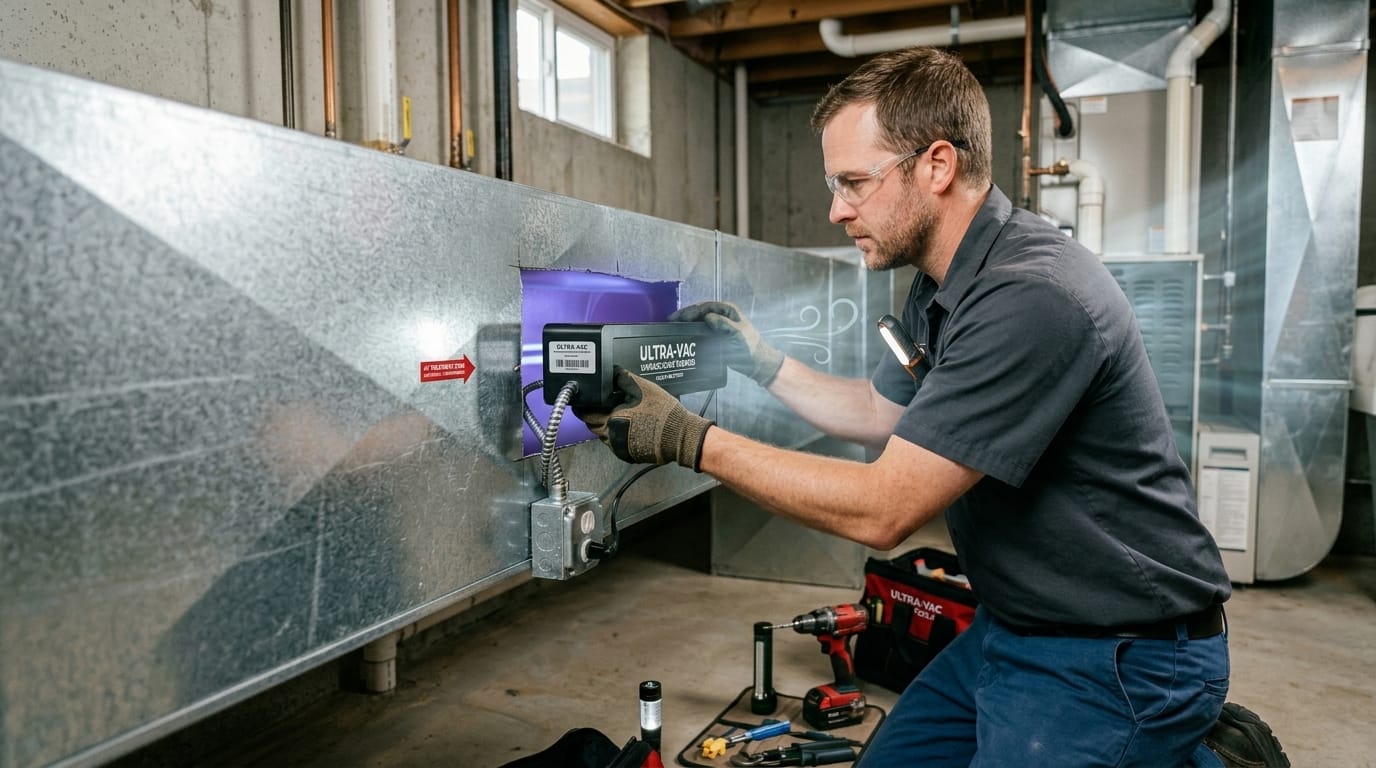
A whole-home air purifier works inside the ductwork, treating the air your system sends to every room. Common setups include a deeper media filter cabinet, a HEPA bypass unit or an activated carbon stage for odors. These clean air only while the blower runs. Towers Plumbing offers air purifier installation matched to your system's airflow.
A UV lamp near the evaporator coil targets microbial growth on the coil and in the air stream. It is not a particle filter, so on its own it does little for inversion haze. EPA's guide notes that some UV lights without adequate lamp coatings may emit ozone, which its page on ozone-generating air cleaners calls a lung irritant.
A portable air cleaner treats one room. EPA advises choosing one with a clean air delivery rate, or CADR, large enough for that room. It works well in a bedroom, while a whole-home system covers the rest of the house.
Keeping the House Closed on Red-Air Days
During inversion season, Utah's air quality forecast shows the daily outlook and action level. On the AirNow Air Quality Index scale, red means Unhealthy, an index value of 151 to 200. On red-air days, keep doors and windows closed and plan errands so the front door opens less often. Hold off on wood fires and candles, since both add particles indoors.
Cooking adds particles too, so run a range hood that vents outside while you cook, then shut it off. A sealed-up house in deep winter also gets very dry once the furnace runs for hours. Dry air can open gaps in wood floors and cause static shocks. A whole-home humidifier adds moisture through the ductwork. Aim for moderate humidity, because too much can leave condensation on cold window glass.
What You Can Check Safely at Home
A few quick checks show whether your system is doing its part this inversion season. Set the thermostat to off before you open the filter door.
- Filter size: compare the size printed on the frame to the slot. A filter that is too small leaves a gap for air to bypass it.
- Airflow arrow: the arrow on the frame should point toward the furnace.
- Filter condition: a gray, clogged surface means it is due. EPA notes that manufacturers typically recommend replacement every 60 to 90 days.
- Filter door: make sure the cover is in place, since an open slot pulls in unfiltered air.
- Return grilles and registers: keep them clear of furniture and rugs.
- Portable units: check their filters and keep them away from curtains.
A Murray Scenario You Might Recognize
Picture a family in Murray whose home sits under a week-long inversion. They swap in a high-MERV 1-inch filter, hoping for cleaner air. Within days, the furnace runs in short bursts, and the far bedrooms stay cooler. A faint whistle comes from the filter door, and fine dust still collects on shelves.
That pattern points to two problems at once. The dense filter restricts airflow, so the heat exchanger can run hot and trip the high-limit switch, which shuts the burners off early. Meanwhile, the whistle suggests air is squeezing through a gap in the slot and bypassing the filter.
Sorting out both usually starts with a correctly sized filter, a sealed filter door and a static pressure check. A deeper media cabinet can then add filtration without choking the blower.
Safety Notes
- Power down first: set the thermostat to off before changing a filter or opening a furnace panel.
- Do not run without a filter: unfiltered air carries dust straight onto the blower and the evaporator coil.
- Skip ozone generators: EPA says no federal agency has approved ozone generators sold as air cleaners for occupied spaces.
- Gas smell or carbon monoxide alarm: get everyone outside, then call 911 or the gas utility's emergency line from outside.
- No heat on a cold night: if the furnace stops completely, treat it as urgent and review the National Weather Service cold safety page.
- Keep the furnace area clear: do not store boxes, paint or cleaners near the furnace or water heater.
- Mind portable units: keep cords out of walkways and keep the intake and outlet unblocked.
When to Call a Professional
Call a technician before moving to a thicker or higher-MERV filter if you are unsure your system can handle it. EPA notes that most systems can accommodate a MERV 13 filter when it is changed often. A technician can confirm that, measure static pressure, and modify the system if needed.
Other signs also point to a service visit this inversion season:
- The furnace short cycles or shuts off before the house warms up.
- A filter bows, collapses or gets pulled out of its slot.
- Dust returns quickly after a fresh filter goes in.
- Some rooms get much less airflow than others.
- You want a whole-home air purifier or humidifier added.
Towers Plumbing can check filter fit, airflow and duct connections, then explain your options before any work begins.
Frequently Asked Questions
Is MERV 13 too restrictive for my furnace?
Often it is not, but it depends on the blower and the filter slot. EPA says most systems can handle MERV 13 if the filter is replaced often. A deeper 4-inch or 5-inch filter usually adds less resistance than a 1-inch filter with the same rating.
Should I run my furnace fan all the time during inversion season?
Setting the fan to "on" increases filtration but uses more electricity. One middle path is to switch it to "on" only on red-air days.
Does a UV light clean inversion haze from the air?
No. A UV lamp targets microbes, not particles. Filtration is what captures particles, in the furnace or in a portable unit.
Plan Your Inversion Season Air Upgrade in Murray
Before you call, gather a few details. Note the size and MERV rating printed on your current filter and how thick the slot is. Write down how often you change it and whether the thermostat fan runs on "auto" or "on." List any rooms that feel stuffy, dusty or cooler than the rest, and note any portable air cleaners you use.
You can also read about local service on our Murray service area page. Then reach Towers Plumbing through our contact page to talk through filter upgrades, a whole-home air purifier or a humidifier. With your notes in hand, a technician can check how your system handles airflow and suggest options that fit your home before the next inversion rolls in.