
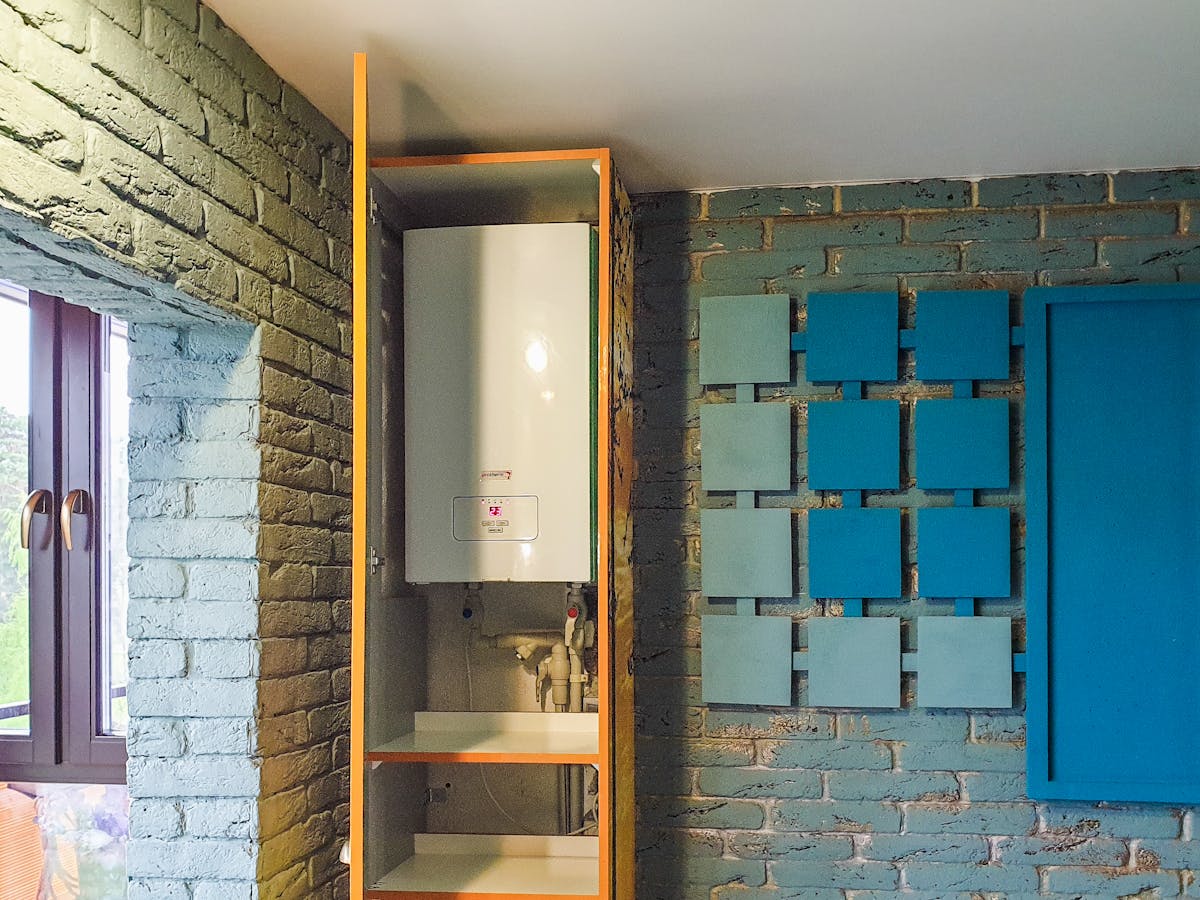
A heat pump water heater warms water by moving heat out of the surrounding air, instead of burning gas or running an element all day. For a Herriman home, that raises fair questions. Is the basement big enough? Where does the condensate go? What happens in a cold garage in January? This guide covers how these hybrid units work, what they need from a room, and how Utah winters affect them, so you can judge the fit before your current tank gives out.
How a Heat Pump Water Heater Moves Heat
Picture a refrigerator running in reverse. Instead of pulling heat out of a box, a heat pump water heater pulls heat out of the room and pushes it into the tank water, as ENERGY STAR's explainer on how these units work describes. The same principle runs an air-source heat pump that heats and cools a home.
A fan draws room air across the evaporator coil, where cold refrigerant absorbs heat. The compressor squeezes the refrigerant, which raises its temperature, and a condenser coil hands that heat to the water. An expansion valve drops the pressure, and the loop repeats. During heavy hot water demand, backup electric elements take over, which is why these units are often called hybrids.
Because the heat comes from the room, the space gets a little cooler while the unit runs. As air cools across the evaporator coil, moisture condenses on it, so the unit also dries the room slightly.
How Much Space and Air It Needs
ENERGY STAR's buying guidance suggests about 1,000 cubic feet of air space, in an interior room that stays between 40 and 90 degrees Fahrenheit year-round. Its installer best-practices guide is more flexible. It says most 240-volt models need at least 700 cubic feet, and some need as little as 450.
To picture 700 cubic feet, think of a room 10 feet by 10 feet with a 7-foot ceiling. The guide says a closet can work with a fully louvered door, and manufacturers sell venting kits for tighter spots. A small closet behind a solid door starves the unit of warm air.
On all-in-one models the fan and compressor sit on top of the tank, so check the height of the space too. The installation manual for the exact heat pump water heater you choose has the final word on these numbers.
Condensate, Noise and Electrical Needs
Water that condenses on the evaporator coil needs a path out. The Building America code compliance brief says it must be routed to a drain, with a condensate pump when gravity drainage is not possible. The condensate is non-acidic, so it needs no neutralizer. Chapter 28 of the Utah residential code also calls for a drain pan under a tank-type water heater wherever a leak would cause damage.
The fan and compressor hum while they run. The same brief puts typical noise at about 45 to 60 decibels, depending on the model. The ENERGY STAR installer guide suggests a rigid foam base and isolation pads to cut vibration.
For power, the guide says a 240-volt unit typically uses a 30-amp breaker and 10-gauge wire, like a standard electric tank. Replacing a gas tank may mean adding a circuit, which is electrician work. Plug-in 120-volt models exist for gas replacements, but they can need a larger tank and more air space.
Cold Basements and Garages in Utah Winters
This is the question that matters most in northern Utah. Heat pumps lose capacity as the air around them cools. The Building America brief notes that a unit in a cold-climate garage has a harder time keeping up in heat-pump-only mode. ENERGY STAR adds that with colder surroundings and colder incoming water, the unit may rely on its backup electric elements for a while.
A basement mechanical room shared with the furnace is often the strongest spot, and ENERGY STAR suggests a room with extra heat, such as a furnace room, when possible. The brief describes only a minor increase in winter heating load for units inside the home.
An attached garage is a harder call. On the coldest nights, some garages drop below the suggested range, and the heat pump water heater leans on its electric elements until the space warms. The installer guide favors spaces that typically stay above freezing.
What You Can Check Safely Before You Decide
A tape measure and a flashlight cover most of it. None of these checks involve opening panels, touching wiring or draining the tank.
- Room volume: multiply length, width and ceiling height in feet, then compare the result to the figures above.
- Winter temperature: place a thermometer in the space this winter and note the lowest morning reading.
- Drain access: look for a floor drain, laundry standpipe or utility sink close by.
- Current tank label: find the gallons and fuel type on the nameplate or the yellow EnergyGuide label.
- Noise neighbors: note any bedrooms or offices that share a wall with the space.
- Breaker label: check whether the panel directory lists a water heater breaker, without removing the cover.
A Herriman Scenario You Might Recognize
Picture a family whose electric water heater is getting old, in a basement mechanical room shared with the furnace. They want a heat pump water heater, but a home office sits on the other side of the wall. The room measures about 9 by 11 feet with an 8-foot ceiling, and it has a solid door and a floor drain.
That pattern points to a promising spot with a few open questions. At about 790 cubic feet, the room clears the 700-cubic-foot mark in the installer guide. It falls short of the broader 1,000-cubic-foot suggestion, so the exact model's requirement decides it. A louvered door would add air. The furnace adds winter warmth, and the floor drain can take condensate by gravity. Noise comes down to the model, isolation pads and placement against that shared wall.
Safety Notes
- Gas, smoke or burning smell: get everyone outside, then call 911 or the gas utility's emergency line from outside.
- Electrical work: leave new circuits, wiring and panel covers to a licensed electrician.
- Before any service: switch off the water heater's breaker and follow the manual, even for a filter cleaning.
- Relief valve: do not cap, plug or adjust the temperature and pressure relief valve or its discharge pipe.
- Refrigerant: the sealed system is for certified technicians, per EPA Section 608 technician certification rules.
- Water in the pan: a wet pan can mean a clogged condensate line or a tank leak, so switch the unit off and schedule service.
When to Call a Professional
Call before you buy, not after the old tank fails. ENERGY STAR advises planning ahead of an emergency, since the right model may need to be ordered and the install can take longer than a standard tank. Late summer, with the heating season still ahead, is a sensible time to start.
Call sooner if an existing unit shows any of these signs:
- Leaks: water around the base of the tank or sitting in the drain pan.
- Unexpected mode: an error code, or electric-only operation you did not select.
- New sounds: a rattle, grinding or a much louder hum.
- Short supply: hot water running out sooner than it used to.
Towers Plumbing offers water heater repair and installation, including water heater service in Herriman. If the room is too small or too cold, a tankless water heater or a standard tank may fit better.
Frequently Asked Questions
Will a heat pump water heater make my basement cold?
It cools the room somewhat while it runs. The Building America brief describes only a minor increase in winter heating load, and a furnace room helps offset it.
Can a hybrid water heater go in a Herriman garage?
It can if the garage stays above freezing, ideally within the range ENERGY STAR suggests. In a colder garage, expect more reliance on the electric elements in winter.
How loud is a heat pump water heater?
Typical models run about 45 to 60 decibels, according to the Building America brief, so keep one away from bedrooms when you can.
Does it need a drain?
Yes. Condensate from the evaporator coil must reach a floor drain, a laundry drain or a condensate pump.
Planning Your Next Step
Before you reach out, note a few details:
- Tank details: current size, fuel type and age from the label.
- Room size: length, width and ceiling height of the space.
- Drain location: the nearest drain and its distance from the tank.
- Photos: the space, the door and the breaker label.
With those notes in hand, use the Towers Plumbing contact page to request a visit and talk through whether a heat pump water heater fits your home.