
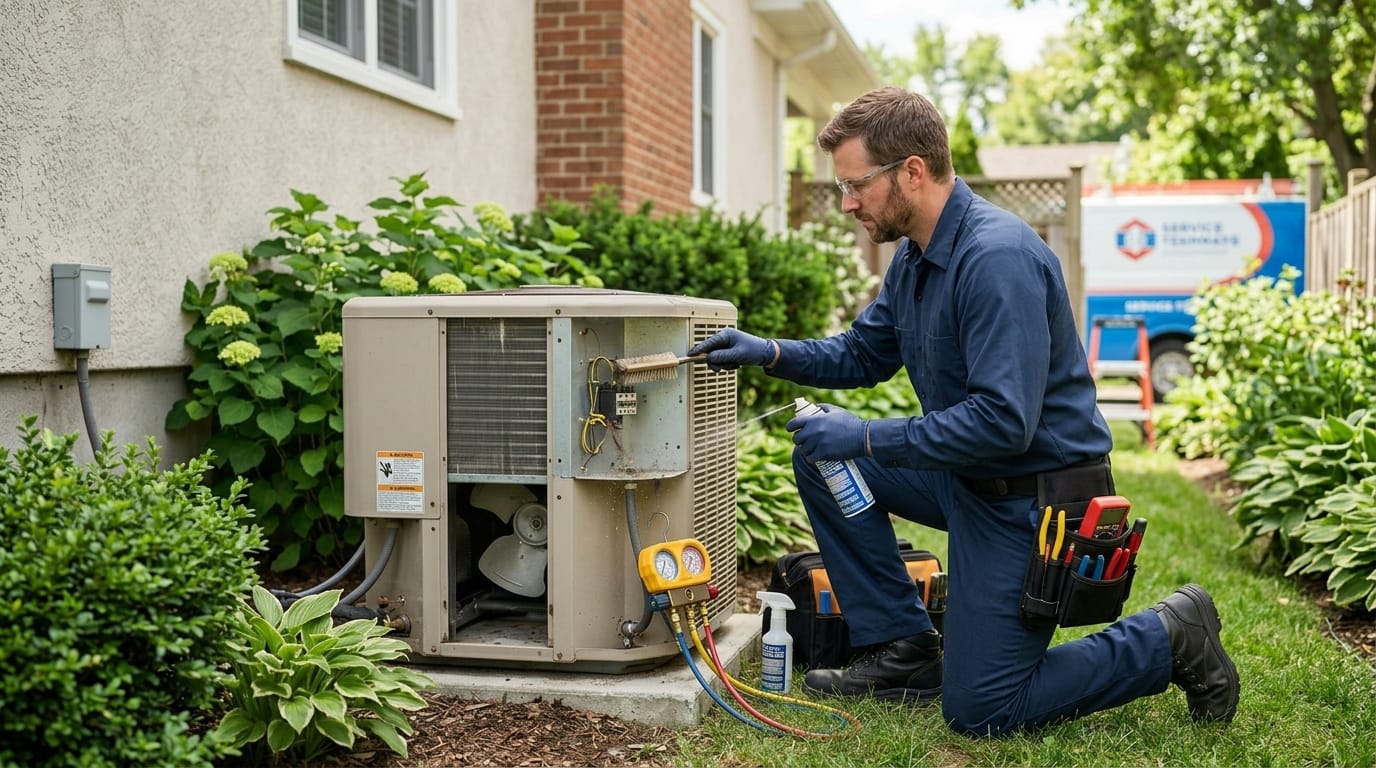
When a January cold snap settles over Lehi, a heat pump can act in ways that look like trouble. The vent air feels cooler than a furnace, the outdoor unit puffs steam, and the thermostat shows "AUX." Often that is normal. Sometimes it is a heat pump not heating the way it should. Here is how to tell the difference and what to check first.
How a Heat Pump Pulls Heat From Cold Air
A heat pump does not burn fuel. It moves heat. In heating mode, the refrigerant in the outdoor coil is colder than the outside air, so it absorbs heat even on a freezing day. The compressor squeezes that refrigerant, raising its temperature, and sends it to the indoor coil in the air handler. The blower pushes house air across that coil and into the ducts.
A four-way reversing valve sets which way the refrigerant travels. As the outdoor air gets colder, there is less heat to collect, so output drops just as the house needs more. That gap is why most Utah systems carry backup heat: electric heat strips in the air handler, or a gas furnace in a dual-fuel setup.
Normal Winter Behavior That Feels Like a Problem
A furnace sends short bursts of hot air. A heat pump delivers a longer, steady stream that is warm but not hot. That air is close to skin temperature, so it can feel cool on your hand while it warms the room.
Defrost is the other surprise. Moisture freezes on the cold outdoor coil, and one manufacturer's defrost guide explains that the reversing valve briefly shifts the system into cooling mode to melt it. During a cycle you may notice:
- Steam: a cloud rising from the outdoor unit.
- Sound: a whoosh as refrigerant changes direction, and a pause in the outdoor fan.
- AUX on the thermostat: backup heat covering the house during defrost.
The same guide notes that some dual-fuel homes may feel cool vent air during defrost. A heat pump not heating for a few minutes, then recovering, is usually just this cycle.
Signs of a Heat Pump Not Heating Because of a Fault
A true fault persists or gets worse:
- Stuck reversing valve: the outdoor unit runs, but the vents blow cool air nonstop. A valve or solenoid stuck in the cooling position pulls heat out of the house.
- Ice that never clears: thick ice on the coil or on top of the unit points to a failed defrost board, a bad coil sensor, a stopped outdoor fan, or roof melt dripping and refreezing.
- Low refrigerant charge: a heat pump is a sealed system, so low charge means a leak. Expect weak heat, long run times and patchy frost.
- Misconfigured thermostat: a thermostat set up for a furnace, or with the O/B setting reversed, can cool when it should heat.
Another manufacturer's guide lists dirty coils, faulty sensors and low refrigerant charge among the causes of excessive defrosting. If a new thermostat preceded the trouble, a thermostat installation visit can confirm the heat pump settings.
Aux Heat, Emergency Heat and Dual-Fuel Setups
Aux heat is automatic: the thermostat adds it when the heat pump cannot keep up, during defrost, or after a big jump in the setpoint. Emergency heat is a mode you choose. It shuts off the compressor and runs the house on backup heat alone, mainly for a damaged or iced-over outdoor unit.
In a dual-fuel system, a gas furnace is the backup, and a control switches to it below a set outdoor temperature called the changeover point. Set poorly, it can run the furnace more than needed or leave the heat pump struggling alone.
ENERGY STAR's air-source heat pump guide says certified cold-climate models are tested at 5°F, and pairing one with backup heat works best when it gets colder. If the furnace half of a dual-fuel pair is aging, furnace installation can be planned around the heat pump.
What You Can Check Safely
Before assuming a heat pump not heating has a fault, start at the thermostat. Confirm it is set to Heat, not Auto or Cool, with the setpoint above room temperature. ENERGY STAR also advises against Auto mode and suggests holding one comfortable temperature. A deep setback forces a big recovery that can lean on backup heat.
- Filter: a clogged filter starves the indoor coil of airflow. Replace it if it looks gray or matted.
- Registers and returns: keep furniture and rugs off them.
- Outdoor unit: brush snow off the sides and top with a soft broom. That second guide recommends at least two feet of clearance.
- Breakers: look for a tripped breaker labeled for the heat pump or air handler. Reset it once, and if it trips again, leave it off.
- Defrost timing: if you catch a cycle, note how long the steam lasts and whether the coil comes out clean.
A Lehi Scenario You Might Recognize
Picture a family in Lehi whose heat pump seemed fine through December. A cold snap arrives, and each afternoon the house slips a little below the setpoint. The thermostat shows AUX almost all day. Outside, ice on the coil thickens between cycles, and the top of the unit is crusted over. The steam clouds that used to appear have stopped.
That pattern points away from normal defrost. The coil is icing faster than the system can clear it, or the system has stopped trying. A technician would test the defrost board, coil sensor and outdoor fan, then check refrigerant pressures for low charge. This is a heat pump not heating on its own while backup heat carries the house. Emergency heat takes the load off the iced unit until a technician can diagnose it.
Safety Notes
- Do not chip or pry ice: a screwdriver or ice pick can puncture the coil and release refrigerant.
- Clear snow gently: keep shovels away from the coil, because its thin aluminum fins bend easily.
- Keep hands out of the fan grille: the outdoor fan can start without warning when a defrost cycle ends.
- Leave refrigerant to certified technicians: refrigerant work requires EPA certification, covered below.
- Do not keep resetting breakers: a breaker that trips twice is telling you something is wrong.
- Burning smell or smoke from the air handler: get everyone outside, then call 911 from outside.
- Gas smell or a carbon monoxide alarm in a dual-fuel home: get everyone outside, then call 911 or the gas utility's emergency line from outside.
When to Call a Professional
Call when cool air lasts well beyond a normal defrost, when ice keeps building between cycles, or when AUX runs nearly nonstop on a mild day. Call as well if the outdoor unit sits silent while the indoor blower runs. If the house keeps losing heat during a cold snap, treat it as urgent. Ready.gov's winter weather page covers staying safe when the heat goes out.
Refrigerant problems need a certified technician. Under the EPA's Section 608 rules, anyone who attaches gauges or adds or removes refrigerant must hold Section 608 certification. Topping off a leak only buys time, so a sound diagnosis finds the leak first.
For a heat pump not heating after these checks, Towers Plumbing offers heat pump repair and maintenance for homes across Lehi, including dual-fuel systems.
Frequently Asked Questions
Why is my heat pump blowing cool air in winter?
If it lasts a few minutes and steam rises outside, the system is probably in defrost. Cool air that continues for a long stretch, with the outdoor unit running, suggests a reversing valve, refrigerant or thermostat problem.
Is it normal for a heat pump to run constantly in a cold snap?
Long run times are normal on the coldest days, because there is less heat outside to collect. The system should still hold the setpoint with help from backup heat. If the house keeps falling behind, it deserves a closer look.
Should I switch to emergency heat when it gets very cold?
Usually not. Aux heat already comes on automatically when needed. Emergency heat runs the house on backup heat only and is meant for a damaged or iced-over outdoor unit.
Next Steps for a Heat Pump Not Heating in Lehi
Before you call about a heat pump not heating, write down what you see. Note the thermostat mode and setpoint, whether AUX or EM appears, and how the vent air feels. Check the coil for light frost, heavy ice, or ice on top of the unit. Time a defrost cycle if you catch one, and mention any recent thermostat replacement or breaker trip. A photo of the outdoor unit helps too, especially if ice covers the top or sides.
Then reach Towers Plumbing through our contact page. With those notes in hand, a technician can separate normal cold-weather operation from a true fault, confirm the cause, and explain the repair before work begins.