
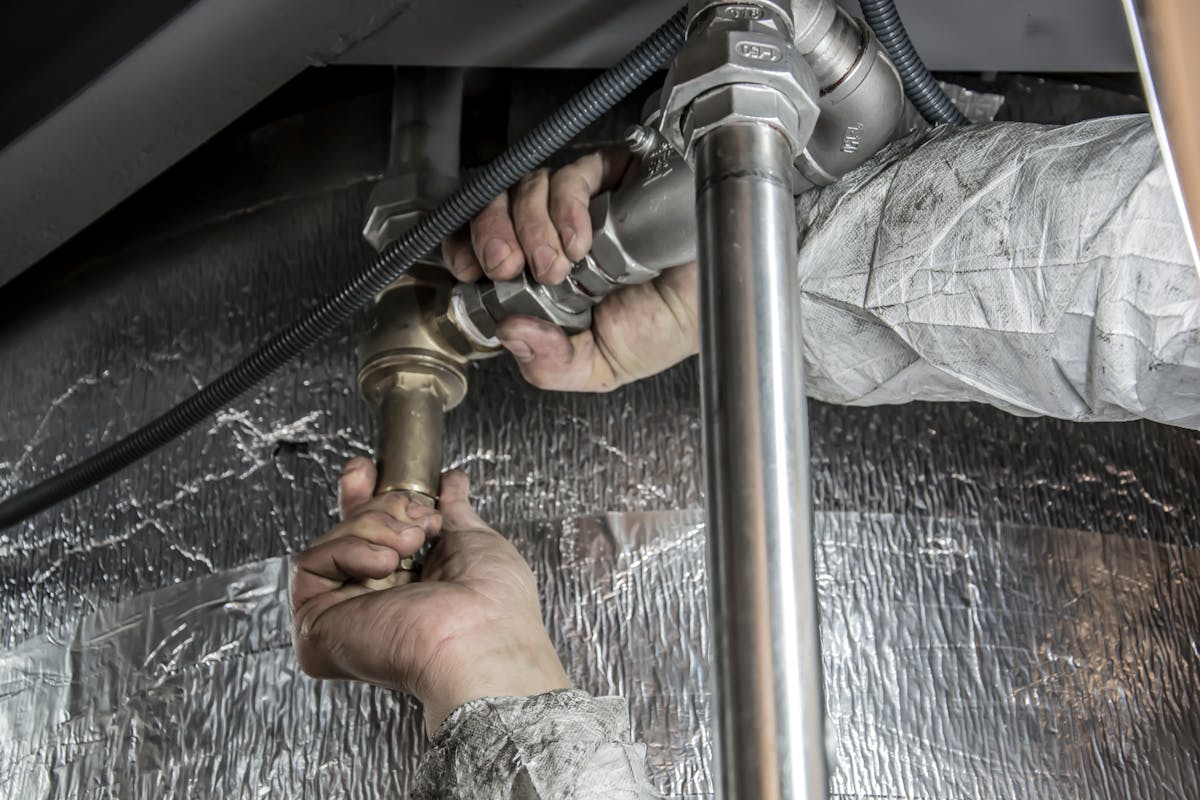
A new gas range looks like a simple swap: slide the old one out and slide the new one in. The part that matters is hidden behind it. A gas range hookup in Holladay joins your fuel gas piping to an appliance with an open flame. Here is what a safe connection includes, what the code expects, and what you can check yourself. Towers Plumbing does this work for homes in Holladay and across the Wasatch Front.
How a Gas Range Hookup Works, From Valve to Burner
Gas reaches the kitchen through rigid piping, often black iron or CSST, which is corrugated stainless steel tubing. That pipe ends at an appliance shutoff valve behind or near the range. From the valve, a flexible appliance connector runs to the range inlet, where a pressure regulator sets the pressure the burners need.
Most trouble starts at the flexible part. The connector bends every time the range is pulled out for cleaning, and the fittings at each end take that strain. A connector that is too long can kink when the range is pushed back. One that is too short pulls hard on its fittings.
Switching from electric adds a layer. The kitchen may have no gas outlet, so a new branch line has to be run and sized for the range. That is gas line services work, not a delivery task.
What the Fuel Gas Code Expects at the Connection
Chapter 4 of the 2021 International Fuel Gas Code covers the parts of a gas range hookup that matter most. Utah adopts that model code with amendments, as the Utah Fuel Gas Code 2021 shows.
- Shutoff valve: each appliance needs its own valve in the same room, within 6 feet. A valve behind a movable cooking appliance still counts as accessible.
- Connector type: a listed and labeled appliance connector, installed per the maker's instructions.
- Connector length and path: no more than 6 feet, one per appliance, and never run through walls, floors or ceilings.
- Connector size: it has to carry enough gas for the range's full demand.
- Sediment trap: the code calls for one ahead of many appliances but exempts ranges. The range's instructions and the local inspector still have the final word.
Leak Testing, Permits and Inspections
Every gas range hookup ends with a leak check. The code does not allow an appliance into service until its connections have been checked. Approved methods include a gas detector or a noncorrosive leak detection fluid brushed onto each joint, where growing bubbles mean gas is escaping. A match or lighter is not a leak test.
A new branch line gets more scrutiny. The code calls for pressure testing newly installed branches, and the joint where new piping meets old is checked with leak detection fluid or another approved method.
Permits and inspections are set by the local building department, not the appliance store. Running or extending gas piping is the kind of work that commonly needs a permit, while a like-for-like swap may be handled differently. Your installer should confirm what applies before gas work starts.
Venting and CO Alarms in a Closed-Up Winter House
Late February on the Wasatch Front usually means a sealed-up house. Windows stay shut through cold snaps, and some winters bring inversion days that make airing out the kitchen less appealing. That puts ventilation and carbon monoxide alarms in any gas range hookup plan.
A gas cooktop burns fuel inside your living space. The EPA page on nitrogen dioxide and indoor air quality lists gas stoves as an indoor source and recommends an exhaust fan vented outdoors over them. A recirculating hood catches grease but returns the air to the kitchen.
Carbon monoxide is odorless and colorless. The NFPA carbon monoxide safety page calls for CO alarms outside each sleeping area and on every level of the home, tested at least once a month.
What You Can Check Safely Before Installation Day
You can prepare for a gas range hookup without touching a single gas fitting.
- Confirm the fuel: check whether your home uses natural gas or propane, and whether the new range is set up for it.
- Measure the space: note the opening width and depth, plus any trim that could keep the range from sitting flush.
- Look for the valve: on many ranges the bottom drawer lifts out, which may reveal the valve and connector.
- Note the connector: if you see a dull, uncoated brass connector, do not slide the range out. The CPSC gas connector warning says moving the appliance, even slightly, can make an older weakened connector fail.
- Test your CO alarms: press the test button on each one.
For a bigger remodel, our kitchen plumbing team handles the sink and water side too.
A Holladay Scenario You Might Recognize
Picture a family in Holladay whose old gas range quits in midwinter. The new range arrives, the old connector is reattached, and the range is pushed back against the wall. One burner on high looks fine. But when the oven and two burners run together, the flames shrink and flutter.
That pattern points to a supply restriction rather than a bad burner. A connector that kinked when the range went back could starve the burners under full load. So could an older connector too small for the new range.
The reused connector is its own concern, since the CPSC says connectors should be replaced whenever the appliance is replaced or moved. A licensed tech would check the connector, valve and supply pressure. If anyone smells gas, get everyone outside, then call 911 or the gas utility's emergency line from outside.
Safety Notes
- Gas smell: get everyone outside, then call 911 or the gas utility's emergency line from outside.
- CO alarm sounding: get everyone outside, then call 911 or the gas utility's emergency line from outside.
- No DIY gas work: connecting, tightening or testing gas fittings belongs with a licensed professional.
- Leave old brass alone: do not move a range with an uncoated brass connector to look behind it.
- New appliance, new connector: the CPSC recommends replacing the connector whenever an appliance is replaced or moved.
- No flame testing: leak checks use a gas detector or leak detection fluid, not a match or lighter.
- Run the hood: use a range hood vented to the outdoors every time the cooktop is on.
When to Call a Professional
Call before delivery if the kitchen has no gas outlet, or if the shutoff valve is missing, in another room or hard to reach. Call as well if the existing connector is uncoated brass. Switching from electric also calls for a pro, since it means new piping sized for the load, pressure testing and a permit check.
After an installation, call if burners light unevenly, if flames look lazy and yellow instead of mostly blue, or if the oven struggles to heat. Those signs suggest the connection, the supply or the burner setup needs a closer look.
Towers Plumbing runs new gas lines for ranges and handles appliance hookups with proper shutoff valves. A professional gas range hookup covers the valve, the connector and the leak check before the first burner is lit.
Frequently Asked Questions
Can I do a gas range hookup myself?
Gas connections are not a DIY job. The connector, valve and leak check all carry code requirements, and a missed leak at a fitting can lead to a fire or explosion.
Can the old connector be reused with a new range?
The CPSC recommends replacing connectors whenever an appliance is replaced or moved, because connectors wear out from moving, bending and corrosion.
Does a gas range need a sediment trap?
The fuel gas code exempts ranges from its sediment trap rule. The range's instructions or the local inspector can still call for one, so follow what they require.
Does switching from electric to gas need a permit?
New gas piping commonly does, but the rules are set locally. Ask your installer to confirm with the building department before work begins.
Getting Ready for Your Gas Range Hookup
Before you reach out, jot down a few details. Note the new range's make and model, and whether it is set for natural gas or propane. Measure the opening. Note where the valve sits and what the connector looks like, but only if you can see them without moving the range.
Mention whether your hood vents outside and where your CO alarms are. If you are switching from electric, note where the nearest gas pipe runs. In many homes that is the basement, near the furnace or water heater.
Then reach Towers Plumbing through our contact page. With those notes, a technician can plan the valve, connector and leak testing before the new range arrives.