Early September is a smart time to test the heat in a Sandy home. If the furnace starts but never sends warm air, you are dealing with a furnace not igniting. The cause is usually one link in a short safety chain. Here is how that chain works, what you can check safely, and when to call.
How a Gas Furnace Lights: The Ignition Sequence
A modern gas furnace runs the same sequence every time the thermostat calls for heat. The control board first starts the inducer motor, a small fan that pulls combustion gases through the heat exchanger and out the vent. A pressure switch confirms that draft before anything else happens.
Next, the hot surface igniter heats until it glows orange. The gas valve opens, the burners light, and the flame sensor has a few seconds to prove the flame. Only then does the blower send warm air to the house. In one manufacturer's troubleshooting guide, the control closes the gas valve if flame is not proved, then makes up to three more tries before it enters ignition lockout.
A furnace not igniting has stopped somewhere in that chain, and where it stops tells a technician which part to test first.
Cracked Igniters and Dirty Flame Sensors
The hot surface igniter is a thin ceramic element that glows when current flows through it. Every heating cycle heats and cools it, and over time it can develop hairline cracks, then stop glowing. When it fails, the inducer runs its purge, but the igniter stays dark and the burners never light. A furnace not igniting with a dark igniter can also point to a wiring fault or a failing control board.
The flame sensor is a thin metal rod that sits in the burner flame. The board applies a small voltage to the rod, and the flame carries a tiny current to the grounded burner. That current proves fire is present. Over time, an oxide coating builds up on the rod and weakens the signal.
A weak flame signal looks different. The burners light, run for a few seconds, then shut off as the board closes the gas valve. Homeowners often describe this as a furnace not igniting, even though the burners lit briefly. The guide linked above lists oxide on the flame sensor, low gas pressure and a poor ground among the checks for this fault.
A fall furnace maintenance visit is the usual time to have the sensor cleaned and the igniter inspected. The ENERGY STAR maintenance checklist suggests checking the heating system in the fall, including gas pressure and burner combustion.
Pressure Switch, Vent and Gas Supply Problems
When the pressure switch does not close, the inducer keeps running but the board never moves on to ignition. The igniter stays dark, and the blink code points to the pressure switch instead. The same guide lists a restricted vent, a blocked or loose pressure switch hose, a weak inducer motor and strong wind among the causes.
High-efficiency furnaces vent through plastic pipes and drain water through a condensate trap. Over a summer, debris or nesting insects can collect in an outdoor vent pipe. A clogged trap can also back water up far enough to keep the pressure switch open.
Gas supply is the other common stop. The manual shutoff valve near the furnace may have been closed during other work. On most quarter-turn valves, the handle lines up with the pipe when it is open. If the range and water heater also have no gas, the problem is upstream, and the gas utility is the right call.
What You Can Check Safely, Including Blink Codes
None of these checks involve opening the burner compartment or touching gas parts.
- Thermostat: set it to HEAT a few degrees above room temperature, and replace weak batteries. If it will not switch to HEAT at all, thermostat installation may be the real fix.
- Power switch: make sure the switch near the furnace, which looks like a light switch, is on. If a breaker has tripped, one manufacturer's furnace troubleshooting page advises against resetting it.
- Blower door: make sure the lower panel is fully seated, because a door safety switch cuts power when it is loose.
- Gas valve: confirm the manual valve at the furnace is open.
- Vent pipes: look at the outdoor pipe ends for debris without reaching inside.
- Status light: watch the blinking light through the door window and write down the pattern.
After those checks, one reset is reasonable. If the furnace still will not light and the same code returns, stop there. On the model in the guide above, an ignition lockout clears itself after three hours, so repeated resets only repeat a failing test.
A Sandy Scenario You Might Recognize
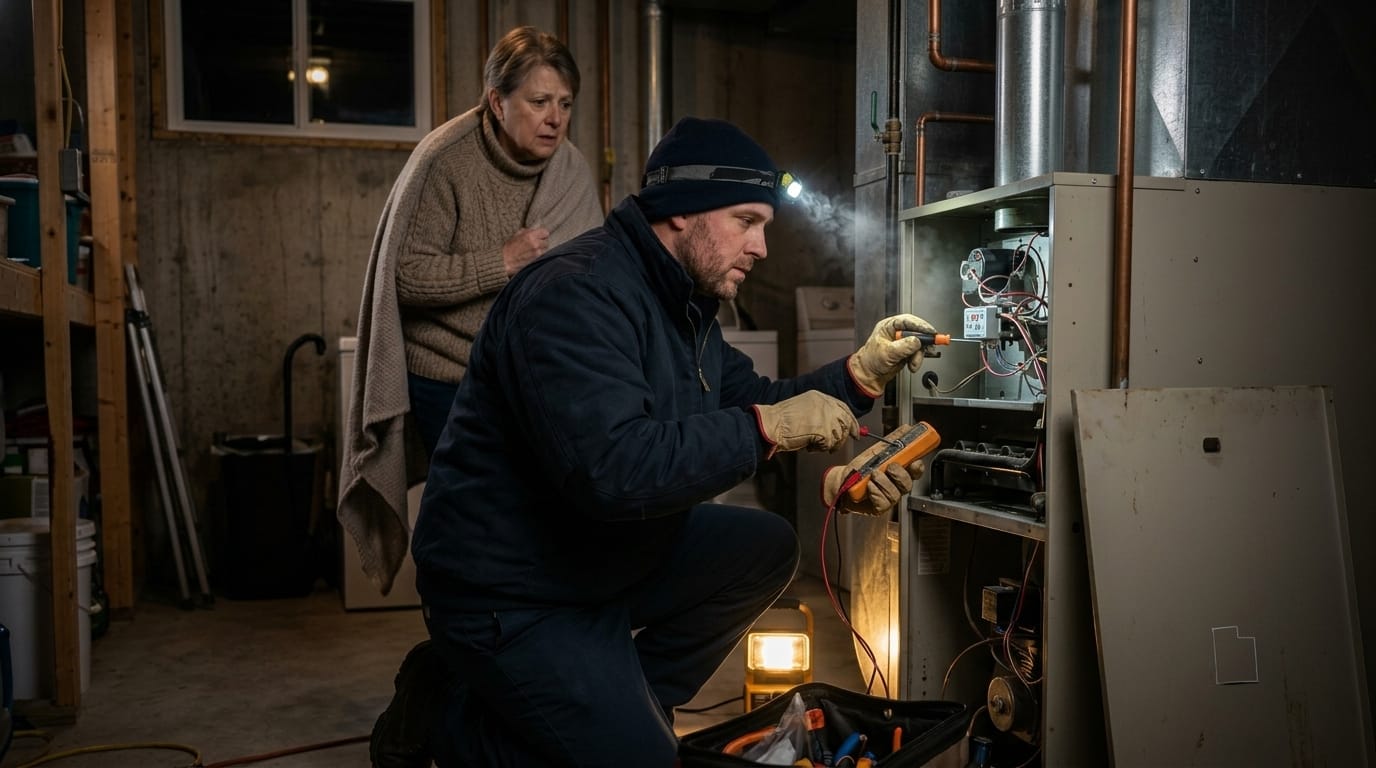
Picture a family whose basement furnace gets its first test run on a mild September evening in Sandy. The inducer hums, and the igniter glows orange through the sight window. The burners light with a soft whoosh, then go out a few seconds later. The furnace tries twice more, then goes quiet while the status light blinks the same pattern.
That sequence rules out a lot. The pressure switch closed, or the igniter would never have glowed. The igniter lit the gas, so gas is reaching the burners. What failed is flame proving. A coated flame sensor is the most likely cause, with a poor ground or low gas pressure next. What sounds like a furnace not igniting is really a flame signal problem.
Safety Notes
- Gas smell, smoke or a CO alarm: get everyone outside, then call 911 or the gas utility's emergency line from outside.
- Do not keep resetting: each reset starts another ignition attempt on a part that may be failing, and it can clear the code a technician needs.
- Do not bypass safety switches: jumping a pressure switch, limit switch or rollout switch lets the furnace run in the condition the switch exists to stop.
- Leave gas parts alone: the gas valve, burners, igniter and flame sensor are technician work, and the igniter is brittle and very hot.
- Test CO alarms before heating season: NFPA's carbon monoxide safety tips call for alarms outside each sleeping area and on every level of the home, tested at least once a month.
When to Call a Professional
Call when the safe checks do not bring the heat back, or when the furnace locks out again after one reset. Call as well when the status light points to the igniter, flame sensor, pressure switch, gas valve or a rollout switch. Testing those parts takes a meter and the model's service data.
A few signs mean the fault is not simple: an inducer that hums but will not spin, water around a high-efficiency furnace, or burners that light with a loud bang. A furnace not igniting after a new thermostat or a power outage also deserves a closer look.
When a household has no heat, Towers Plumbing provides emergency furnace repair for gas furnaces that will not light or stay lit. The NFPA heating safety page also recommends having heating equipment cleaned and inspected every year by a qualified professional.
Frequently Asked Questions
Why is my furnace not igniting after sitting all summer?
A lot can change during a long idle stretch. A manual gas valve may have been closed for other work, a thermostat battery may have died, or debris may have collected in a vent pipe. An aging igniter can also crack during the first cycles of the season.
Can I clean the flame sensor myself?
The manufacturer page linked above advises leaving flame sensor cleaning and replacement to an HVAC professional. The sensor sits inside the burner compartment, close to the gas valve and the brittle igniter.
How do I read my furnace's blink code?
Count the flashes through the small window in the lower door while the furnace has power. The code chart is usually printed inside the door. On some boards, each code combines short and long flashes, so write down both counts.
Get Your Furnace Lighting Again
A furnace not igniting in early fall is easier to sort out before the first cold snap. Before you call, note what happens when the thermostat calls for heat. Does the inducer start? Does the igniter glow? Do the burners light and then go out, or never light at all?
Write down the blink pattern and the thermostat settings, and take a photo of the data label inside the furnace door. Mention whether the furnace has plastic vent pipes and when the filter was last changed. Then reach Towers Plumbing through our contact page. With those notes, a technician can start with the most likely link in the ignition chain, test it, and explain the repair before any work begins.