
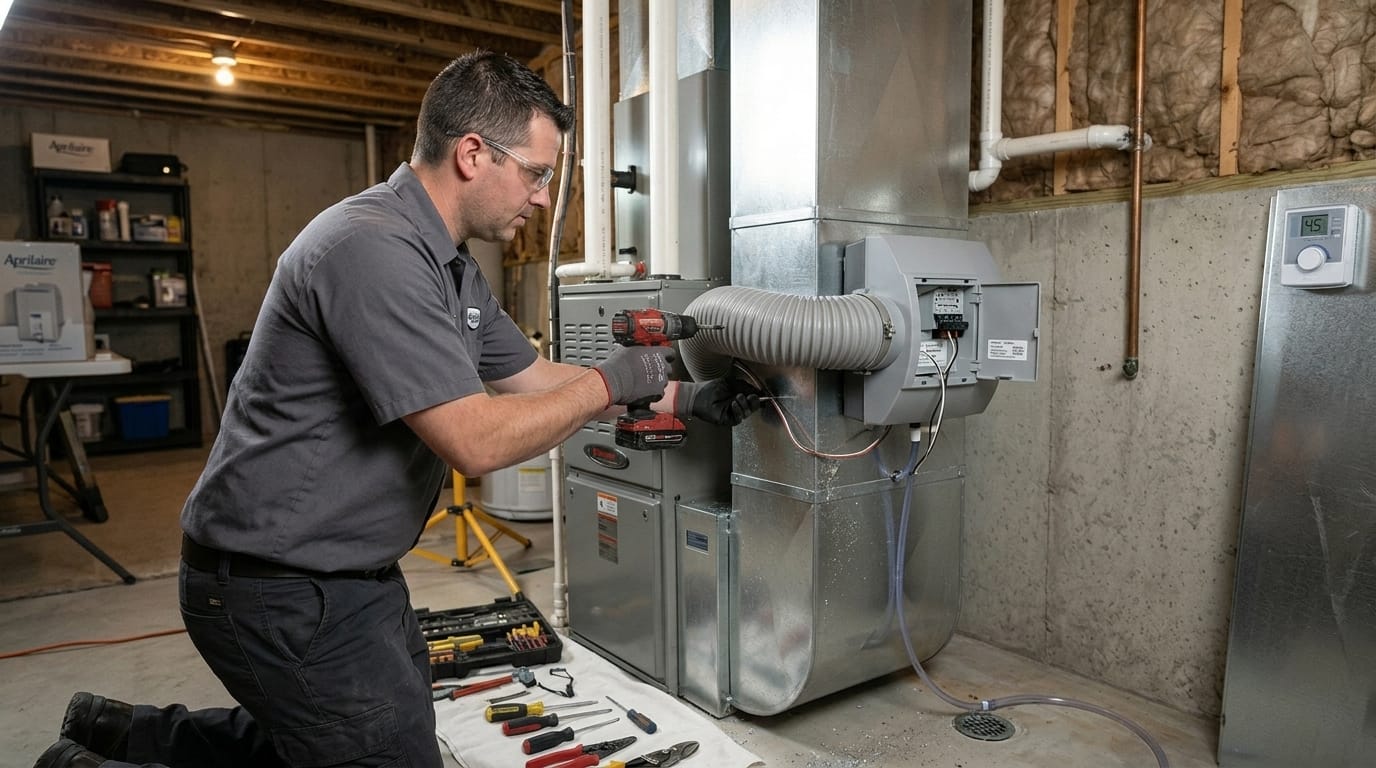
In January, dry indoor air is easy to notice in a Sandy home. A doorknob snaps with static, thin gaps open between floorboards, and paint cracks along the trim. Towers Plumbing works on heating systems across Sandy, and this guide covers why the air dries out, how to measure it, how whole-home humidifiers work, and where the safe upper limit sits.
Why Winter Heating Leaves Sandy Homes With Dry Indoor Air
Relative humidity compares the water vapor in the air with the most that air could hold at its temperature. Cold air holds very little water vapor. Warm air can hold much more, so the same moisture reads as a lower percentage once it warms up.
In winter, cold outdoor air seeps in through gaps around doors and windows, and it replaces the air that bath fans and the dryer push outside. Utah's air is dry for most of the year, so that incoming air carries little moisture.
When the furnace or heat pump warms it, the water content stays the same while the air's capacity grows, so the relative humidity drops sharply. The heating system is not removing water; it is warming air that arrived nearly dry.
Signs of Dry Indoor Air Around the House
Low humidity shows up before most people think to measure it. The EPA's page on the use and care of home humidifiers lists static electricity, peeling wallpaper and cracks in paint and furniture among the nuisances winter heating brings. Watch for these patterns:
- Static shocks: sparks jump from doorknobs, railings and pets once the air stays dry for days.
- Gaps in wood floors: hardwood boards give up moisture and shrink, opening thin seams.
- Cracks in wood and trim: furniture joints and painted trim can split at the seams.
- Parched rooms: the house feels dry on waking, and lotion and lip balm come out more often.
One sign alone proves little, but two or three together make a strong case for a measurement.
What You Can Check Safely: Measure With a Hygrometer
A hygrometer is a small humidity gauge sold at most hardware stores. It turns a hunch about dry indoor air into a real number. Set it in a main living area, away from the kitchen, bathrooms and supply registers, and note the reading morning and evening for several days.
The EPA's Care for Your Air guide says to keep indoor humidity between 30 and 50 percent. Readings below 30 percent for days point to a real shortfall.
If a humidifier already hangs on the furnace ductwork, a few more checks are safe:
- Humidistat setting: confirm the control on the wall or return duct is turned up.
- Damper position: many bypass units have a summer and winter damper handle that should be open in heating season.
- Water supply: make sure the small valve on the line feeding the unit is open.
- Furnace filter: a clogged filter cuts airflow through the humidifier too, so keep up with air filter replacement.
Bypass, Fan-Powered and Steam Whole-Home Humidifiers
A whole-home humidifier mounts on the furnace ductwork and adds moisture to the air the blower moves. The AprilAire humidifier FAQ explains that its humidifiers need heat, water and air movement. There are three main types:
- Bypass humidifier: a short duct links the supply and return sides of the furnace. Warm air passes through a wetted water panel and picks up moisture.
- Fan-powered humidifier: a built-in fan pushes warm air through the water panel, so no bypass duct is needed.
- Steam humidifier: an electric element or electrodes boil water into steam, which goes into the duct. It does not rely on furnace heat, so it often pairs well with heat pumps and larger homes.
Each type needs a water line, a control and, for most models, a drain. The right choice depends on the home's size, air tightness and heating system. Our humidifier and dehumidifier service covers sizing and installation.
Upkeep, and Why Window Condensation Is the Upper Limit
A whole-home humidifier needs yearly attention. AprilAire says its water panels are designed to last one humidifier season and then be replaced. It adds that hard water, common in Utah, increases scale buildup and calls for extra maintenance. The EPA says to follow the manufacturer's directions for cleaning furnace-mounted humidifiers.
The EPA humidifier page says not to humidify above 50 percent. If water condenses on windows, walls or pictures, it advises lowering the setting or using the humidifier less.
Window glass is usually the coldest surface in a heated room, so fog or frost there means the air holds more moisture than the house can handle. The EPA's guide to mold and moisture also notes that condensation can be a sign of high humidity.
A Sandy Scenario You Might Recognize
Picture a family in Sandy whose oak floors show thin gaps between the boards every January. The kids get static shocks from the stair railing. A hygrometer in the living room reads well under 30 percent all week. The furnace has a bypass humidifier, and the humidistat is turned up, yet the house stays dry.
A look at the unit shows the damper handle still in the summer position, and the water panel is stiff with white mineral scale. That pattern points to a humidifier that is barely adding moisture. The closed damper keeps warm air from reaching the panel, and the scaled panel cannot hold enough water. The dry indoor air here comes less from the house and more from a unit never switched over for winter.
Safety Notes
A humidifier sits next to a gas appliance, electrical wiring and a pressurized water line. Keep these points in mind:
- Cut the power first: switch off power to the furnace and humidifier before opening a cover.
- Close the water supply: shut the humidifier's supply valve before pulling the water panel.
- Let steam units cool: the EPA warns that steam and boiling water can cause burns.
- Watch for damp spots: the EPA says to turn the output down if the area around a humidifier becomes damp.
- Stay at or under 50 percent: higher settings invite condensation on cold surfaces.
- Gas smell or a carbon monoxide alarm: get everyone outside, then call 911 or the gas utility's emergency line from outside.
When to Call a Professional
Some humidity problems go beyond a setting or a filter. Reach out when you see these:
- The humidifier never runs: the furnace is heating and the humidistat is set above the room reading, but the unit stays dry.
- Water leaks or the drain backs up: water around the unit or on the furnace needs a prompt look.
- The house stays dry: readings stay low with a working unit. It may be too small, or the furnace may run in short cycles.
- There is no humidifier yet: adding one means tapping a water line, running a drain and wiring a control.
ENERGY STAR's maintenance checklist recommends checking the heating system each fall. Towers Plumbing can look over a humidifier during furnace maintenance, so both are ready before dry indoor air season arrives.
Frequently Asked Questions
What humidity should a Sandy home hold in winter?
The EPA recommends keeping indoor humidity between 30 and 50 percent. On the coldest nights, the lower part of that range is often the practical target, because higher levels can fog the windows. If condensation appears, turn the setting down.
Why do my wood floors gap every winter?
Wood takes on and gives up moisture with the air around it. When dry indoor air settles in for weeks, the boards shrink and thin seams open. The seams often narrow again as humidity rises in spring.
Is a portable humidifier enough?
A portable unit can help one room, but it needs steady care. The EPA advises emptying and refilling portable tanks daily and cleaning them every third day. A whole-home unit ties into the furnace and serves every room the ductwork reaches.
Next Steps for Dry Indoor Air in Sandy
Before you reach out, gather a little information from around the house. Write down hygrometer readings from two or three rooms, morning and evening, for several days. Note any window condensation and which signs you see, such as static, floor gaps or cracking trim.
If a humidifier is installed, record the brand and model from its label, the damper position and when the water panel was last changed. A phone photo of the unit, its control and the damper handle helps too.
Then contact Towers Plumbing through our contact page. With those notes in hand, a technician can check the humidifier, the furnace and the settings together, then explain the options that fit your home.