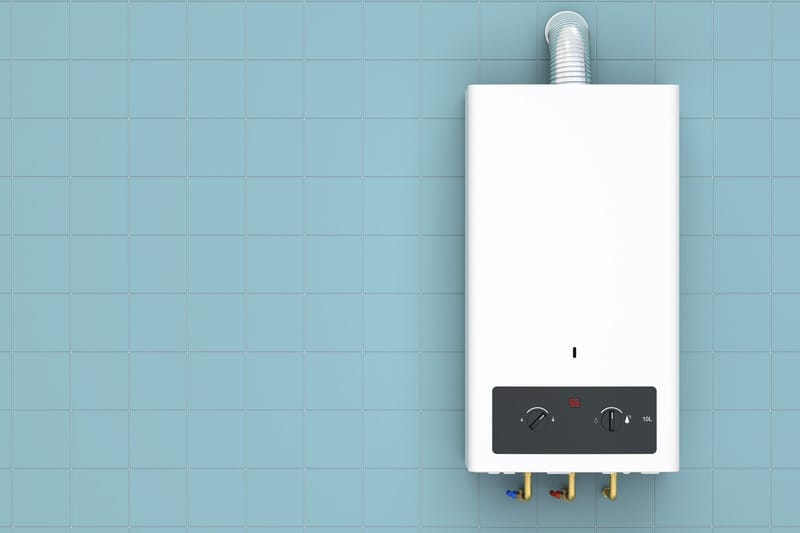
Summer mornings in a Lehi home often mean showers back to back. With a tankless water heater, the second person may get a warm start, then a few seconds of cold, then hot water again. That hot-cold-hot burst is called a cold water sandwich. It is a known trait of on-demand heaters, not a mystery. Here is why it happens, how to reduce it, and what you can safely check.
How a Cold Water Sandwich Actually Happens
A tankless heater makes hot water only while water flows through it. Open a hot tap, and a flow sensor tells the control board to start the fan, light the burner and heat the heat exchanger. When the tap closes, the burner shuts off.
Now picture the next shower a few minutes later. The pipe between the heater and the shower still holds hot water from the first draw, so that arrives first. Meanwhile, the heater needs a few seconds to sense flow, ignite and warm up again.
Water that passes through during that restart gap comes out barely heated. It travels down the pipe behind the hot water already there, followed by fully heated water. At the showerhead, you feel hot, then a cold slug, then hot. Some models hold a ready state briefly after the tap closes, which shortens the gap, but the basic pattern stays.
Low-Flow Fixtures and Minimum Activation Flow
A tankless heater will not fire until enough water moves through it. One manufacturer's knowledge base says most units need about half a gallon per minute to activate. It adds that a fixture opened only partway, or one with scale in the faucet, may not reach that flow.
Modern fixtures use less water by design. EPA's WaterSense bathroom faucet page notes that labeled faucets use a maximum of 1.5 gallons per minute. When you set the handle to warm, only part of that flow comes from the hot side.
Summer adds a twist. The cold water entering a home in July is often warmer than in winter, so a shower needs less hot water in the mix. Less hot-side flow means the heater sits closer to its activation limit. If flow dips below it, the burner can drop out and relight, which feels like a cold water sandwich during a single shower.
How Scale Makes the Problem Worse
Hard water is common in northern Utah. The USGS explains in its guide to water hardness that when hard water is heated, solid deposits of calcium carbonate can form. That scale can shorten equipment life and clog pipes.
Inside a tankless unit, scale coats the heat exchanger. The burner then works harder to reach the setpoint, and outlet temperature can swing as flow changes. Scale also collects in faucet aerators, showerheads and the small inlet screen on the heater. Each restriction trims the flow that the heater sees.
One manufacturer's troubleshooting guide lists mineral buildup as a common tankless problem and recommends descaling annually, especially in hard water areas. If the unit has gone years without a flush, scale may be making a normal cold water sandwich feel worse. Routine tankless water heater service includes that flush.
How Recirculation and Buffer Tanks Reduce the Gap
You cannot remove the restart delay completely, but you can shrink it or hide it.
- Recirculation: ENERGY STAR describes how a demand hot water recirculating system pumps cooled water sitting in the hot line back to the heater through the cold line. With the pipes already warm when the tap opens, the gap is smaller and less noticeable.
- Buffer tank: a small insulated tank on the hot outlet blends the cold slug with stored hot water. The same troubleshooting guide suggests a model with a built-in buffer tank as one fix.
- Built-in options: some tankless models include a recirculation pump or buffer inside the cabinet.
Each option needs correct piping and controls. If your household runs many short, stop-start draws, a water heater comparison between tank and tankless designs may also be worth a conversation.
What You Can Check Safely
These steps need no tools beyond a rag and an old toothbrush, and none involve opening the heater.
- Timing: note whether the cold burst happens only on the second draw within a few minutes. That points to a classic cold water sandwich.
- Handle position: open the fixture fully to the hot side for a moment. If the water heats reliably, low flow is part of the story.
- Aerators and showerheads: unscrew a sink aerator and rinse out grit or white scale, then test again.
- Shutoff valves: make sure the valves under the sink are fully open, as the manufacturer's knowledge base suggests.
- Display messages: if the heater or its remote shows an error code, write it down exactly.
Also try another fixture. If only one sink struggles, the fixture is the likely limit rather than the heater.
A Lehi Scenario You Might Recognize
Picture a family whose tankless heater hangs in a basement utility room. On a hot July morning, one teen finishes a shower, and a second starts a few minutes later. The second shower runs warm for a moment, turns cold for several seconds, then comes back hot.
Later, a parent opens the bathroom faucet halfway to wash up and gets only lukewarm water. Opening the handle fully brings real heat.
That pattern points to two separate things. The shower burst is the restart gap between draws, a normal cold water sandwich. The sink points to low hot-side flow, perhaps from a scaled aerator or a warm summer supply that needs little hot water in the mix. Neither sign by itself means the heater is failing, but both are worth checking.
Safety Notes
- Gas smell: if you smell gas near the heater, get everyone outside, then call 911 or the gas utility's emergency line from outside.
- Keep the cover on: the heater cabinet holds the burner, gas valve and line-voltage electronics. Internal parts are a job for a technician.
- Leave the setting alone: do not turn up the temperature to mask the problem. At a mixed fixture, a higher setting sends even less water through the hot side.
- Flushing: descaling uses isolation valves, a pump and descaling solution. If you do it yourself, follow the owner's manual exactly, including its power and gas steps.
- Keep the vent clear: do not stack storage items against the heater or block its exhaust vent outside.
When to Call a Professional
Call when the cold bursts are new or getting worse, since that change can point to scale, a clogged inlet screen or a weak flow sensor. Call as well when the heater shows an error code, or when a fixture will not heat even with the handle fully open and a clean aerator.
A technician can measure flow at your fixtures, check the heat exchanger and flush scale. They can also confirm whether the unit is sized for your household. If you want recirculation or a buffer tank added, that work involves plumbing and controls best handled by a pro. Towers Plumbing serves homes across Lehi and nearby communities, and a visit can sort out which fix fits your system.
Frequently Asked Questions
Does a cold water sandwich mean my tankless heater is broken?
Usually not. The restart gap is part of how on-demand heaters work. A sudden change, longer cold bursts or an error code is a reason to have the unit checked.
Will turning up the temperature fix it?
No. A hotter setting means your faucet blends in more cold water, so less water flows through the heater. That can push low-flow draws below the activation point.
Can a recirculation pump help?
Often, yes. Keeping the hot line warm shrinks the gap you feel at the tap. The right setup depends on your piping and heater model.
How often should a tankless heater be flushed?
One manufacturer's guide recommends descaling annually, especially with hard water. Your owner's manual gives the interval for your model.
Next Steps for a Cold Water Sandwich in Lehi
Before you reach out, spend a day noting when the cold bursts happen. Write down which fixtures are affected, whether it only happens on back-to-back draws, and any error codes. Note the heater's age and when it was last flushed, if you know.
Mention any new faucets or showerheads installed recently, since a lower-flow fixture can change how the heater responds. If you are curious about recirculation or a buffer tank, say so, and the visit can include a look at your piping layout.
Then contact Towers Plumbing through our contact page. With your notes in hand, a technician can check flow, scale and settings first, then explain the options, from a simple flush to recirculation, before any work begins.