When a furnace blower keeps running after the house feels comfortable, the cause may be a simple thermostat setting or a furnace that is overheating. In Riverton, September is often when thermostats switch from cooling to heating, so odd fan behavior tends to show up on the first cool mornings. Here is what keeps the blower on, what you can safely check, and when to call a technician.
How the Furnace Decides When the Blower Runs
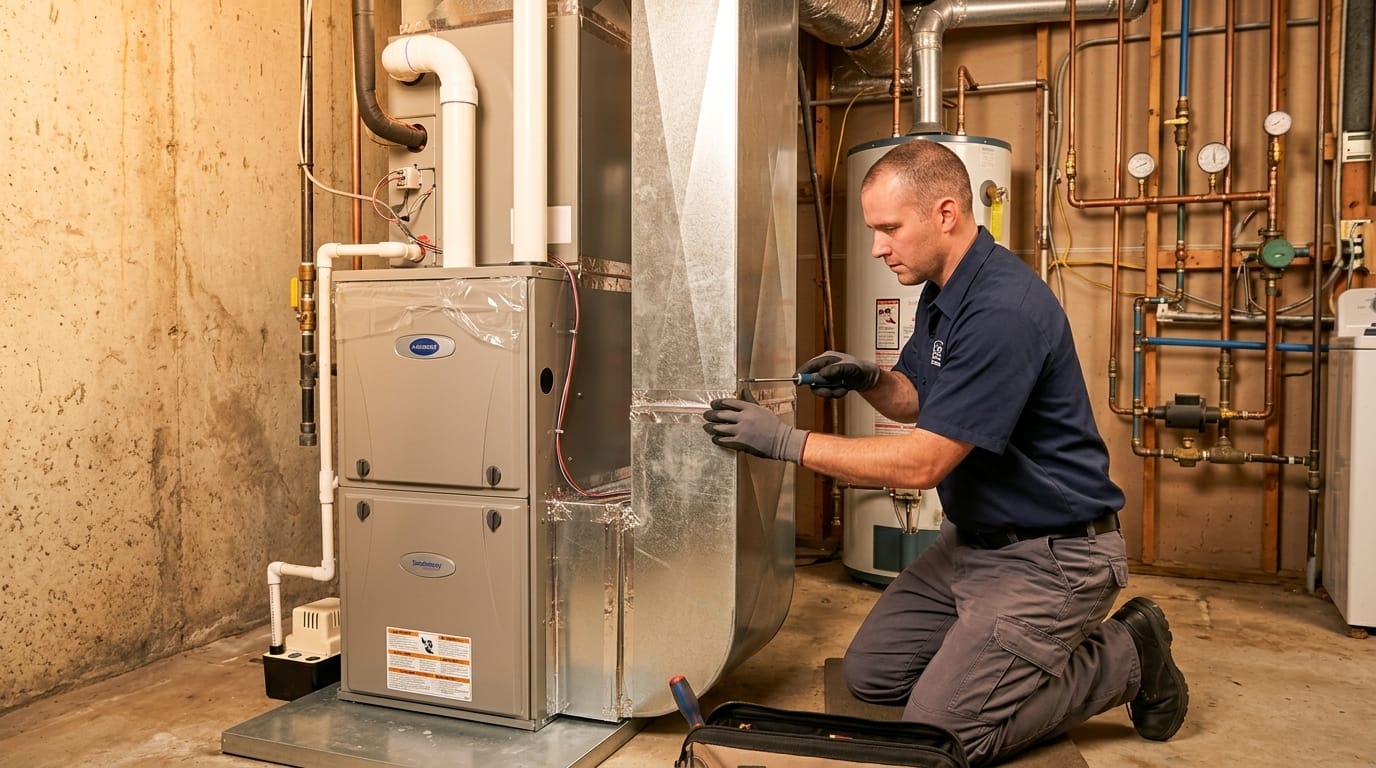
The blower is the large fan inside the furnace cabinet. It pulls air through the filter, pushes it across the heat exchanger and evaporator coil, and sends it to the registers. The thermostat tells it when to run. One wire calls for heat, one calls for cooling, and a separate fan wire calls for the blower alone.
The control board reads those calls and switches the blower motor on through a relay. It also watches the safety switches, including the high-limit switch that senses heat around the heat exchanger. So when the blower keeps running, the signal comes from one of four places: a thermostat setting, the board's normal delay after a cycle, a tripped safety switch, or a failed part that sends power when nothing should.
Fan ON vs AUTO and the Normal Delay After a Cycle
Start at the thermostat. On AUTO, the blower runs only while the system heats or cools. Set to ON, it runs around the clock, even with the burners off, so the air can feel cool between heating cycles. The EPA's wildfire smoke guidance even suggests On instead of Auto on smoky days, so a high-efficiency filter can clean the air.
Smart thermostat fan schedules, circulate modes, and humidifier or ventilation controls can also call for the fan.
The blower also runs briefly after each cycle to pull leftover heat out of the heat exchanger. One manufacturer's troubleshooting guide lists a selectable blower-off delay of 90 to 180 seconds after heating, plus 90 seconds of fan after cooling. A blower that stops within a few minutes of the burners going out is working normally.
When the High-Limit Switch Trips
A gas furnace needs steady airflow across its heat exchanger. When airflow drops, the metal runs too hot and the high-limit switch opens. The control board closes the gas valve and runs the blower to cool things down. The same guide says the blower then runs for four minutes or until the switch closes, whichever is longer, and it lists a dirty filter or restricted duct first.
- Dirty or overly dense filter: a packed filter starves the blower of air. The EPA's MERV rating page advises choosing a filter your system fan and filter slot can accommodate. Summer cooling, and wildfire smoke in some years, can load one faster than expected.
- Blocked returns or closed registers: furniture over a return grille or several shut registers chokes airflow.
- Weak blower: a failing motor, weak run capacitor or dirty blower wheel moves less air.
In this pattern, the blower keeps running while the burners stay off, and the air turns lukewarm. Routine furnace maintenance helps catch these airflow problems early.
A Stuck Relay, a Manual Fan Control or a Wiring Short
If the blower keeps running with the system on OFF and the fan on AUTO, and no limit code is flashing, the problem is likely electrical.
- Stuck blower relay: the relay on the control board can weld its contacts closed and feed the blower motor with no call for fan. The usual fix is a new control board.
- Fan-limit control set to manual: some older furnaces have a mechanical fan-limit control with a manual fan button. Set to manual, it runs the blower nonstop.
- Shorted thermostat wire: if the fan wire touches the power wire, the furnace sees a constant call for the fan. A staple through the cable or a wire nicked during a basement finish can cause it.
Careful thermostat installation helps prevent these wiring faults. Telling a short from a bad relay takes a meter on live terminals, which is technician work.
Safe Checks Before You Call
You can narrow the cause without opening the furnace.
- Check the fan setting: set the thermostat fan to AUTO and look for a circulate mode or fan schedule.
- Run the OFF test: set the system to OFF with the fan on AUTO and wait several minutes. If the blower stops, the thermostat or a schedule was calling for it.
- Look at the filter: hold it up to a light. If little light passes through, replace it with the same size. ENERGY STAR's maintenance checklist recommends inspecting filters once a month.
- Open the airflow path: open the supply registers and clear anything blocking the return grilles.
- Read the status light: many furnaces have a small window in the blower door. Count the blinks and match them to the code chart on the door label.
If the blower keeps running after the OFF test and a clean filter, stop there and note what you saw.
A Riverton Scenario You Might Recognize
Picture a family in Riverton whose thermostat moves from cooling to heating on the first chilly September morning. The burners light and warm air flows for a while. Then the burners go out, but the blower keeps running with lukewarm air for several minutes before the cycle starts over. A light behind the blower door window blinks a code. The filter has not been changed since spring.
That pattern points to a high-limit trip. The burners shut down because the heat exchanger is too hot, and the board runs the fan to cool it. A clogged filter is the first suspect. If a fresh filter does not clear the code, the blower motor, blower wheel or ductwork needs a technician's look.
Safety Notes
- Use the service switch: if the blower never stops, turn the furnace off at its service switch. It often looks like a light switch on or near the unit.
- Do not defeat the door switch: removing the blower door releases a safety switch that cuts power. Do not tape it closed to watch the furnace run.
- Do not keep resetting: cycling power on a furnace that trips its limit hides the warning and lets it overheat again.
- Leave the rollout switch alone: a tripped flame rollout switch means flame went where it should not. It needs a technician, not a reset.
- Gas, smoke or burning smells: if you smell gas, see smoke, smell burning or hear a carbon monoxide alarm, get everyone outside, then call 911 or the gas utility's emergency line from outside.
When to Call a Professional
Call for service when the blower runs with the system set to OFF, when the status light shows a limit or rollout code, or when a new filter does not stop the limit from tripping. Call as well if the blower motor hums without spinning or makes a new grinding or squealing sound.
Relay, control board and wiring repairs involve line voltage and gas controls, so they are not homeowner jobs. For a blower that will not shut off, Towers Plumbing offers emergency furnace repair. ENERGY STAR's checklist also suggests a heating check-up in the fall, so September is a good time to sort out a fan problem. Local details are on our Riverton service area page.
Frequently Asked Questions
Is it bad if my furnace blower keeps running on the ON setting?
No. The ON setting runs the blower continuously by design, which keeps air moving through the filter. Expect to change the filter more often.
Why did the fan start running nonstop after a new thermostat?
Check the fan setting first, since a new thermostat may start with the fan set to ON or a circulate mode active. If the system is OFF and the fan is on AUTO, a miswired or shorted fan wire is the likely cause, and a technician should trace it.
Should I shut the furnace off if the blower will not stop?
Yes. Turn it off at the service switch, note what the thermostat and status light show, and call for service. A furnace left cycling on its limit keeps overheating.
Next Step: Note the Pattern, Then Reach Out
Before you call, take a minute to write down a few details. Note the thermostat fan setting and whether the blower keeps running with the system set to OFF. Note whether the air feels warm, lukewarm or cool, and count any blinks on the status light. Add the date of the last filter change and any recent thermostat, duct or remodeling work. A phone photo of the thermostat screen and the code chart on the furnace door helps too.
Then reach Towers Plumbing through our contact page to schedule a technician for your Riverton home. With those notes, a technician can check the likely cause first and explain the repair before any work begins.