
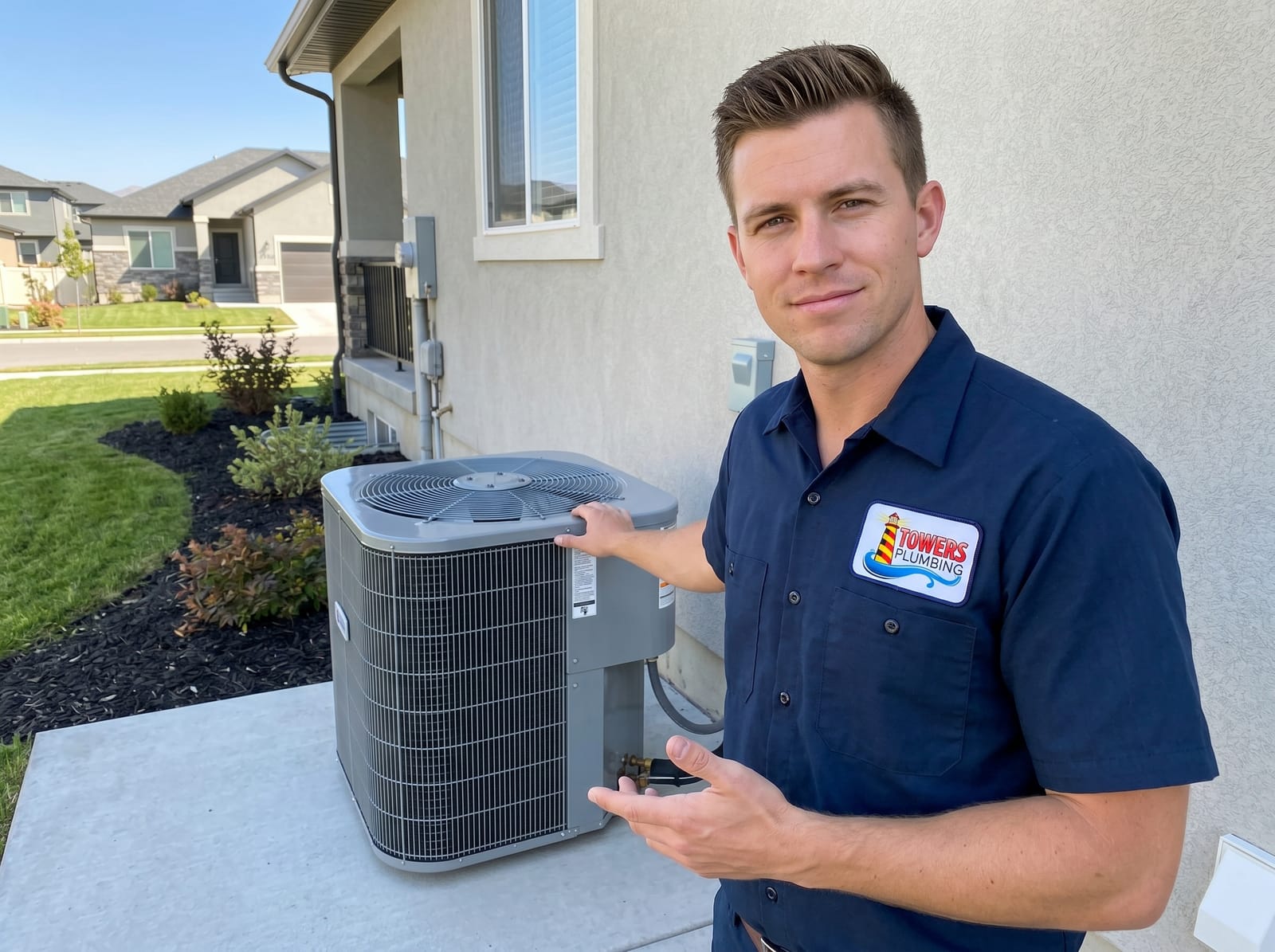
The first warm afternoon of spring is when many Herriman households switch the thermostat from heat to cool. If the AC is not starting, the house stays warm and the outdoor unit sits silent or just hums. After months of rest, a few specific things tend to stand between the thermostat and a running compressor. Here is how a start-up works, what you can check safely, and when to call for help.
How an Air Conditioner Starts, and Where the Chain Breaks
A central air conditioner starts through a short chain of signals. When the room is warmer than the setpoint, the thermostat sends a low-voltage call for cooling. At the furnace or air handler, that call starts the indoor blower, and a thin control wire carries it to the outdoor unit.
Inside the outdoor unit, the call energizes the contactor, a heavy relay that closes and sends full line voltage to the compressor and the condenser fan motor. A run capacitor, often a dual unit that serves both motors, helps them start and keeps them turning smoothly.
Every link has to work. A wrong thermostat setting, a safety switch that opens the control circuit, a cut wire or a worn part can each leave an AC not starting while the rest of the system looks fine. The symptom you notice tells you which part of the chain to suspect.
Why Problems Show Up on the First Spring Start
An air conditioner that sat idle all winter can come back with problems that have nothing to do with worn parts.
- Power shut off for winter: some homeowners pull the outdoor disconnect or switch off the breaker in the fall, then forget about it.
- Covers and debris: a tarp or plastic cover left on the unit, or leaves packed against the coil, blocks the airflow the condenser needs. The unit may shut itself off soon after it starts.
- Rodents: mice look for shelter inside the cabinet and can chew through the control wire where it runs along the foundation.
- The condensate line: algae and sludge left from last summer can clog the drain line once water starts flowing through it again.
None of these show up from inside the house, so an AC not starting in spring deserves a look outdoors before anyone assumes a failed compressor.
Capacitors and Contactors: The Parts That Wear
When the outdoor unit hums but the fan does not spin, the run capacitor is a common suspect. A capacitor weakens with age and heat, and the first start after a long rest can be when a weak one gives out. Without its help, the compressor and fan motor may hum, strain and then shut off on their thermal overload.
The contactor is the other part that wears. Its contact points can become pitted or burned after years of opening and closing under load. Insects and nesting material can also end up between the contacts. A contactor that will not close leaves the AC not starting while the indoor blower runs normally.
Both parts sit behind the outdoor unit's service panel, next to live line voltage, and a capacitor can hold a charge after the power is off. Testing and replacing them belongs with a technician through AC repair.
What You Can Check Safely
When the AC is not starting, these checks need no tools and no contact with wiring. Stop at anything that looks wrong.
- Thermostat mode: confirm it is set to Cool, not Heat or Off, and that the setpoint sits a few degrees below the room temperature.
- Thermostat power: replace the batteries if the screen is dim or blank.
- Start-up delay: a wait message or a flashing Cool On means the thermostat is holding the compressor off. Honeywell Home explains that this protection delay can last up to five minutes under normal operating conditions.
- Breaker: find the breaker labeled for the air conditioner. If it has tripped, switch it fully off and then back on, one time only.
- Outdoor disconnect: look at the box on the wall near the unit. If the lever reads off or the pull-out handle is missing, power was shut off for winter.
- Cover and debris: remove any cover and clear leaves from around the coil by hand.
- Condensate drain: look for water around the base of the indoor unit or a full condensate pump.
If the thermostat itself is unreliable, consider thermostat installation.
A Herriman Scenario You Might Recognize
Picture a family in a Herriman home switching the thermostat to Cool on the first warm afternoon of spring. The furnace blower in the basement starts and air moves through the vents, but it never turns cool. Outside, the condenser is silent: no fan, no hum, no click.
That pattern says a lot. The running blower shows the thermostat has power and the call for cooling is reaching the furnace. The silence outdoors means either the call or the line power is stopping before the compressor. The likely suspects are a disconnect or breaker left off for winter, a control wire chewed by mice, or a contactor that will not close.
If the family instead hears a steady hum while the fan sits still, the pattern shifts toward a weak capacitor. Either way, an AC not starting while the blower runs points outdoors first.
Safety Notes
- Stay out of the outdoor unit's service panel: the capacitor can hold a dangerous charge even after the power is off.
- Do not open electrical panels: leave the main panel's inner cover and the inside of the disconnect box to a technician.
- Reset a breaker only once: if it trips again, leave it off. A repeat trip points to a short or a failing motor.
- Keep hands clear of the fan: the condenser fan can start without warning when the thermostat calls for cooling.
- Leave refrigerant alone: refrigerant work falls under the EPA's Section 608 rules, which cover technician certification and prohibit venting refrigerant.
- Treat burning smells as an emergency: if you smell burning or see smoke near the unit or the panel, get everyone outside, then call 911 from outside.
- Leave nests in place: nesting material inside the cabinet often wraps around wiring, so let a technician remove it with the power off.
When to Call a Professional
If the AC is still not starting after those checks, it is time for service. Call when the outdoor unit hums without the fan turning, when the breaker trips a second time, or when you find chewed or damaged wire. A float switch that keeps tripping after the drain seems clear also needs a closer look, since the clog may sit deep in the line or the pan.
Other signs point to the compressor or controls: the fan runs but the compressor never kicks on, or the unit clicks repeatedly without starting. Towers Plumbing can measure voltage, test the capacitor and contactor, and trace the control wiring.
Spring is also the right time for a tune-up. The ENERGY STAR maintenance checklist recommends checking the cooling system in the spring, including tightening electrical connections and checking the starting cycle. AC maintenance before the first hot stretch can catch a worn part early.
Frequently Asked Questions
Why is my AC not starting when the thermostat says Cool?
Give it several minutes first, since many thermostats hold the compressor off after a setting change. If nothing happens after that, check the breaker and the outdoor disconnect. Then listen at the outdoor unit for a hum or a click.
Can a clogged drain line stop my air conditioner?
Yes. Many systems have a float switch in the condensate drain line or pan. When water backs up, the switch opens and shuts the system down to prevent an overflow. Trane explains that this can stop the outdoor unit and the indoor blower.
Why does the outdoor unit hum but the fan will not spin?
A weak capacitor or a seized fan motor is the usual cause. Set the thermostat to Off so the motors stop straining, and call for service. Do not push the fan blades with a stick to get them going, since the unit is live.
Get Your AC Ready Before the First Hot Week
Before you call, write down what you observed. Note what the thermostat screen shows, whether the indoor blower runs, and whether the outdoor unit is silent, humming or clicking. Note the breaker and disconnect positions, any water near the indoor unit, and any chewed wire you can see without opening anything.
Mention when the system was last serviced, whether anyone shut off its power last fall, and whether the thermostat was recently replaced. Then reach Towers Plumbing through our contact page to set up a visit. With those notes in hand, a technician can go straight to the likely break in the start-up chain and explain the repair before any work begins.