
On a hot July afternoon, you hold a hand to a register and barely feel a breeze. Weak airflow in a Cottonwood Heights home usually comes down to a restriction, a duct leak or a blower that is not moving enough air. Here is how each one happens, what you can check safely, and when to call a technician.
How Air Moves Through Your Heating and Cooling System
A forced-air system works as a loop. The blower, inside the furnace or air handler, pulls house air in through the return grilles. That air passes through the filter and across the evaporator coil, which sits on top of or beside the furnace. The blower then pushes it through the supply ducts and out of the registers.
Every part of that loop resists the air a little. Technicians call that resistance static pressure. When a filter clogs, a coil gets dirty or a duct is crushed, resistance climbs and the blower moves less air.
Weak airflow at the vents is the symptom, not the cause. Air is either blocked, escaping before it reaches the room, or not pushed hard enough. In many northern Utah homes the furnace sits in the basement, so upstairs rooms at the end of the longest runs feel a problem first.
Filters, Blocked Returns and Closed Dampers
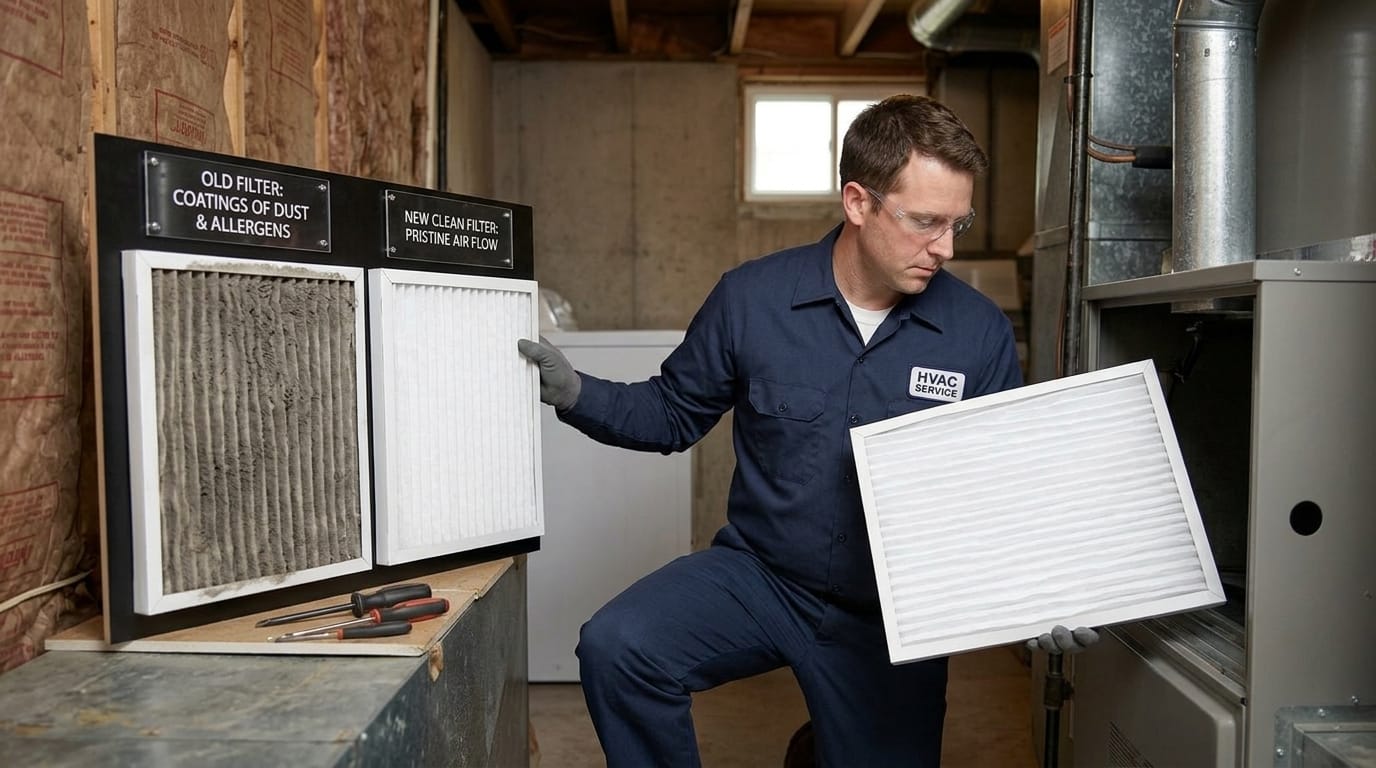
The filter is the first restriction air meets. As it loads with dust, the blower has to pull harder. ENERGY STAR's maintenance checklist recommends that you inspect, clean or change filters once a month, and warns that a dirty filter can damage your equipment.
A new filter can cause trouble too. A higher MERV rating means the filter traps smaller particles, and denser media can resist more air. The EPA's MERV rating guide suggests a rating as high as your system fan and filter slot can accommodate. In smoky summers, some homeowners switch to a thicker filter without checking the fit. Our air filter replacement service matches the filter to the system.
Returns matter too. A couch against a return grille or a rug over a floor return can starve the blower. Closed registers and balancing dampers add resistance as well. A balancing damper has a small lever on a round duct near the furnace that shows the blade's position.
Duct, Coil and Blower Problems
If the filter and grilles look fine, weak airflow often traces to the ducts or to parts inside the equipment.
- Crushed or kinked ducts: flexible duct in an attic can get flattened by stored boxes or bent too tightly.
- Disconnected ducts: a run can pull loose at a joint and dump air into a wall or ceiling. ENERGY STAR's duct sealing page says about 20 to 30 percent of the air in a typical duct system is lost to leaks, holes and poor connections.
- Dirty evaporator coil: dust that slips past a loose filter mats onto the coil fins.
- Iced coil: low airflow or low refrigerant lets the coil run too cold, so moisture freezes on it and blocks more air.
- Blower motor or capacitor: a weak run capacitor or worn motor turns the blower wheel too slowly.
Coil, capacitor and motor faults call for AC repair. If a technician finds heavy debris inside the ducts, duct cleaning may be part of the plan.
Safe Checks You Can Make First
When you notice weak airflow, start here. These checks need no tools.
- Thermostat: confirm the mode is Cool and the setpoint sits below the room temperature.
- Filter: hold it up to a light. If light barely passes through, replace it. Check its MERV rating and make sure the arrow points toward the blower.
- Registers and returns: open any closed supply registers, and clear rugs, furniture and boxes away from return grilles.
- Dampers: note the position of any damper levers near the furnace before you touch them. A lever turned across the duct usually means the damper is closed.
- Ice: look for frost on the larger insulated copper line. If you see it, set the thermostat to Off and the fan to On so the coil can thaw.
- Listen: note a blower that hums, runs slowly or shuts off quickly.
A Cottonwood Heights Scenario You Might Recognize
Picture a family whose two-story Cottonwood Heights home has its furnace and coil in the basement. During a smoky week in July, they swap in a thick, high-MERV filter. A few days later the upstairs bedrooms feel stuffy. By evening, the flow is weak at every vent, and the larger copper line outside has a thin coat of frost.
That pattern points to a restriction near the blower, not one bad duct. Every register is weak, so the problem sits where all the air passes. The new filter is the first suspect, and the frost says the evaporator coil is icing from low airflow. If weak airflow returns after a full thaw with a clean, correctly rated filter, a dirty coil or slow blower moves up the list.
What a Technician Measures
A technician turns a vague complaint into numbers. The key reading is total external static pressure. Using a manometer, the tech places probes in the return and supply sides of the equipment and reads the pressure the blower is working against. That number is compared with the maximum in the equipment's installation data.
If static pressure runs high, the tech measures the drop across the filter and across the coil to see which one adds the most resistance.
ENERGY STAR also notes that airflow problems can reduce a system's efficiency by up to 15 percent, and its checklist calls for measuring voltage and current on motors. The tech compares the blower motor's amp draw with its nameplate and tests the capacitor against its rated value. If the coil froze, refrigerant pressures come next. Finally, they inspect reachable duct runs for crushed or loose sections.
Safety Notes
- Cut power first: turn off the furnace switch or breaker before you open the blower compartment door.
- Leave the capacitor alone: it can hold a strong electrical charge even after the power is off.
- Do not chip ice: a screwdriver or ice pick can puncture the coil and cause a refrigerant leak.
- Keep a filter in place: running without one sends dust straight onto the coil and blower wheel.
- Watch your footing: in an attic, step only on the framing, and skip attic checks on hot afternoons.
- Burning smell or smoke: if you smell burning or see smoke at the vents, get everyone outside, then call 911 from outside.
When to Call a Professional
Call when weak airflow continues after a new filter, open registers and clear returns. Call as well if the blower hums, runs slowly or shuts off on its own, or if the coil refreezes after a full thaw. Those signs point to a motor, capacitor, coil or refrigerant problem that needs testing.
A single room with little air, while the rest of the house feels fine, often means a crushed or disconnected duct. That is a good reason to have Towers Plumbing trace the run.
If the house heats up during a July heat wave while the system struggles, treat it as urgent. See the National Weather Service heat safety page for official guidance.
Frequently Asked Questions
Can a high-MERV filter cause weak airflow?
It can, if the system was not designed for it. Denser filters resist more air, and some blowers cannot overcome that extra resistance. A static pressure test shows whether a filter is too restrictive for your equipment.
Should I close vents in rooms I do not use?
Closing registers raises static pressure across the whole system. With enough vents closed, the blower moves less air and the coil can run too cold.
Why is airflow weak in only one room?
One weak room points to that room's duct run: a closed damper, a crushed flex duct or a joint that has come apart. A closed door on a room without its own return can also cut its airflow.
Get Weak Airflow Checked Before the Next Heat Wave
Before you reach out, write down what you noticed. Is the air weak at every register or only in certain rooms? Note the filter's MERV rating and when you last changed it, any frost on the copper lines, and any blower noises. Mention recent changes too, such as a new filter or a remodel.
Then contact Towers Plumbing through our contact page to set up a visit, or read about our work in Cottonwood Heights. With your notes in hand, a technician can go straight to the likely cause of weak airflow and explain the repair before any work begins.