
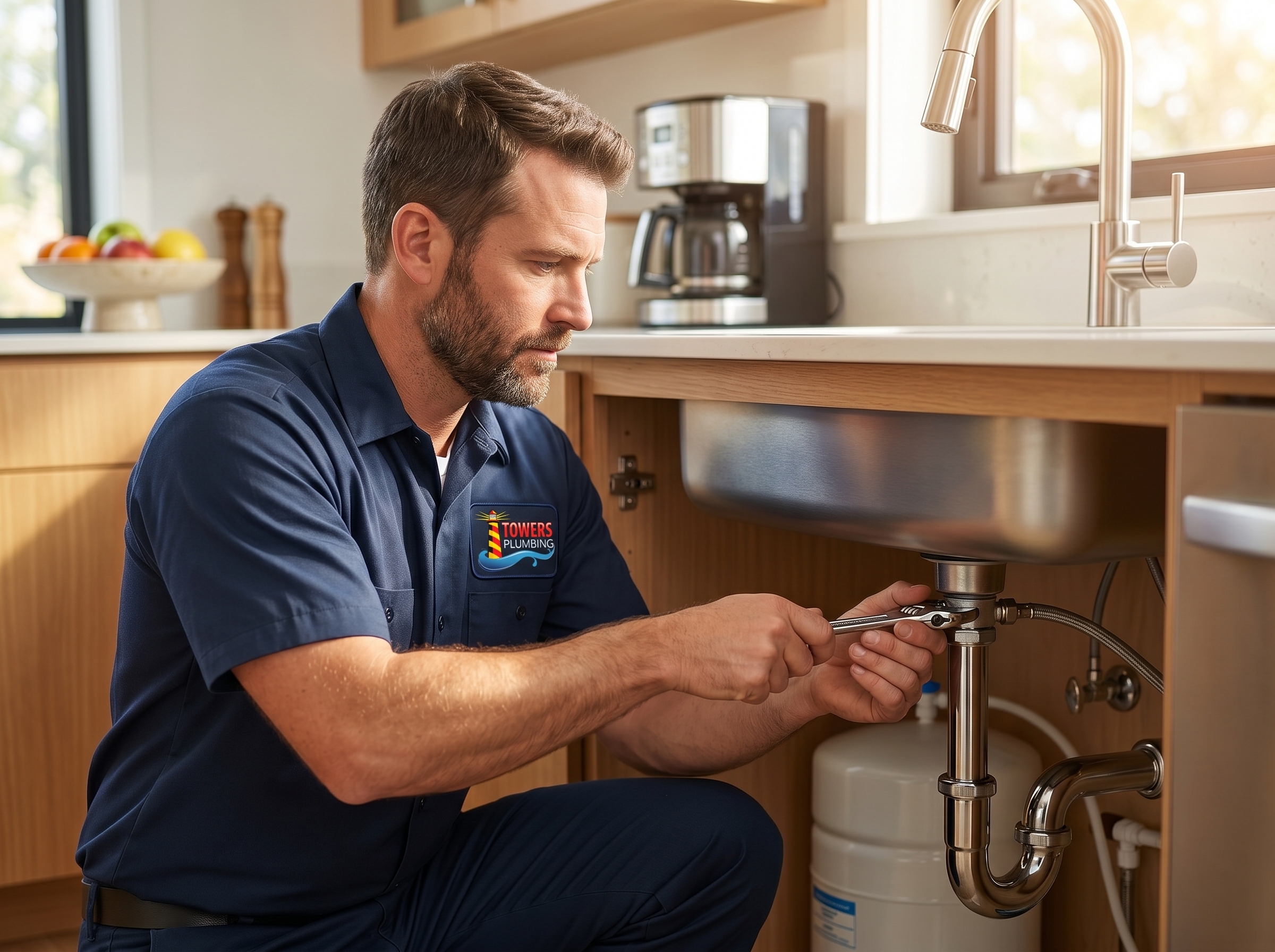
When a water-heater concern affects a Provo household, it is natural to want an immediate answer about repair or replacement. The better first step is a clear conversation based on what was actually observed at the property. Focused questions can help a homeowner understand an assessment without asking a general article, photo, or phone description to diagnose equipment remotely.
This guide does not recommend a repair, replacement, price, lifespan, equipment size, or setting. Water-heater decisions depend on the installed system, access, use history, household demand, manufacturer guidance, and conditions verified during evaluation. Do not open equipment, remove panels, reset breakers, alter gas connections, drain a tank, change controls, or modify a valve before a qualified professional gives property-specific instructions.
Begin with facts rather than a conclusion
Before the conversation, note what changed. Did hot water seem different? Was there a new sound, visible moisture, or an unfamiliar odor? When did it start, which fixtures were involved, and did it happen again? These observations help the service team understand the household experience.
Use simple wording. "Hot water changed after normal morning use" is useful. "The heater has failed" is a conclusion that has not been verified. A professional needs to compare the record with the actual water heater and property before deciding which conditions matter.
If there is a gas odor, smoke, burning smell, water near electrical equipment, active water spread, or another immediate hazard, lead with that safety concern. Do not spend time organizing questions or trying to recreate the symptom in an unsafe area.
Ask what the assessment is evaluating
One helpful question is, "What conditions are you evaluating based on what you found?" This invites an explanation of the inspection scope without demanding a promise before the work is complete. It also helps distinguish a visible fact from a possible contributing factor.
You can ask whether the concern appears limited to a fixture, the water heater, plumbing distribution, household demand, or another condition that needs review. The answer may be that more information is needed. That is a useful outcome because it keeps the next step tied to evidence rather than to an assumption.
The Department of Energy's water-heating guidance provides broad information about water-heating systems. It does not determine what is happening at a particular Provo property or which action is appropriate.
Ask what supports a recommendation
If service or another next step is recommended, ask what observation or finding supports it. A clear answer may refer to the actual equipment condition, safely visible details, manufacturer information, access, or the household pattern you reported. It should not rest only on a generic assumption about age or a single symptom.
Useful questions include:
- What was observed during the assessment?
- Which facts are confirmed and which remain unknown?
- What safety boundary should the household follow before the next step?
- What documents or service history are relevant?
- What should remain untouched until further evaluation?
These questions support a transparent conversation. They do not ask a homeowner to inspect components, choose a repair, or make a technical decision from a general article.
Discuss options without demanding a universal answer
If options are discussed, ask what each one addresses and what property-specific facts it depends on. For any proposed equipment change, ask what must be verified on site. Relevant questions may involve accessible model information, fuel type, household use, location, drainage, connections, and manufacturer guidance.
Do not reduce the decision to a universal rule such as an equipment age, a sound, or a general online comparison. A water-heater recommendation should reflect the actual Provo installation and the findings from evaluation. Avoid asking for a promise about outcome, timing, price, or equipment lifespan before the relevant conditions are known.
The household can ask for the reasoning in plain language. A responsible explanation identifies what was found and what remains uncertain instead of presenting a generic answer as if it applied to every property.
Clarify what should remain untouched
Ask the professional whether there is anything the household should avoid before the next visit or decision. This can be valuable when the concern includes visible moisture, a new sound, changed hot-water use, or a tight equipment location.
Until direct property-specific advice is provided, do not open equipment, remove a panel, reset a breaker repeatedly, perform gas or electrical work, drain a tank, change temperature settings, or modify a relief valve. A drain pan may limit some damage, but it does not diagnose or repair active water. A relief valve must never be capped or plugged.
If a label is visible without moving or opening equipment, record it. If it is concealed, leave it for the professional. An incomplete record is safer than an attempt to access a risky detail.
Bring service history and normal use to the conversation
Existing invoices, manuals, and past service notes can give context. Bring forward what is already available, but do not assume a missing document prevents a useful assessment. Explain normal household use and what changed. A concise timeline is more valuable than a long list of online theories.
Mention where the water heater is located and whether access involves a closet, garage, stairs, pets, a gate, or stored items. If a dry safe route can be cleared of loose household items, that may help. Do not move equipment, alter piping, or remove installed materials.
These facts let Towers Plumbing plan a visit without asking the household to solve technical access or installation questions.
Keep follow-up questions specific
At the end of the conversation, ask what happens next, what should be documented if the condition changes, and which questions remain open. If a recommendation is made, ask for the reasoning in terms of the actual property. If more information is needed, ask what can be collected safely and what should be left to the service team.
Save the answer with the original observation note. If a future symptom appears, the history can distinguish what the household first saw from what was later verified. Do not apply an old instruction automatically to a new condition without current assessment.
A grounded next step in Provo
For water-heater service in Provo, good questions make an assessment clearer without pushing the household into diagnosis. Towers Plumbing can discuss the conditions found at the property and explain appropriate options. At editorial review, this post may link to water-heater service only after the live destination is confirmed.
Until then, preserve the facts, keep equipment untouched, and use the service conversation to understand what has actually been observed. The most useful answer is the one connected to the installed water heater and property, not a generic online conclusion.
Keep household observations and findings separate
When reviewing the service history later, label household observations and professional findings separately. A household observation may describe a time, fixture, sound, or safely visible condition. A professional finding should include the service date and explanation after direct evaluation. This prevents a possibility raised during an early call from being remembered as a confirmed fact.
That distinction also makes a later conversation more efficient. Towers Plumbing can see what the household experienced, what was inspected, and what changed afterward without relying on a reconstructed story or an equipment change made between visits.