
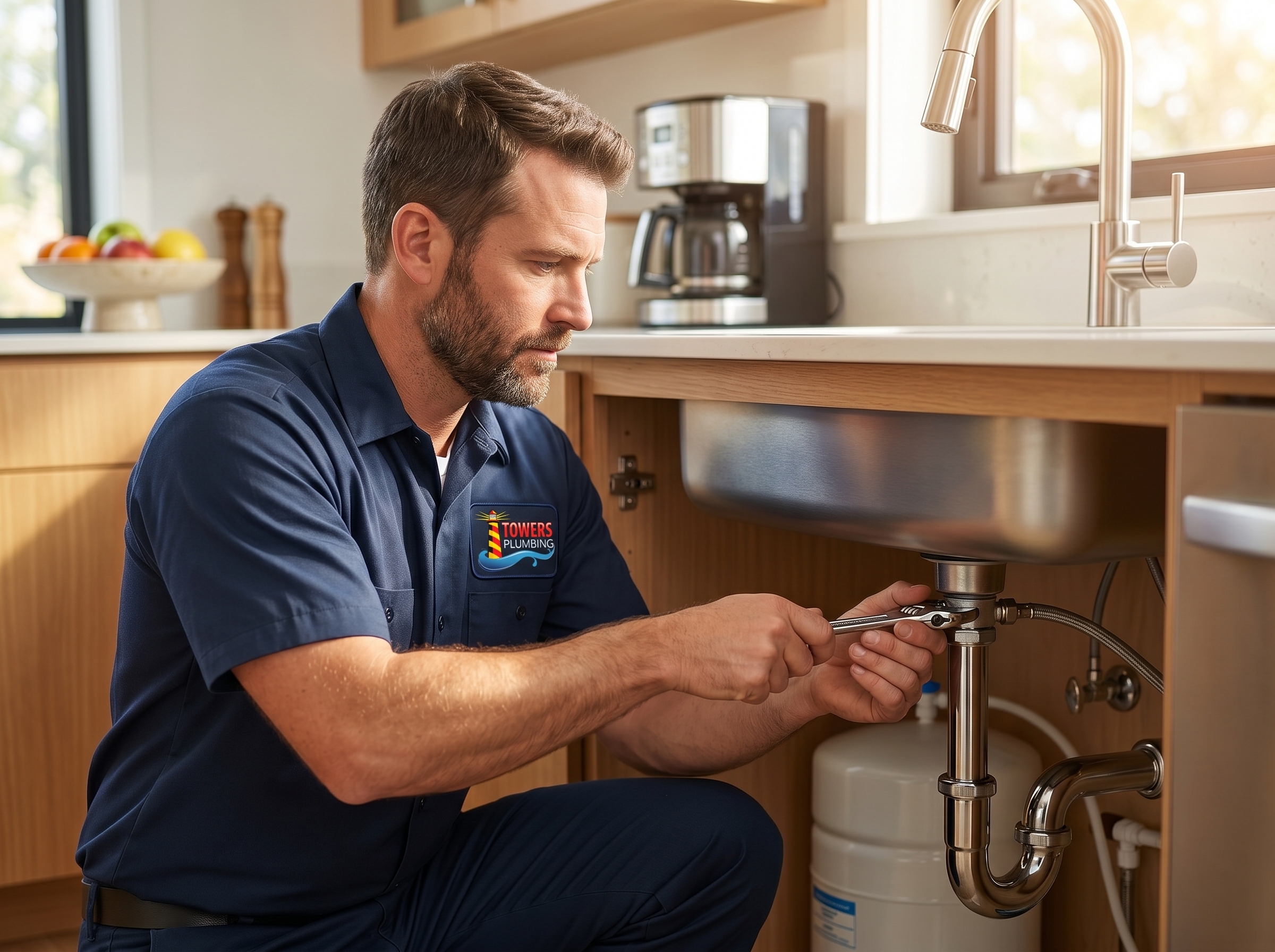
Preparing for water heater service in Salt Lake City does not mean troubleshooting the equipment yourself. A useful preparation is simply a short record of what changed, what can be seen safely, and what normal household use was happening. That record helps a qualified professional begin with the actual property rather than with a guess from a single symptom.
Water heaters can involve hot water, pressure, gas or electrical components, controls, and installation-specific conditions. Do not open panels, remove covers, reset breakers, adjust gas equipment, drain a tank, change settings, or modify a valve to collect more information. A general article cannot determine what repair, if any, is appropriate for a specific home.
Put safety before the service checklist
First decide whether the equipment area is safe to observe. A gas odor, smoke, burning smell, water near electrical equipment, active water spread, or any condition that makes the area unsafe is not a routine note-taking task. Step away and use appropriate emergency or professional help.
The Consumer Product Safety Commission's electrical safety guidance supports keeping distance from wet or damaged electrical conditions. It does not diagnose a Salt Lake City water heater. If a detail cannot be obtained without entering an unsafe area or touching equipment, report it as unknown.
For a non-urgent concern, make observations only from a dry, accessible position. There is no need to reproduce the symptom or stand at the unit while it operates. Normal use provides enough context for a first service conversation.
Describe the change in ordinary language
Write down what the household noticed. Did hot water seem different? Was there a new sound, visible moisture, or a change in a fixture's usual behavior? Include when the issue was first noticed and whether it has happened again.
Avoid giving the symptom a technical name. "The shower felt cooler after normal morning use" is an observation. "The heater needs a new part" is a conclusion that requires professional assessment. A factual note leaves room for the technician to evaluate the equipment, the plumbing, and the household pattern together.
If the concern is intermittent, say so. An intermittent pattern can still be important, but it should be described honestly instead of forced through repeated testing. Do not run extra showers, laundry, or dishwashing cycles just to see whether the pattern returns.
Record the normal-use context
The timing of hot-water use can be useful, even though it does not identify a cause. During one or two ordinary periods, note which fixtures or activities were using hot water and whether the concern appeared at one fixture or more than one area.
Keep the list short:
- Date and approximate time
- Fixtures or normal household activities involved
- Whether the pattern seemed whole-home or limited to one area
- Whether hot water later returned to its usual behavior
- Any safely visible moisture, sound, or odor
- Recent changes in household use, plumbing work, or appliances
These notes do not prove a capacity, recovery, fixture, or component issue. They give Towers Plumbing a clearer starting point for evaluating the actual Salt Lake City home.
Gather only accessible reference details
If a manufacturer label is already visible, record the model number, serial number, fuel type, and capacity. Do not move the unit, reach behind it, remove a cover, or access concealed electrical information. An incomplete record gathered safely is better than an exact record gathered by creating risk.
The U.S. Department of Energy's water-heating guidance describes broad water-heating concepts. It cannot establish the condition of an individual installation or tell a homeowner whether a repair or replacement is needed. Existing manuals, invoices, and prior service notes may be useful if they are already available, but missing paperwork should not delay a needed call.
Also note where the unit is located and any access limits, such as a garage, closet, stairs, pets, gate, or stored items. Clear only ordinary loose items from a dry route. Do not alter piping, venting, equipment, or installed materials to make the area more accessible.
Leave controls and components alone
Many online posts suggest an immediate setting change or test. Those steps can create scalding, electrical, gas, pressure, or water-damage risks and may alter the condition a technician needs to inspect. Until a qualified professional gives property-specific instructions, do not:
- Open equipment or touch wiring
- Reset a breaker repeatedly
- Relight or adjust gas equipment
- Drain or flush a tank to test a theory
- Change temperature settings
- Cap, plug, or modify a relief valve
A drain pan may limit some damage but does not diagnose or repair an active water concern. A relief valve is a safety component, not a homeowner adjustment. Preserve the conditions and let the service evaluation determine the next step.
Make the call clear and specific
When contacting Towers Plumbing, lead with any safety concern. Then share the timeline, normal-use pattern, visible observations, and safely accessible equipment details. Mention access constraints so the service team can plan for the property. Ask what should remain untouched before the visit and what information would be helpful if the condition changes.
At editorial review, this draft may link to water-heater service only after the live destination is confirmed. The link should support a request for assessment, not imply that a diagnosis or repair has already been determined.
A better starting point for Salt Lake City service
For water heater service in Salt Lake City, a concise observation record is often more valuable than an online fix. Towers Plumbing can assess the installed system and property context. Until then, keep the equipment untouched, record what normal use revealed, and put any immediate safety issue ahead of a complete checklist.
Keep the household record in one place
If more than one person noticed the concern, collect those observations in one short dated note. Different people may have seen the pattern at different times, and that timing can be useful. Keep each entry factual: what happened, when it happened, and what was safely visible. Do not convert the record into a list of suspected failures.
Store any safe photos, accessible label details, manuals, and prior invoices with the same note. This prevents a service conversation from being split among messages, memory, and paperwork. It also makes it easy to add a new observation without losing the original one.
Avoid changing normal use to create proof
There is no need to schedule extra showers, run repeated appliance cycles, or adjust equipment to make the concern more obvious. Normal household use provides the most honest context. If the condition changes, write down the time and what was noticed rather than starting a new experiment.
This approach protects the equipment and gives Towers Plumbing a clearer view of what the Salt Lake City household actually experienced. A service visit can then begin with relevant facts instead of a symptom that has been altered by trial-and-error changes.
Bring forward any earlier service history
If a previous invoice, manual, or service recommendation is already available, keep it with the observation note. It can help establish context without proving that the current concern has the same source. A prior event and a new symptom may be related, or they may require separate evaluation.
Tell the technician what was found previously and what has changed since then. That simple distinction gives the service visit a more accurate starting point while keeping repair, setting, and safety decisions tied to the actual equipment and property.