
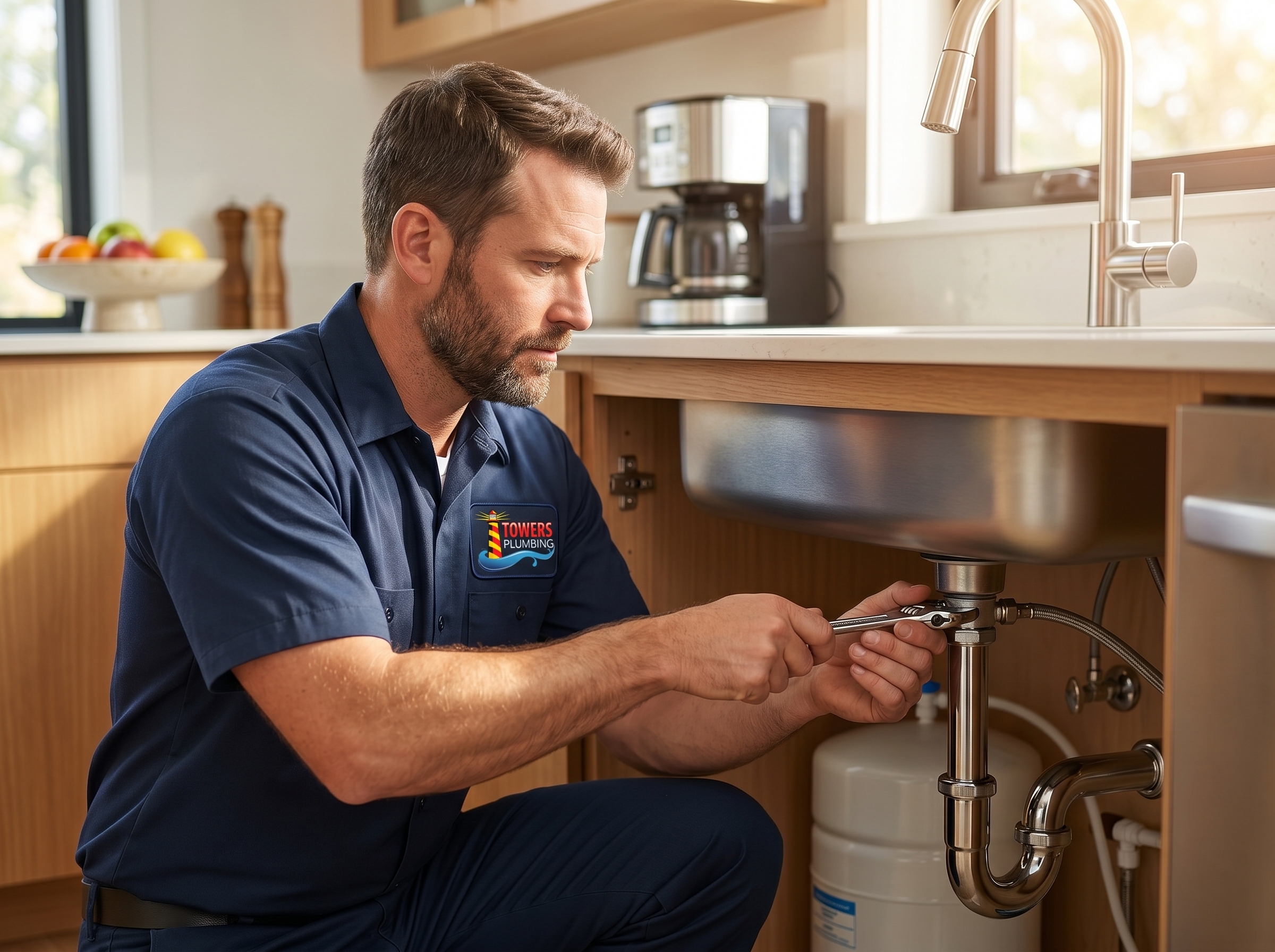
A visible water-heater data label can make a Lehi service conversation more efficient. It can provide basic equipment information that helps a qualified professional prepare questions or locate relevant documentation. The safe approach is limited: record only what can already be seen without moving, opening, reaching behind, or altering the water heater.
The label is not a diagnostic tool. It does not establish the condition of the unit, the reason for a hot-water concern, the correct repair, a replacement decision, or a safe equipment setting. Do not remove a panel, access concealed electrical information, handle gas equipment, drain a tank, or change controls to obtain a more complete label record.
Check whether the area is safe first
Before looking for a label, decide whether the equipment area is safe to approach. If there is a gas odor, smoke, burning smell, water near electrical equipment, active water spread, or another condition that makes the area unsafe, step away and seek appropriate help. Do not stay to take a photo or read a model number.
The Consumer Product Safety Commission's electrical safety guidance supports keeping distance from wet or damaged electrical conditions. It does not evaluate a particular water heater. If a label is inaccessible because the area is unsafe or concealed, record that it is unknown and leave it for a qualified professional.
For a routine service conversation, observe from a dry accessible position. A partial label record gathered safely is more useful than an exact record gathered by taking a risk.
Record only clearly visible details
If the label is in plain view, write down the model number, serial number, fuel type, capacity, and any other information that can be read without touching equipment. A photo may be useful if it can be taken from a safe location and does not require moving the unit or entering a tight space.
Do not try to read a label behind a panel, under a cover, around wiring, or in a location that requires reaching behind the unit. Do not use tools, a mirror, or a phone to inspect a concealed space. The service team can obtain those details using the appropriate procedure if relevant.
The Department of Energy's water-heating guidance provides general information about water-heating systems. It does not explain the condition of a particular Lehi installation or tell a homeowner how to handle equipment safely.
Keep label facts separate from service conclusions
A model number, capacity, or fuel type can be useful context, but it is not a diagnosis. Avoid statements such as "this label means the equipment needs replacement" or "this capacity explains the problem." The installed system, household use, plumbing, access, and actual conditions need professional evaluation.
If the household has noticed a change, keep that observation in a separate note. Record when it began, which fixtures were involved, and what was safely visible. Use ordinary language. "Hot water seemed different after normal use" is a fact. "The label proves a component failed" is not.
Keeping the two records separate helps Towers Plumbing begin with useful information without treating a data label as a repair decision.
Make a simple equipment record
Put safely visible label information with any existing manual, invoice, warranty document, or prior service note. Add the date it was recorded and the general equipment location, such as a garage, utility room, or closet.
Do not delay service because some information is unavailable. Missing details are common and should remain marked as unknown. A current assessment can still proceed based on the property and concern observed by the household.
Also note access constraints such as stairs, pets, a gate, a narrow doorway, or stored items. If a dry safe route can be cleared of loose household belongings, that may help. Do not move the water heater, alter piping, remove venting, or touch electrical or gas connections to improve access.
Avoid using the label as a DIY checklist
The label may prompt online searches about a model or fuel type. Do not use those searches to choose settings, order parts, drain a tank, reset electrical equipment, adjust gas controls, or modify a valve. Those actions can create risk and may alter the condition a professional needs to evaluate.
Do not cap, plug, or modify a relief valve. Do not treat a drain pan as a repair for active water. These components have property-specific roles, and a label cannot tell a homeowner what action is safe for the installed system.
If an immediate safety concern appears, put the label record aside and seek appropriate help. The record is useful only when it does not compete with safety.
Prepare a clearer service conversation
When contacting Towers Plumbing, share visible label details, normal-use observations, previous service records, and practical access information. Lead with any safety concern. Ask what should remain untouched and whether additional accessible information would help the assessment.
The answer should be tied to the Lehi property. Do not expect a model number to establish a price, response time, equipment lifespan, installation requirement, or outcome guarantee. A responsible service conversation explains what is known, what remains unknown, and what direct evaluation will consider.
At editorial review, this post may link to water-heater service only after the current live destination is confirmed.
Keep the record current without inspecting equipment
If a later service visit confirms a detail, add the date and source to the record. If a visible label cannot be read clearly, leave that fact in the notes rather than trying to access it again. The service history should show what was visible, what was professionally verified, and what remains unknown.
This approach supports a safer handoff and prevents a simple equipment label from becoming an unsupported DIY project.
A measured next step in Lehi
For a water-heater data label in Lehi, safe visibility is the limit. Towers Plumbing can assess the actual equipment and explain appropriate options. Until then, record only accessible facts, leave equipment untouched, and keep the review-required boundaries explicit.
Keep later information in the same file
If a qualified professional later confirms model information or provides a property-specific finding, add the date and source beside the original label note. Do not overwrite the earlier observation. The history is clearer when it shows what the household could see and what was confirmed later through appropriate access.
If equipment location, access conditions, or the household concern changes, add a separate dated entry. This prevents an old label record from being treated as a current assessment. A model number can remain the same while the property's use, condition, or service question changes.
Keep the record useful for review and service
For editorial review, keep any proposed featured image, internal-link idea, and publication status separate from equipment facts. A complete local draft does not prove that a public URL is correct or that a client-facing post is approved. Featured media, current link verification, rubric review, and required approval remain separate gates.
For service planning, the same principle applies: a label record supports a conversation, but it does not select a repair, set a schedule, or establish an equipment outcome. Keep the record factual, preserve unknowns, and let current property evidence guide the decision.
Keep household observations and professional findings distinct
When reviewing the file later, label household observations and professional findings separately. A household note may describe a date, fixture, sound, or safely visible condition. A professional finding should include the service date and the explanation provided after direct evaluation. This prevents a possible concern from being remembered as a confirmed fact.
That distinction also makes a later call more efficient. Towers Plumbing can see what the household experienced, what was inspected, and what changed afterward without relying on a reconstructed story or an equipment change made between visits.