
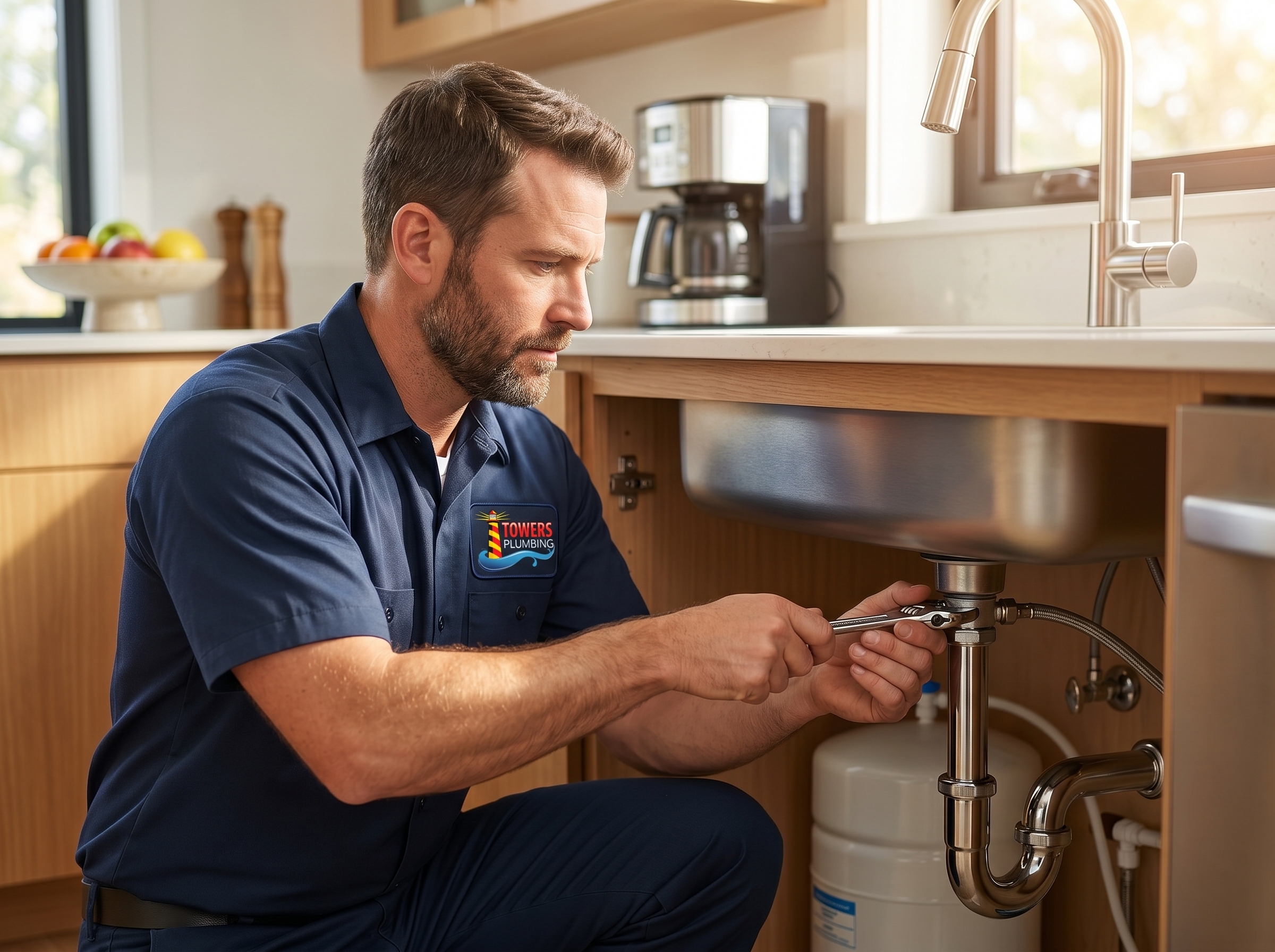
The place where a water heater is installed can affect how a service visit begins, but it does not tell a homeowner what repair is needed. A garage, closet, utility room, basement, or tight storage area can create practical access questions. Before water heater service in Salt Lake City, the safe preparation is to describe the location and clear only ordinary loose items from a dry route. It is not to move equipment or alter the installation.
Water heaters can involve hot water, pressure, electrical or gas components, piping, and venting. Do not remove a panel, pull a unit away from a wall, move connected pipes, change a valve, reset electrical equipment, or adjust gas equipment to improve access. If the area is wet, has a gas odor, smoke, a burning smell, or another safety concern, step away and seek appropriate help.
Describe the location in simple terms
Start with a short description: garage, utility room, closet, basement, or another area. Note whether the route includes stairs, a narrow doorway, a locked gate, pets, or stored belongings. These are useful planning details for Towers Plumbing because they help the service team understand the property before arrival.
Do not assume that a tight location explains a performance concern. Access and equipment condition are separate questions. A technician may need to consider both, but a homeowner does not need to inspect behind or inside the installation to provide a useful description.
If the water heater is in a shared area, mention normal household traffic or items that block the path. The goal is a safe route, not a rearranged utility room. A clear account of the setting can be more useful than attempting to make the space look different before service.
Clear only what can be moved safely
If the path is dry and clear of hazards, move ordinary loose belongings such as boxes, laundry baskets, or portable storage items. Do not remove shelves attached to the installation, disconnect appliances, take down venting, move a water heater, or change anything connected to the system.
Leave all piping, wiring, fuel connections, valves, pans, and equipment covers as found. A drain pan, relief valve, or pipe may have a property-specific role that is not obvious from a quick look. Moving or modifying a component can create risk and make the original condition harder to assess.
If access cannot be improved safely, say so when scheduling. A professional can decide what access is needed. The honest answer is better than a risky effort to create more room.
Pair access notes with the reason for the call
Location information is most helpful when it is paired with a factual description of the concern. Note when the issue began, which fixtures or household activities were involved, and whether the pattern is recurring. Describe visible water, a new sound, or changed hot-water behavior only if it can be observed safely.
Avoid conclusions such as "the closet caused the problem" or "the unit must be replaced because it is hard to reach." The installed equipment, its condition, and the property context must be evaluated together. A general post cannot make that decision.
The Department of Energy's water-heating overview offers general background about water-heating systems. It does not establish the condition or service need of a particular Salt Lake City installation.
Keep the safety boundary intact
Never enter a wet electrical area to create access. Do not reach behind the unit to read a label, remove a panel, or take a close photo. If the area cannot be approached safely, report what is known from a distance and leave the rest for the service visit.
Do not force an unfamiliar shutoff valve or use tools to remove obstructions connected to the equipment. If a known accessible household shutoff has previously been used safely, follow established instructions only. Otherwise, ask the service team what should remain untouched.
This boundary protects the household and preserves the system for professional evaluation. It also avoids turning a scheduling detail into an unsupported DIY task.
Prepare a short access note
Before contacting Towers Plumbing, write down the equipment location, route constraints, pets or gates, and any safely visible concern. Include accessible model information only if it can be read without removing a cover or moving equipment. Existing invoices, manuals, or service records can be helpful if already available.
Ask whether the service team needs any additional access information. The answer may depend on the actual concern. A useful appointment starts with a clear path and a factual description, not with equipment changes made before a professional has seen the property.
During editorial review, this post may link to water-heater service only after the live page is confirmed. The link should support a service request, not imply a diagnosis or guarantee.
A practical next step in Salt Lake City
For water heater service in Salt Lake City, prepare a safe route, a short description of the location, and the facts of the concern. Towers Plumbing can evaluate the actual system and explain appropriate options. Until then, leave the installation intact and treat access preparation as a modest household task, not a repair project.
Use a simple arrival checklist
On the day of a planned visit, confirm the route is still safe and tell the service team about any practical changes. A gate may be locked, a pet may need to be secured, or an ordinary storage item may have returned to the walkway. These details are useful because they affect how a person reaches the equipment, not because they identify a technical condition.
Do not try to anticipate every tool, clearance, or installation requirement. A technician can determine what is needed after seeing the water heater and the surrounding area. The household can prepare by keeping a clear walking path, placing relevant paperwork nearby, and explaining any safety boundary observed before the appointment.
If a concern involves a visible change, add the date and a brief description to the same note. For example, record that water was seen from a safe position, that a sound was intermittent, or that hot-water use changed. Do not move the unit or touch components to make the account more detailed. The original condition is more useful when it has not been altered.
Separate access from diagnosis
Some water heaters are in spaces that are inconvenient but operating normally. Others are easy to reach but need assessment. Access alone does not determine service urgency, repair scope, replacement, equipment capacity, or a safety conclusion. A professional has to consider the actual system and property together.
For this reason, avoid statements such as "the closet is the problem" or "the equipment cannot be serviced because of storage." Say what is physically true: where the unit is located, what blocks the dry path, and what can be moved safely. That gives Towers Plumbing a usable picture without asking the household to redesign or dismantle anything.
Keep visible information separate from inaccessible information
If a label is in plain view, record the visible model or serial number. If it is behind a cover, in a narrow gap, or requires reaching around connections, leave it blank. Missing information is not a failure. It tells the service team that the detail must be obtained through safe professional access.
The same rule applies to pipes, valves, venting, and electrical connections. A homeowner can note that something is visible or inaccessible, but should not decide what it is, whether it is correct, or whether it needs adjustment. This preserves a clear boundary between access notes and technical evaluation.
Keep the final decision tied to the visit
After service, save the date, any written explanation, and property-specific guidance with the original access note. This creates a useful history for future conversations without turning the blog into a list of universal directions. A recommendation should be linked to findings at the Salt Lake City property, not to a generic access scenario or an online assumption about water heaters.