
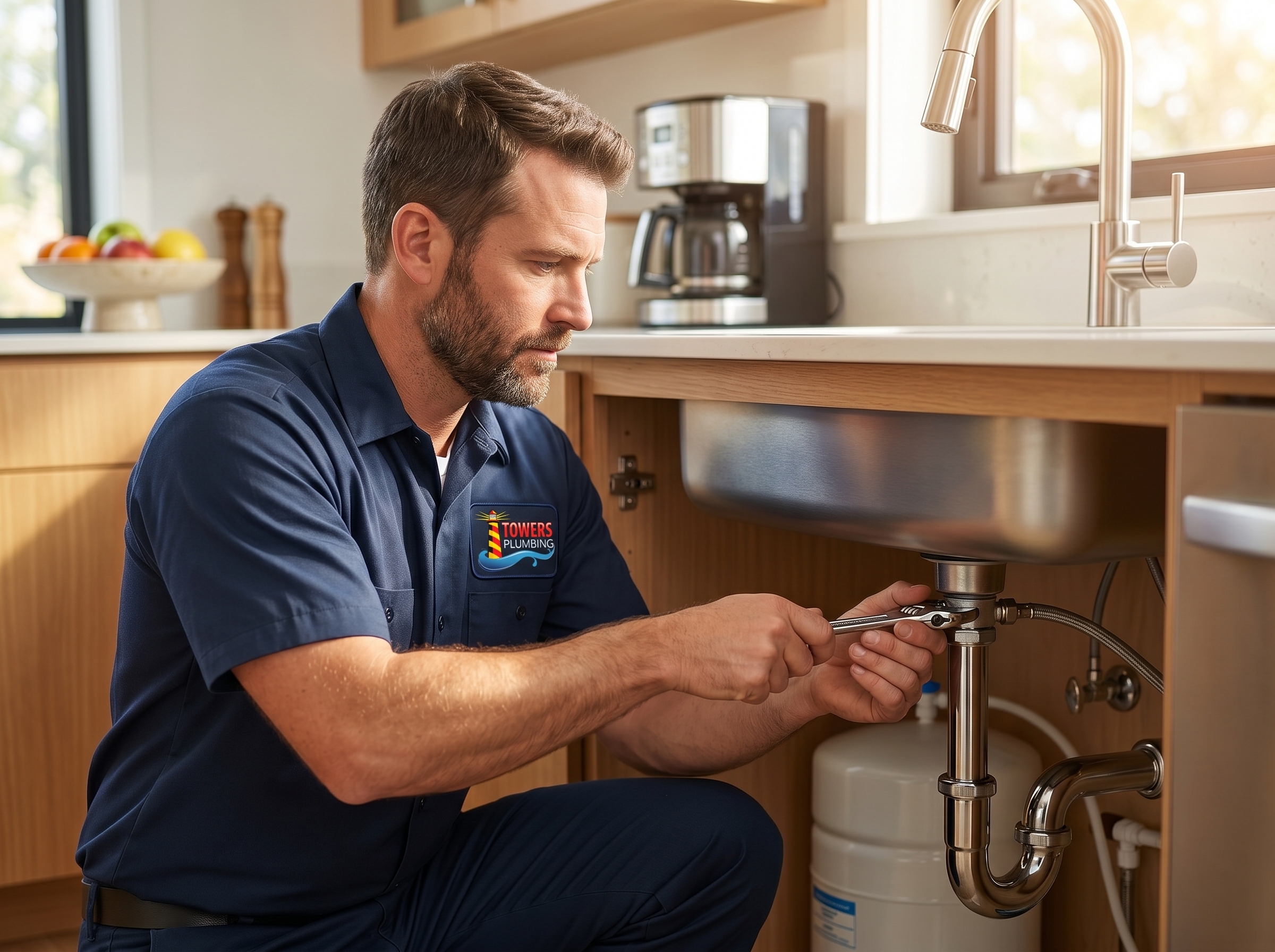
Water filtration in a Provo home should begin with a clear goal, not a guess about what equipment every house needs. A household may be asking about an existing filter, a change at one fixture, maintenance records, or the scope of a possible treatment conversation. Those are useful reasons to speak with a professional. They are not proof of a contaminant, a system failure, or a universal solution.
Do not open a pressurized filter housing, force a bypass valve, change a cartridge from a generic schedule, or alter plumbing based on a blog. Filtration decisions depend on the actual system, the household goal, the property, manufacturer information, relevant testing, and professional evaluation.
Begin with the question you are trying to answer
Write down the household's goal in plain language. It may be related to a particular sink, a whole-home question, an existing system, a change in flow, or a desire to understand prior service. A specific goal helps keep the conversation focused without assuming a treatment result.
The Environmental Protection Agency's home drinking-water treatment guidance explains that treatment systems should be considered in relation to the concern and the system used. It does not establish what is present in a particular Provo home's water or which equipment is appropriate there.
Avoid turning a taste, odor, cloudiness, or change at a fixture into a water-quality conclusion. Those observations can be documented, but they need evidence before anyone claims that a particular contaminant or condition exists.
Define the scope of the concern
One helpful question is where the issue appears. Is it limited to one kitchen sink or another fixture? Is it observed at more than one point of use? Is there an existing treatment system already connected? Scope matters because different uses and locations may call for different questions.
Do not assume that a one-fixture concern describes the whole property, or that a broader household goal automatically requires a certain system. Coverage, flow, space, service access, maintenance, treatment objectives, and the installed plumbing all need property-specific review.
During normal use, note which fixtures are involved and when the observation appears. Do not take apart a faucet, remove a housing, or run special tests to make the pattern more obvious. Clear facts are more useful than a forced experiment.
Collect existing information safely
If there is an existing filter system, gather manuals, invoices, prior service records, and manufacturer instructions that are already stored in a safe place. If a label can be read without opening the system or reaching around plumbing, record the model or visible identifier.
Do not open a pressurized housing or disconnect a fitting to verify a cartridge. If the information is inaccessible, leave it for a qualified professional. A partial record is enough to begin the conversation, and preserving the equipment as found can help an assessment.
Note the equipment location and access conditions as well. Under-sink installations, utility rooms, cabinets, pets, stored items, or limited workspace can all be useful planning facts. Do not move plumbing, alter an installation, or force a component to create better access.
Keep observations separate from water-quality claims
A service conversation can include what the household noticed: a change in taste, flow, odor, appearance, or use. It should not claim that water is unsafe, that a filter is ineffective, or that a specific contaminant is present without appropriate evidence.
Similarly, do not use a general post to assign a universal cartridge interval. Service timing can depend on the installed system, use, manufacturer guidance, conditions, and the treatment goal. If prior records are incomplete, that is a reason to ask what should be verified, not a reason to force a service action.
If a condition seems urgent or may affect immediate safety, seek appropriate professional or public-health guidance. A routine filtration conversation should not delay a response to an urgent problem.
Avoid easy but risky shortcuts
Do not loosen a housing, manipulate a bypass, change a connection, or substitute equipment based on a list of popular products. These actions can create leaks, damage fittings, or change the conditions a professional needs to see. Filtration equipment can have system-specific installation and maintenance requirements.
Point-of-use and whole-home discussions also require different questions. Rather than choosing a category from a blog, ask what the current scope is, what the household needs to accomplish, and what verified information will guide the recommendation. A responsible answer may involve more assessment before a specific option is discussed.
Keep household members informed that the system should stay as found until property-specific guidance is available. This preserves both safety and useful evidence.
Prepare practical questions for Towers Plumbing
When contacting Towers Plumbing, share the goal, the fixtures involved, any existing records, and what was observed during normal use. Ask what the current system is designed to address, what information remains unknown, and what should be verified before a change is considered.
Ask which documents or service dates should be retained and whether the concern appears limited to one point of use or needs broader review. The answer should follow the property facts rather than a universal recommendation. During editorial review, a relative link to water-filtration service should be kept only after confirming the current live page.
A grounded next step in Provo
For water filtration in Provo, the best first step is a precise question and a factual record. Towers Plumbing can discuss the actual system and household goals. Until then, keep equipment closed, avoid unsupported water-quality claims, and let verified information guide any future treatment decision.
Keep the conversation centered on verified information
If you have a municipal report, a manufacturer document, or a record from an earlier service visit, keep it available for the conversation. Ask what the document actually supports and what it does not establish for your property. A general report, a filter label, or an online review should not be treated as a substitute for evaluating the household's current goal and system.
It is also useful to say whether the question is about drinking water at one location, water used for cooking, an existing appliance, or another use. That detail does not prescribe a solution. It gives the professional a clearer way to explain where the current system applies and what additional information could be relevant.
Treat maintenance history as context, not proof
An old invoice or an unknown cartridge date does not by itself prove that an installed filter is ineffective. Record the date if it is known, the model if it is safely visible, and the household observation. Then ask how manufacturer guidance and a professional assessment apply to that specific system.
Do not respond to uncertainty by opening a housing, forcing a bypass, or buying a replacement part from a generic list. Pressurized connections and installed plumbing deserve care. Keeping the system as found protects against leaks and lets the service conversation start from accurate facts.
Make a simple follow-up record
After the discussion, keep the recommendation, the information used, and any next step together with the existing documents. If a change is observed later, record the date and fixture involved without claiming a water-quality result. A small record helps future service stay consistent while leaving conclusions to verified evidence.