
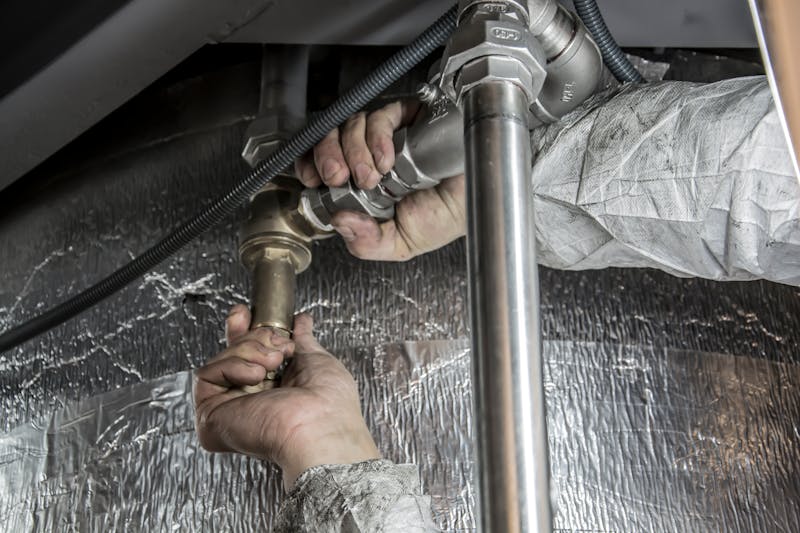
Water-filter service records can make a future Draper conversation more efficient when they preserve facts: what system is present, what documents already exist, and what has been observed during normal use. They should not become a generic maintenance calendar or a basis for claims about water quality. An installed treatment system has its own scope, manufacturer information, plumbing conditions, and service needs.
Do not open a pressurized housing, loosen fittings, force a bypass valve, or change a cartridge because a general article suggests an interval. Those actions can create leaks or alter the condition that a professional needs to evaluate. The safest record is built from documents and details that are already accessible.
Gather the documents you already have
Start with manuals, invoices, service reports, warranty paperwork, and any manufacturer instructions kept in normal household files. Store copies together in a labeled folder or secure digital location. Include a date and a short description, such as "service visit," "manual," or "filter purchase," rather than trying to reconstruct a complete history from memory.
Missing paperwork is not proof that a system has a problem. It simply means some history is unavailable. A qualified professional can evaluate the current system even when older records are incomplete. The record is there to support the conversation, not to delay it.
If a document identifies a model or cartridge, keep that information with the file. Do not take apart equipment to make a label and an invoice match. Accessible facts are enough.
Note visible equipment details safely
If a model label or visible identifier can be read without opening the system, reaching around plumbing, or moving equipment, record it. Also note where the system is located: under a sink, in a utility room, cabinet, garage, or another area. Mention access limits such as pets, stored items, a tight cabinet, or stairs when requesting service.
Do not remove a housing or disconnect a line to find more detail. A partial record gathered safely is better than a complete record that creates a pressurized-water risk. Clear only loose household items from a dry route; leave plumbing and installed components as found.
The EPA's home drinking-water treatment guidance provides general context about treatment systems. It does not identify a contaminant, establish water safety, or prescribe a service schedule for a particular Draper property.
Keep observations descriptive
If the household noticed a change in flow, taste, odor, appearance, or use, record the fixture, date, and normal-use context. Do not say that a particular contaminant is present, that a filter is ineffective, or that the water is unsafe. Those conclusions require appropriate evidence.
Write what was observed instead: "A change was noticed at the kitchen sink," or "The concern appeared after normal use." Note whether it was brief, recurring, or limited to one fixture. This helps a professional ask the right questions without treating an observation as a test result.
Do not create special tests or take apart the system to prove the observation. A clear note from normal use is more useful than an experiment that changes the system.
Separate records from a universal schedule
Service intervals can depend on the specific equipment, manufacturer instructions, household use, treatment goal, and conditions found during service. An old invoice or uncertain date does not prove that immediate replacement is necessary. Keep dates when they are known and ask how the actual system should be evaluated.
Do not use a broad online schedule to force a cartridge change, open a housing, or change a bypass position. Filters and connections may have system-specific requirements. If the property needs an assessment, leaving the equipment unchanged can preserve useful information and avoid unnecessary water exposure.
The same caution applies to point-of-use and broader treatment discussions. A record can identify what is in place, but it does not by itself determine what scope is appropriate for the home.
Build a concise timeline
For each useful entry, record the date, document or observation, fixture or equipment location, and any service conversation. Keep the entry short. Attach safe photos only if they show an accessible label or general equipment area from a dry position.
If a professional provides property-specific advice, store it with the related invoice. If manufacturer guidance is relevant, keep it beside the model information. This makes later follow-up clearer while leaving technical decisions tied to the actual system.
If a condition seems urgent, do not treat it as a recordkeeping task. Seek appropriate professional or public-health guidance. A water-filtration discussion should not delay a response to an immediate safety concern.
Share the record with Towers Plumbing
When contacting Towers Plumbing, provide the household goal, accessible system information, prior records, and factual observations. Ask what the current system is designed to address, what information is still unknown, and what should remain untouched before service.
At editorial review, this article may link to water-filtration service only after the live destination is confirmed. The link should invite a property-specific discussion, not imply a treatment result or universal equipment recommendation.
A useful record, not a DIY plan
For water-filter service in Draper, a small organized file can support safer decisions. Towers Plumbing can assess the actual system and explain appropriate options. Keep equipment closed, record facts without water-quality claims, and let manufacturer information and professional evaluation guide the next step.
Keep records organized by source and date
Label each item with its date and source: manufacturer manual, service invoice, household observation, or professional recommendation. This makes it easier to see what is confirmed and what is simply a note from normal use. Do not treat an old receipt as proof that the same work is required today, or a missing receipt as proof that the system has failed.
If a record mentions a model or cartridge, preserve the wording exactly rather than guessing from a photo or online listing. A qualified professional can confirm whether the document matches the installed system. This is particularly helpful when equipment has been updated, prior records are incomplete, or the visible label cannot be accessed safely.
Include the household goal with the history
Service records are more useful when they show why the conversation is happening now. Write a sentence about the household goal: understanding an existing system, discussing a fixture-specific observation, or asking about the scope of treatment. Do not frame the goal as a claim that water is contaminated, unsafe, or guaranteed to improve with a specific product.
The goal may change over time. If it does, add the new date and reason rather than replacing the earlier note. This gives Towers Plumbing a clear sequence and avoids conflating a past service event with a new household question.
Preserve safe access boundaries in the file
Add a note if the system is under a sink, in a tight cabinet, near other equipment, or otherwise not safely accessible. This tells the service team what is unknown without asking anyone to open a housing, move plumbing, or force a connection. Access limits are relevant facts, not a problem for the household to solve.
If a leak, odor, or other safety concern appears, stop treating the situation as routine recordkeeping. Do not keep updating the file from a hazardous area. Seek appropriate help, then record only what was observed safely and what action was necessary for immediate safety.
Use the record to support a clear follow-up
At a service visit, ask which documents matter, what the current system is designed to address, and which questions need verified information before a change is considered. Keep the answer together with the original notes. This helps future discussions remain tied to the actual Draper property, manufacturer information, and professional findings rather than to a general maintenance interval or a marketing claim.