
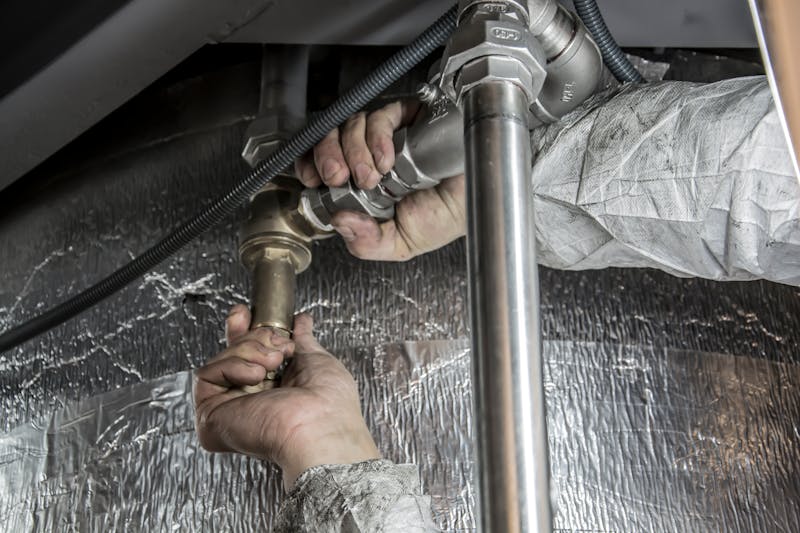
A useful water-filter service history helps a future Provo conversation start with facts rather than guesses. It can include existing invoices, manuals, safely visible system details, normal-use observations, and property-specific findings from earlier service. It should not become a generic maintenance calendar or a reason to open a pressurized housing, force a bypass valve, or alter plumbing.
Water-filtration systems have their own scope, manufacturer information, plumbing conditions, service requirements, and household goals. Do not change a cartridge from a generic interval, loosen fittings, open a housing, or make water-quality conclusions from a blog. The appropriate next step depends on the actual system and property.
Begin with records already available
Gather invoices, manuals, warranty paperwork, installation notes, and prior service reports from normal household files. Keep them in a labeled folder or secure digital location. Add a date and a short description such as "service visit," "manufacturer manual," or "filter record" so a later reader can understand what each item represents.
Missing paperwork is not proof that a system has a problem. It only means part of the history is unavailable. A qualified assessment can still begin with current observations and the accessible information that is available now.
If a document names a model, cartridge, or service date, preserve that wording with the document. Do not take apart equipment to make a record match a visible label. A professional can confirm inaccessible information when it is relevant.
Record visible system details safely
If a model label or other identifier is visible without opening equipment or reaching around plumbing, record it. Note the equipment location: under a sink, in a cabinet, utility room, garage, or another accessible area. Mention practical limits such as stairs, a gate, pets, stored items, or a tight cabinet.
Do not open a pressurized housing, disconnect a fitting, force a bypass, or move plumbing to make the record more exact. A partial history collected safely is more useful than a detailed history that creates a leak or damages an installation.
The Environmental Protection Agency's home drinking-water treatment guidance provides general context about treatment systems. It does not establish what is in a particular Provo home's water, whether a system is effective, or what equipment is right for the property.
Keep observations separate from water-quality claims
When a household notices a change, write down the date, fixture, and normal-use context. You might note an observation involving flow, taste, odor, appearance, or a particular use. Use plain language and do not assign a contaminant or safety conclusion.
For example, write "a change was noticed at the kitchen sink during normal use" rather than "the filter no longer works." Write "an odor was noticed at one fixture" rather than "the water is unsafe." These observations can help a professional ask useful questions. Conclusions require appropriate evidence.
Do not run special tests, open equipment, or change components to prove a pattern. A concise note from normal use is safer and more reliable.
Keep service history distinct from a universal schedule
Store any property-specific recommendation with the related invoice or report. If a professional gives a next step, record the date, what was observed, and what the recommendation was based on. This keeps future decisions connected to actual findings rather than to a generic online interval.
Do not assume an old invoice or uncertain date proves that immediate service is needed. The appropriate timing can depend on the installed system, manufacturer guidance, use, treatment goal, and conditions found during service. A history should capture facts, not prescribe equipment work.
If a later concern is different from an earlier one, make a new dated entry. Do not assume an old instruction applies automatically. This is important when a system, fixture, or household goal has changed.
Keep safety conditions out of routine recordkeeping
If there is an active leak, an unsafe area, or another immediate concern, do not treat it as a recordkeeping task. Step away from any hazardous condition and seek appropriate help. Do not open a housing or disturb plumbing to collect a model number or photograph.
If a detail cannot be safely observed, mark it as unknown. This prevents a future reader from assuming a missing fact is an answer or trying to obtain it through risky equipment access.
The service history should preserve what is known without inviting a household repair project around pressurized connections or installed filtration components.
Prepare a clear service conversation
When contacting Towers Plumbing, have the short timeline, accessible system information, prior invoices, and safe photos available. Share the household goal and explain what changed, when it was noticed, and what remains unknown.
Ask what should remain untouched before a visit and which records are useful. The answer should be tied to the actual Provo property, not to a promise about treatment result, price, response time, or a universal maintenance plan. At editorial review, this article may link to water-filtration service only after the live destination is verified.
A practical next step in Provo
For water-filter service in Provo, a small factual history supports safer decisions. Towers Plumbing can assess the actual system and explain appropriate options. Until then, keep equipment closed, retain documents and normal-use facts, and let verified information guide the next step.
Keep later observations with the first record
If the household notices a later change, add a new dated entry rather than deleting the first observation. Identify the fixture, normal-use context, and what was safely noticed. State whether the original observation remained, changed, or was not noticed during a later period. Do not treat the difference as proof that a particular component is responsible or that the system is safe or unsafe.
If more than one household member has observations, add them to the same brief timeline. Different notes may be useful without proving a source. A shared record is clearer than several separate guesses and gives the service team a more accurate description of what people experienced.
Keep access preparation modest
Before a service visit, make sure the route to the system is dry and clear of ordinary loose belongings. Tell the team about a cabinet, utility room, stairs, pets, gate, or other access limit. Do not move plumbing, remove a housing, disconnect a fitting, or force a component to create more room.
This simple preparation helps Towers Plumbing plan for the property while keeping the installed system in the condition that produced the question. A clear walking path and an honest access note are enough. Technical access and treatment decisions belong with the qualified professional.
Keep household observations and findings distinct
When reviewing the history later, label entries as household observations or professional findings. A household observation may describe a date, fixture, flow change, or safely noticed concern. A professional finding should include the service date and explanation after direct evaluation. This prevents an early possibility from being remembered as a confirmed fact.
It also makes future service conversations more efficient. The team can see what the household experienced, what was inspected, and what changed afterward without relying on a reconstructed story or a component change made between visits.
Keep the record useful, not prescriptive
The service history is a communication tool. It is not an instruction to set an interval, alter equipment, or choose a treatment system. Preserve documents and normal-use facts, ask for property-specific guidance, and add the date and source of any recommendation. This keeps decisions connected to current evidence at the Provo home.