
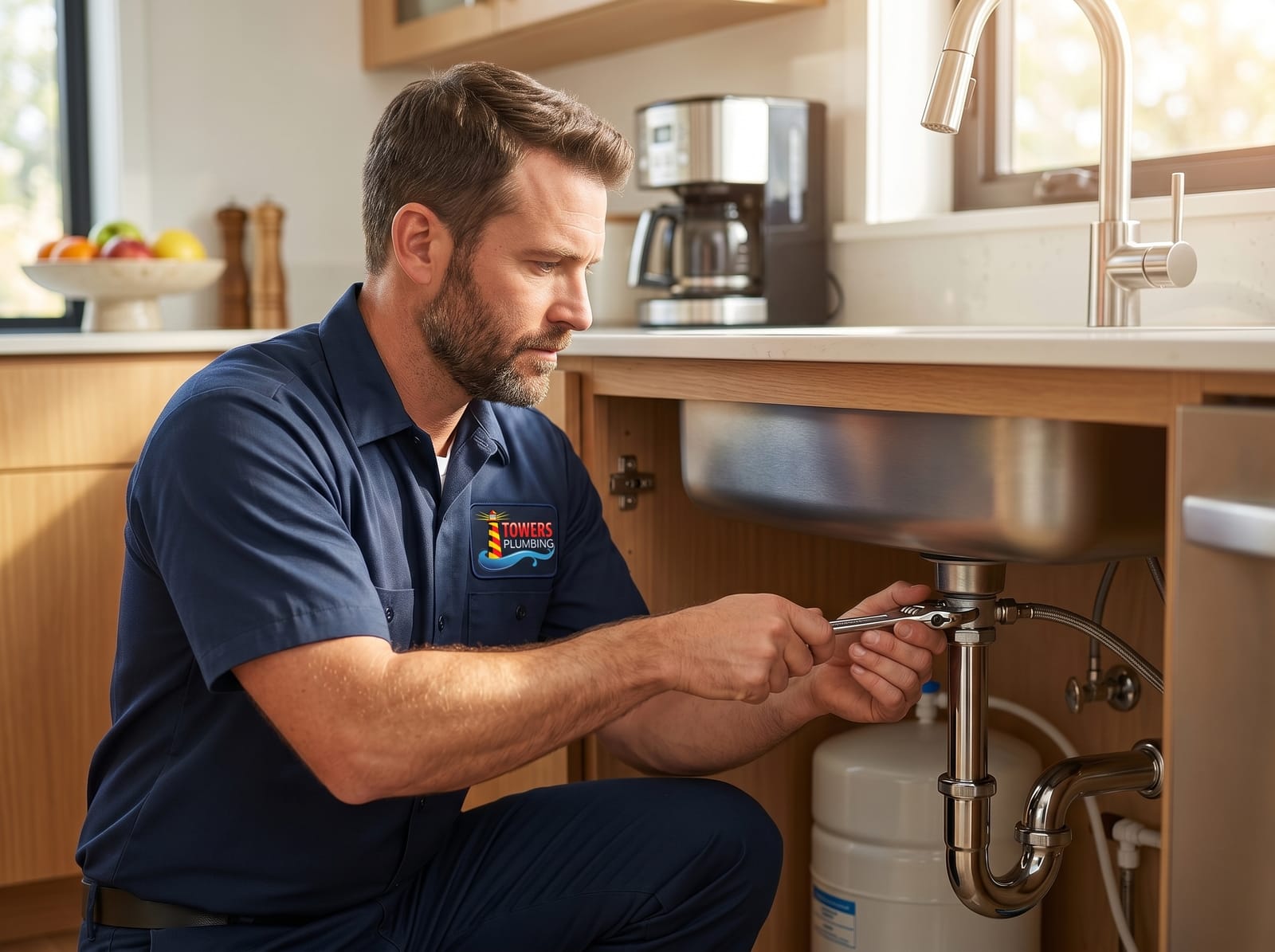
A sewer smell in the house tends to show up in odd places: a basement corner, a guest bathroom, or the hallway after a shower. In an Ogden home coming out of a long winter, with the windows closed for months, the odor can seem to come from nowhere. Sewer gas gets inside when a seal in the drain system fails, and each type of failure leaves distinct clues.
How a Trap Keeps Sewer Gas Out, and How It Dries Up
Every sink, tub, shower and floor drain has a trap, a bend of pipe that holds a plug of water. A toilet's trap is built into the bowl. That water is the only barrier between the room and the gas in the drain lines. The 2021 Utah plumbing code calls for a trap seal of 2 to 4 inches of water and requires extra protection for seals subject to evaporation.
Evaporation is the simplest failure. Water in an unused fixture slowly disappears, and dry indoor air during a northern Utah winter can speed that along. Basement floor drains and spare showers are the usual suspects. One manufacturer's guide to sewer gas odors says an unused trap can dry out completely in two to four weeks.
Once the seal is gone, the sewer smell rises straight out of the drain. A trap primer on some floor drains adds water automatically, but primers can quietly stop working.
A Failed Toilet Wax Ring
A toilet sits on a wax ring that seals its outlet horn to the closet flange in the floor. The wax is molded by compression when the toilet is set, so it seals only while the toilet stays firmly down.
A ring can fail when the toilet rocks, when the closet bolts loosen, or when new flooring raises the toilet above the flange. Resetting a toilet on the old wax after clearing a clog causes the same problem, and one manufacturer's wax ring guide warns against reusing a ring.
Gas can escape at the base even when water does not, so a sewer smell that is strongest right at the toilet points here. Resetting the toilet on a new ring, with the flange inspected for cracks and correct height, is part of toilet repair and replacement.
Blocked Vent Stacks That Siphon Traps
Traps also depend on the vent stack, the pipe that rises through the roof and lets air into the drain system. When a full tub or a washing machine empties, the moving water draws air in behind it. With an open vent, that air comes from the roof. With a blocked vent, it comes through the nearest trap, and the water seal gets siphoned away.
Debris or a bird's nest can narrow a vent opening. On some winter nights, frost and ice can build up at the opening, or heavy snow can bury a short pipe. The vent chapter of the 2021 Utah plumbing code includes a frost closure section that sets a minimum vent size through the roof in cold design climates.
Typical clues are gurgling drains, a toilet bowl that loses water after a nearby fixture drains, and a sewer smell that comes and goes with heavy water use.
Loose Cleanout Caps and Cracked Drain Lines
A cleanout is a capped fitting that gives a plumber access to the drain line. Nothing but the cap seals it, so a cap left loose after drain work lets gas straight into a basement or utility room.
Cracked pipes do the same thing out of sight. A split vent pipe in a wall or a broken drain under the slab can release gas far from any fixture. That is why a sewer smell in a room without plumbing deserves attention. Slow drains alongside the odor suggest a partial blockage, so drain cleaning comes first. A sewer camera inspection then shows cracks, offsets and roots in the line.
For hidden leaks, plumbers use smoke testing. The 2021 Utah plumbing code describes the method: fill every trap with water, then send thick smoke from a smoke machine into the system. Smoke seeping from a wall or a toilet base marks the leak.
What You Can Check Safely
These checks need no tools and no ladder.
- Note the pattern: write down where the smell is strongest, when it appears, and what water use comes right before it.
- Refill every trap: run water in each sink, tub and shower, and pour about a gallon into each floor drain, as the manufacturer guide above suggests. If the smell fades within a day, a dry trap was the likely cause.
- Check the toilets: try to rock each bowl gently. Movement or a stain at the base points to the wax ring.
- Look at the cleanouts: see whether any cap is loose, cracked or missing, but do not open one.
- Listen for gurgling: drain a full tub and listen at the nearby sink and toilet.
An Ogden Scenario You Might Recognize
Picture a family whose upstairs bathroom starts to smell like sewer after a snowy stretch in early spring. The odor is worst right after someone drains the tub or the washing machine empties. The sink gurgles while the tub drains, and the toilet bowl water sits lower than usual in the morning. The basement floor drain smells fine.
That pattern does not fit a dry trap, because every fixture in that bathroom gets daily use. It does not point to the wax ring either, since the odor follows draining water instead of staying at the toilet base.
It points to a vent stack narrowed by ice or debris. Without enough air from the roof, big drains pull water out of nearby traps, and each siphoned trap lets gas in until the next use refills it. That explains a sewer smell that comes and goes.
Safety Notes
- Rule out natural gas first: natural gas can also smell like rotten eggs. If you cannot tell them apart, or the smell is near the furnace, water heater or range, get everyone outside. Then call 911 or the gas utility's emergency line from outside.
- Do not trust a fading odor: OSHA notes that hydrogen sulfide, which it also calls sewer gas, smells like rotten eggs at low levels, but that after a while you can no longer smell it.
- Leave cleanout caps closed: loosening a cap on a backed-up line can release wastewater under pressure.
- Stay off icy roofs: checking a vent stack on a snowy or icy roof is a real fall risk.
When to Call a Professional
Call when a sewer smell returns within a few days of refilling every trap, or when it is strongest in a room with no fixtures. Both suggest a failed seal or a cracked pipe hidden in a wall or floor. Call as well when a toilet rocks, when several drains gurgle, or when the odor comes with slow drains. Vent repairs also belong with a professional, since they mean working on a pitched roof.
Towers Plumbing works on homes across Ogden and can trace the source, whether it is a dry trap, a wax ring, a blocked vent or a broken line.
Frequently Asked Questions
Why does the house smell like sewer after we have been away?
While a house sits empty, every trap slowly loses water to evaporation and nothing refills it. Run water in every fixture and pour water into the floor drains when you get home.
Can a toilet leak sewer gas without leaking water?
It can. A wax ring that has shifted or been crushed unevenly may still hold back water but leave a gap for gas. A smell that is strongest at the toilet base, or a bowl that moves when pushed, is worth having checked.
Why does the sewer smell return after I refill the floor drain?
If it comes back within a day or two, something else is letting gas in: a cracked trap, a failed trap primer, a loose cleanout cap or a crack in a nearby drain line. A smoke test can show where it escapes.
Your Next Step for a Sewer Smell in the House
Before you call, refill every trap, give it a day, and write down what you found. Note where the smell is strongest, when it shows up, and whether it follows draining water, a flush or a snowy night. List any fixtures that rarely get used, any toilet that rocks, and any drain that gurgles or runs slow.
Then reach Towers Plumbing through our contact page to set up a visit. With that pattern in hand, a technician can go straight to the likely seal, confirm it with a camera if needed, and explain the repair before any work begins.