
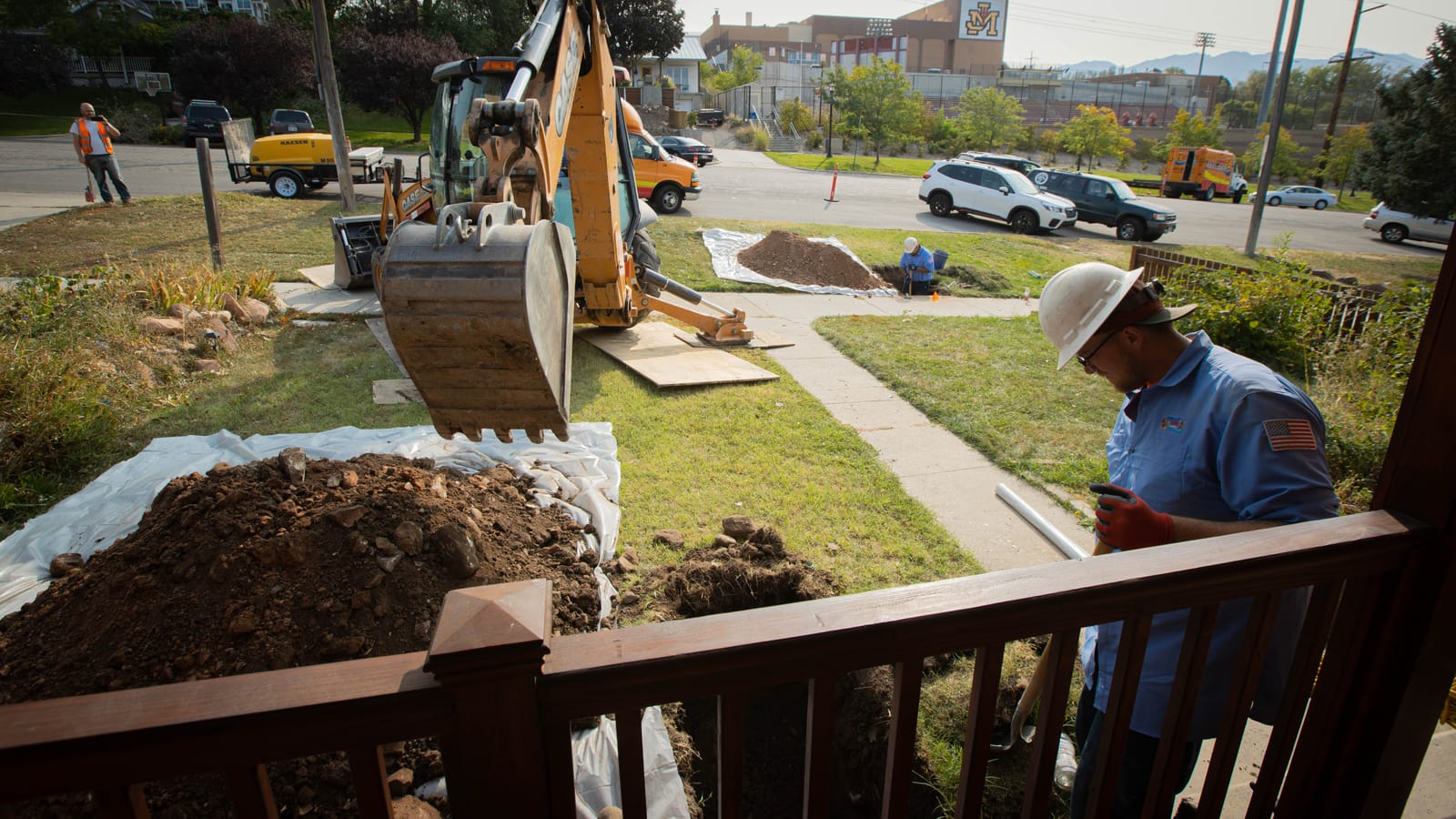
Trenchless repair gets most of the attention, but some sewer lines can only be fixed by digging. If a camera inspection shows that a Bountiful sewer line has collapsed or sunk, sewer line excavation may be the right repair. A trench sounds alarming, but the work follows a clear order. Here is why open trench work is sometimes needed, what happens before anyone digs, and how long your drains and yard are out of use.
How a Sewer Line Fails Beyond a Trenchless Fix
Your sewer lateral is the private pipe that carries every drain in the house to the public main, by gravity alone. Utah's plumbing code calls for drainage pipe laid in uniform alignment at uniform slopes, so water carries waste steadily downhill.
Trouble starts when the ground around the pipe moves. Soil settles under a joint, roots pry joints apart, and older pipe can crack or crush. Three patterns tend to push the job toward a trench:
- Collapse: a crushed section can leave no open path for a liner or a bursting head.
- Belly or grade problem: a sunken stretch holds water and waste. A liner follows the old pipe, so it keeps the low spot.
- Severe misalignment: joints shifted far apart, or sharp bends, can stop trenchless tools.
When the pipe still has a usable path, trenchless sewer line repair through small access pits is often the better fit. When it does not, sewer line excavation lets a crew lay new pipe on a firm bed at the correct grade.
What You Can Check Safely Before the Dig
Start with the pattern of the trouble, then walk the yard.
- Which drains back up: water rising in a basement floor drain or the lowest toilet points to the main line, not one fixture.
- The cleanout: find the capped cleanout pipe and note where it sits. Leave the cap on if drains are backing up, because sewage can spill out.
- Soft or sunken spots: a damp, sinking strip of lawn between the house and the street can mark a broken pipe.
- Private lines in the yard: list sprinkler lines, lighting wires, pet fences and anything else buried on the property.
- The camera video: ask to see the inspection footage and how far the problem sits from the cleanout.
These notes help a contractor plan the sewer line excavation, size the trench and avoid surprises.
Call 811 First: Blue Stakes of Utah and Private Lines
Every dig in Utah starts with a locate request through Blue Stakes of Utah 811. According to the Blue Stakes FAQ, the request should go in at least three business days before digging, and no more than 14 calendar days ahead. That applies however shallow the dig.
Member utilities then mark their buried lines with paint or flags. Green marks sewer and drain lines, yellow marks gas, red marks electric power, and white outlines the planned dig. Within 24 inches of either side of a mark, Blue Stakes calls for hand tools or vacuum excavation instead of machines.
Here is the catch for sewer line excavation: utilities only mark the lines they own, usually up to the meter. Your private sewer and water laterals, sprinkler lines and power to a detached garage may not be marked. That is why your list of private lines matters.
Permits, Shoring and a Safe Trench
Utah's plumbing code requires a permit to repair or replace part of a plumbing system, as its permit and inspection rules spell out. Work in the street or park strip may need extra city approval. Which part of the lateral you own varies by city, so ask before work starts.
The trench from a sewer line excavation is a hazard in itself. The OSHA trenching fact sheet says trenches 5 feet deep or more need a protective system unless the cut is entirely in stable rock. Crews slope or bench the walls, brace them with shoring, or set a steel trench box inside.
OSHA also calls for keeping dug soil at least 2 feet back from the edge and checking the trench after rain or water intrusion. That matters in April. Spring snowmelt can leave soil wet and heavy, and OSHA lists soil water content and weather among the factors in protective system design.
Backfill, Restoration and How Long Access Is Interrupted
Under the same code, the underground inspection comes after the trench is dug and bedded and the pipe is in place, but before any backfill.
Backfill is more than pushing dirt back. The code's trenching and backfill section calls for loose earth with no rocks, broken concrete or frozen chunks. It goes in 6-inch layers, tamped until 12 inches of tamped earth cover the pipe. Even fill on both sides keeps the pipe aligned.
Access is interrupted in stages. Drains are out of service from the moment the old pipe is cut until the new section is connected. The trench may stay open until the inspection, and lawn, concrete or asphalt repair often comes last. Filled trenches can also settle over the next few weeks. Ask for the expected window for each stage, and talk through restoration when you plan sewer and water line excavation.
A Bountiful Scenario You Might Recognize
Picture a family whose basement floor drain gurgles each time the washing machine empties. Snowmelt has soaked the yard, and a strip of lawn between the house and the street feels soft and has sunk a little. Cleaning the line helps for a few weeks, then the slow drains come back.
A camera run from the cleanout shows water standing in one long stretch of pipe. Past it, the pipe looks oval and cracked. That pattern points to a sagging section with a partial collapse. A liner would keep the low spot, and the crushed pipe may block a bursting head. This Bountiful home is a likely candidate for sewer line excavation over that stretch, with new pipe bedded at the correct grade.
Safety Notes
- Wait for the marks: submit the Blue Stakes request and wait for marks before any digging, even a short trench.
- Stay out of the trench: only trained workers should enter, and only after a protective system is in place.
- Keep kids and pets back: trench edges and soft spoil piles can give way without warning.
- Hold off on water use: while the line is open, skip flushing, showers, laundry and the dishwasher.
- Leave the marks alone: do not pull flags or drive over marked areas before the dig.
- If you smell gas: if digging strikes a line and you smell gas, get everyone outside and away from the dig, then call 911 or the gas utility's emergency line from outside.
When to Call a Professional
Call when the same main line backup returns after cleaning, when drains across the house slow at once, or when a wet, sunken strip appears over the sewer route. Sewage surfacing in the yard or backing into the basement also calls for prompt help.
A camera inspection decides between trenchless and open trench. If the footage shows a belly, a collapse or joints pulled far apart, ask whether sewer line excavation is needed for that section. If damage runs the whole length, main sewer line replacement may make more sense than a spot repair.
These are good reasons to have Towers Plumbing take a look. Our Bountiful service area page shows the other work available locally.
Frequently Asked Questions
Can every sewer line be fixed without digging?
No. Trenchless methods need a pipe with a usable path. A collapsed section, a deep belly or severe misalignment often calls for sewer line excavation over at least that stretch. Even trenchless work usually needs small access pits.
Will Blue Stakes mark my sewer line?
Usually not. Member utilities mark the lines they own, which typically stop at the meter. Private sewer and water laterals may not be marked, so planning the dig has to account for them.
Can the work happen in wet spring soil?
It can, but conditions shape the plan. The code bars frozen chunks in backfill, and snowmelt can make trench walls less stable. The crew matches shoring and compaction to the soil it finds.
Plan Your Sewer Line Excavation With Clear Notes
Before you call, gather what you already know. Note which drains back up, how often, and whether cleaning has helped. Mark any soft or sunken spots in the yard, and list sprinkler lines, lighting and other private lines. If you have camera footage, keep it handy along with the cleanout location. Mention any past repairs on the line, since an old patch can change the plan.
Then reach Towers Plumbing through our contact page. With those notes, a technician can confirm whether your line needs a trench or a trenchless fix, and explain each step before work begins.