
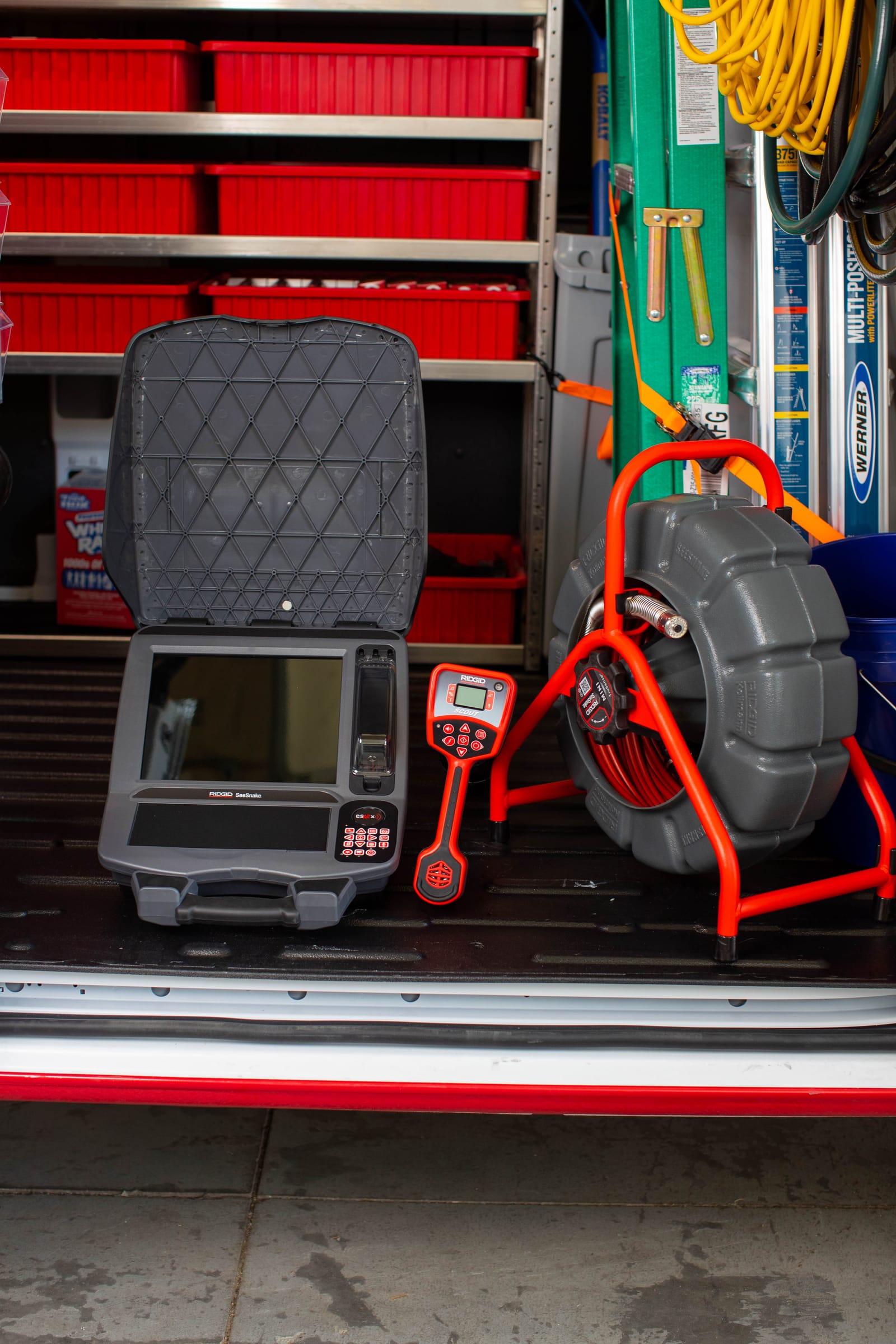
A drain that clogs, clears and clogs again in the same place often points to the pipe itself. A common cause is a sewer line belly, a stretch of buried main line that has sunk and now holds water. In a Sandy home, the first clue is often a slow basement drain or a toilet that gurgles on laundry day. Here is how a belly forms, how a camera measures it and which repairs correct it.
How a Sewer Line Belly Forms and Traps Waste
A house sewer works by gravity, running downhill from the house to the street. The plumbing code requires horizontal drain pipe to be installed "in uniform alignment at uniform slopes," and Table 704.1 of the plumbing code sets a minimum of 1/8 inch per foot for pipe 3 to 6 inches across.
Pipes sink when the ground under them moves or was never firm. The code calls for buried piping to be "supported throughout its entire length," per the code's trenching and bedding rules. Loose, untamped backfill or a void under the pipe lets a section settle. The Utah Geological Survey also describes collapsible soils that settle significantly when wetted. A leaking joint or years of heavy lawn watering can supply that water.
Once a section drops, water runs into the dip and slows. Paper, grease and food scraps settle there, and each flush adds more. Daily use still squeezes past, but a full tub or a washer pumping out backs up to the lowest drain. The sag can also pull apart the joints at its ends, letting soil and roots in.
Signs to Watch For and What You Can Check Safely
A belly rarely causes one dramatic failure. It shows up as a pattern.
- Repeat clogs: the main line backs up, gets cleared, then backs up again months later.
- Same spot each time: the clearing tool meets the blockage at about the same distance.
- Big-discharge trouble: drains work for daily use but slow or gurgle after the washer or a full tub.
- Lowest drain first: the basement floor drain or shower takes on water first.
Without opening anything, run the washer and watch the lowest drain. Note which fixtures slow down together, because several at once point to the main line rather than one trap. Find the cleanout, often a capped pipe near the foundation or in the basement floor, but leave the cap on. Then jot down past clearing dates.
A Sandy Scenario You Might Recognize
Picture a Sandy family whose basement bathroom drains slowly every few months. The line gets cleared and runs well for a while. Then the basement toilet starts gurgling again on laundry day, while upstairs sinks seem fine until the washer pumps out. Each time, the blockage turns up at about the same distance from the cleanout.
A dropped toy or a single wipe would not keep coming back. Trouble that returns at the same spot, mostly during big discharges, points to a fixed defect in the main line.
A sewer line belly fits that pattern well, because the dip slowly fills with settled waste until a surge backs up behind it. An offset joint is the other suspect, and a camera inspection is the step that tells the two apart.
How a Camera Finds and Measures a Belly
A sewer camera inspection confirms a belly and shows its size. A waterproof camera on a push cable goes in through the cleanout. A sound line shows a thin stream along the bottom of the pipe. At a belly, the water deepens, the lens may dip under, and sludge often sits in the low spot.
A footage counter records how far the cable has traveled. Where the standing water starts and ends gives the length of the sewer line belly, and how high it rises on the pipe wall shows how deep the sag runs.
A small transmitter behind the camera head, called a sonde, sends a signal that a receiver picks up from the surface, as one manufacturer's guide to sonde locating explains. The technician can then mark the belly's spot in the yard.
Cleaning vs Sectional Repair
Cleaning with a cable machine or hydro jetting removes the waste settled in the dip and restores flow. For a shallow belly that holds only a little water, scheduled cleaning can be a reasonable plan. It does not change the shape of the pipe, though, so the low spot starts collecting again.
Correcting the grade takes main sewer line repair at the belly itself. In a sectional repair, the crew digs at the marked spot, removes the sagging pipe and rebuilds the bedding with firm, compacted support. New pipe is set back on an even slope and joined to the sound pipe on each side. A camera pass before backfill confirms the water runs through without pooling.
When the camera finds several bellies, or one long one, replacing the whole line may make more sense than a series of digs.
Why Lining Does Not Fix a Sewer Line Belly
Trenchless sewer line repair is a strong option for many problems, but grade is not one of them. In cured-in-place lining, a resin-soaked tube is pulled into the old pipe, inflated against its walls and cured. NASSCO describes the result as a new, seamless structural pipe within the host pipe. It notes that lateral lining suits a host pipe with cracks, fractures or holes that has generally kept its original shape.
A belly is a change in that shape. The liner follows the old pipe down into the dip and back up, so water still pools in the same place. The new wall is smooth and jointless, but the low spot remains. Some lines need both: a sectional dig at the sewer line belly and lining for cracked stretches elsewhere.
Safety Notes
- Stop running water during a backup: each flush or laundry load adds to what comes up at the lowest drain.
- Leave the cleanout cap on a backed-up line: wastewater standing in the pipe can push out as the cap loosens.
- Skip chemical drain openers: they do not change the slope, and they can splash back when the line is full.
- Keep children and pets clear: keep them away from any overflow, and wear gloves during cleanup.
- Call before anyone digs: Blue Stakes of Utah 811 explains that private sewer laterals may not be marked, so the sewer itself needs locating.
- Stay out of open trenches: a trench wall can cave in without warning.
When to Call a Professional
Call when the main line has backed up more than once, especially if the blockage keeps turning up at the same distance. Call as well when several fixtures slow down together, or when the lowest drain takes on water while other fixtures run. A clearing that brings only brief relief is another sign the pipe needs a closer look.
A camera inspection is also worth scheduling before buying an older home, or when a sunken strip appears in the yard along the sewer's path. Towers Plumbing provides sewer inspection and repair in Sandy and can run the camera, mark the belly and walk you through the video. If a plan calls for lining a line that holds standing water, ask how it handles the low spot.
Frequently Asked Questions
Is a sewer line belly an emergency?
Usually not by itself, but it tends to get worse. A shallow belly may only need watching and periodic cleaning. A deep one that submerges the camera, or keeps causing backups, deserves a repair plan. An active backup into the house is urgent: stop using water and call for service.
Can a small belly be left alone?
Sometimes. If the camera shows a little standing water and no debris building up, a technician may suggest checking it again later instead of digging. Keeping wipes and grease out of the drains helps a shallow dip stay clear longer.
Will hydro jetting fix a belly?
Jetting cleans the pipe, including the sludge in the low spot, so flow improves. It does not lift the sunken section, so waste collects again. Think of jetting as maintenance and sectional repair as the correction.
Get Your Sewer Line Belly Checked
Before you call, note which drains back up first, what was running at the time and whether the basement floor drain was involved. Write down when the line was last cleared, how long the relief lasted and any distance a technician mentioned. Note where the cleanout is and any sunken or soggy ground along the line's path.
Then reach Towers Plumbing through our contact page to schedule a sewer camera inspection. With your notes in hand, a technician can go straight to the likely spot, measure the belly on video and talk through cleaning, sectional repair or replacement before any work begins.