
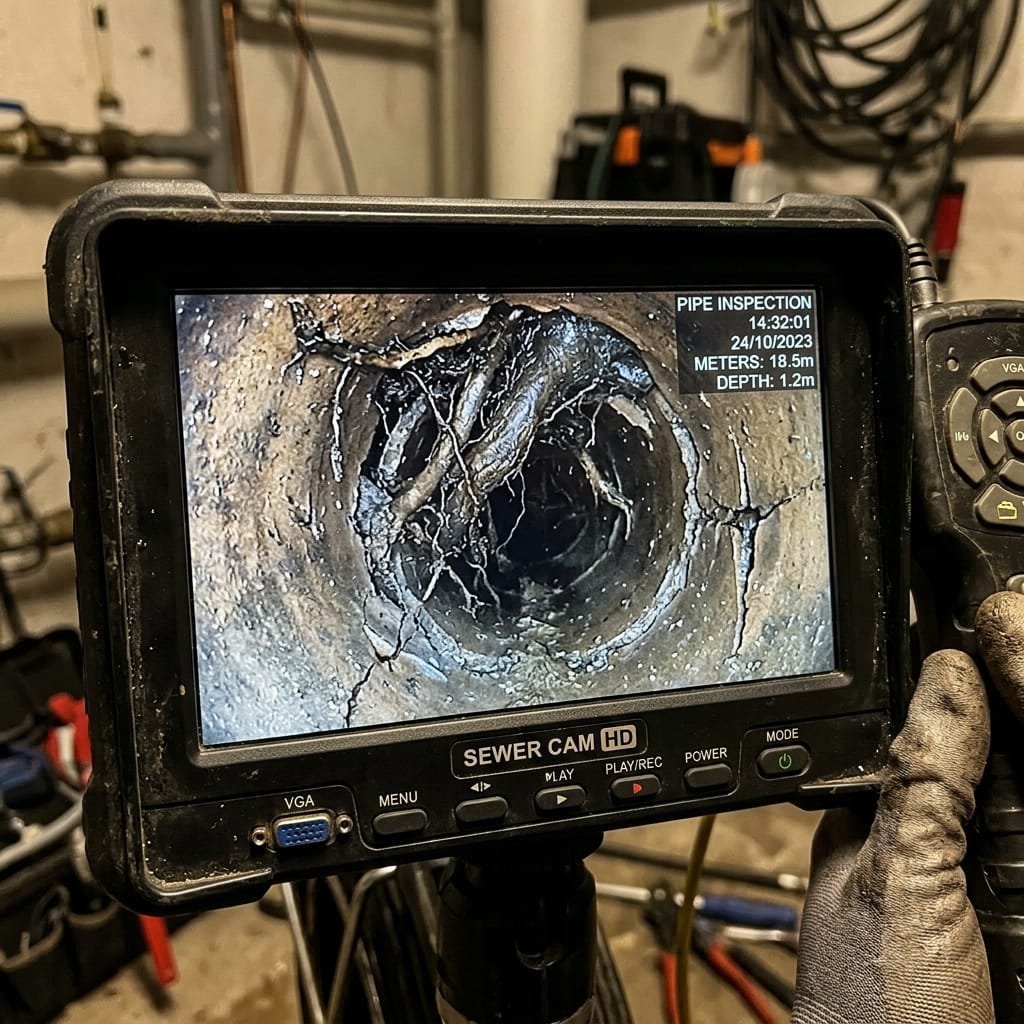
When a sewer backup returns after cleaning in a Salt Lake City home, restored flow and pipe condition need separate consideration. Cleaning can remove material blocking a passage. It does not automatically show whether the pipe has roots entering a joint, an offset connection, a damaged section or a low area that retains debris. A camera inspection can add evidence when access and visibility permit.
A returning backup does not prove that the previous cleaning failed or that the line must be replaced. The question is what caused the obstruction and whether the pipe still contains a condition that encourages another one. That decision should follow evidence about the actual line.
Why a sewer backup returns after the passage opens
Wastewater carries material through a pipe by gravity. An obstruction narrows the passage and can slow or stop flow. Removing that material can restore a route for water while leaving the pipe's shape and joints unchanged.
Roots can enter a vulnerable opening and create a place for debris to collect. An offset joint can leave a ledge along the flow path. A low section can retain water and material instead of carrying them onward. These are possible mechanisms, not conclusions that can be made from repeated symptoms alone.
The cleaning method and pipe condition also need to match. A plumber considers access, materials and the nature of the obstruction before choosing tools. A second round of cleaning may be appropriate, but it should not replace investigation when the recurring pattern raises unanswered questions.
What to inspect when a sewer backup returns
A sewer camera travels through accessible pipe and records the interior surface. The inspection can reveal visible roots, deposits, joint alignment or defects along the inspected route. Location information may help relate a finding to the property, depending on the equipment and accessible path.
Water, debris and an impassable section can limit visibility. A clear image of one section does not certify the entire drainage system. When a sewer backup returns, ask the plumber to explain the inspection coverage:
- Which branch or main pipe the camera head reached and where progress stopped.
- Whether roots, an offset joint or standing water were visible along that route.
- Which findings are clear and which remain hidden by water, debris or limited access.
A useful report distinguishes a visible defect from an interpretation requiring further work.
Towers Plumbing's sewer camera inspection services address that evidence question. Its drain cleaning services address obstructed flow. Discuss how the two tasks fit together rather than treating them as interchangeable solutions.
Contact Towers Plumbing to discuss camera inspection when the cause of a recurring backup remains unclear.
A hypothetical backup that comes back in the same bathroom
Imagine a Salt Lake City homeowner arranging cleaning after a lower-level shower backs up when upstairs fixtures run. Normal drainage returns. Later, the same shower begins rising again during ordinary use, and the toilet nearby gurgles.
That recurrence makes the shared drainage path relevant. A camera inspection might reveal a condition that retains debris, or it might show that visibility is too limited until additional cleaning occurs. The report should state what was actually seen, not jump from repeated water at the shower to a replacement recommendation.
Now imagine only the shower is slow while other fixtures remain unaffected. That variation could shift attention to the shower branch. Describing the other fixtures helps a plumber decide the appropriate inspection route. A whole-house sewer conclusion requires more evidence than a single slow drain.
Compare the next service paths
Cleaning is relevant when removable material obstructs flow. Inspection is relevant when the cause, location or condition remains unclear. Repair becomes relevant when an assessed defect requires a physical correction. A plumber may combine these tasks, but the reason for each should be understandable.
Ask whether the proposed repair addresses the observed finding and whether the inspection covered the affected path. A pipe image should be explained in ordinary language: what part is visible, what it means for flow and what uncertainty remains. Preserve the recording and findings for later decisions if they are provided.
The EPA's WaterSense resources distinguish household water use from drainage performance. Its leak guidance is useful for separate supply-side leaks. General EPA indoor-air-quality information provides building moisture context when repeated water intrusion affects the home.
Safety and common questions
Stop using fixtures that contribute to an active backup. Keep people and pets away from wastewater, and avoid electrical equipment in wet areas. Do not open a cleanout that may hold backed-up wastewater or operate a drain-cleaning cable yourself. Released sewage can contaminate the room, and powered cables can catch clothing or injure hands. Leave those tasks to a professional.
Does a returning backup always mean roots?
No. Roots are one possibility among several. The inspected pipe condition and obstruction evidence must support the conclusion.
Can inspection happen before cleaning?
Sometimes, but standing water and debris can limit the camera view. A plumber should explain the sequence appropriate to the line and its condition.
Is replacement always the next step?
No. The next step depends on the cause, location and severity of the finding. Repeated symptoms alone do not establish the repair scope.
Contact Towers Plumbing to schedule a sewer camera inspection assessment in Salt Lake City when a sewer backup returns after cleaning. Describe the previous work and affected fixtures so the team can determine safe access and whether cleaning is needed before inspection.