
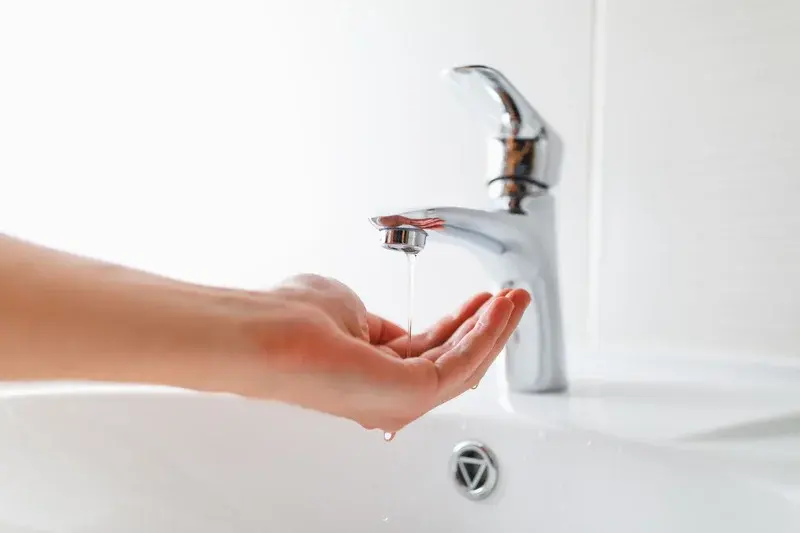
Low pressure at every fixture in a Salt Lake City home points toward a shared supply question rather than a problem isolated to one faucet. The cause could be upstream supply, a partially closed valve, a pressure-regulating valve, a restriction in shared piping or a leak. The correct response depends on where the pressure or available flow changes.
Pressure and flow are related but different. Pressure is the force available to move water. Flow is the amount moving through a pipe or fixture. A small faucet opening or clogged aerator can reduce local flow even when the home's supply pressure is normal. A weak pattern throughout the house broadens the investigation.
Why a shared restriction causes low pressure
The main supply pipe brings water into the home before branches distribute it. A restriction ahead of those branches affects every downstream fixture. A valve that is not fully open or a pressure-regulating valve that no longer controls properly can change the supply experienced across the house.
Pipe condition also matters. Deposits or corrosion can narrow the available passage in some pipe materials. When fixtures run together, the restriction becomes more apparent because more water must pass through the same limited opening. A professional compares pressure under different operating conditions to help locate the problem.
A leak is another possibility, especially if water use or visible dampness changes. Weak flow alone does not prove a buried main has failed. The inspection needs evidence of the source and location before any decision about repair or replacement.
Low pressure throughout the home versus one slow faucet
If a kitchen faucet is weak while other taps behave normally, its aerator, cartridge or local supply path deserves attention. If both hot and cold water weaken throughout the home, the common incoming supply deserves assessment. If only hot water is affected everywhere, the hot-water path becomes more relevant.
Towers Plumbing's plumbing services provide the appropriate starting point for a supply assessment. Its water heater services are relevant when the weakness affects the hot side specifically. Give that distinction when arranging service so the complaint is not reduced to a vague report of poor water pressure.
Changing every faucet is not a sound response to a shared symptom. Similarly, replacing the water heater does not address a main supply restriction affecting cold water too. The first decision is where the symptom belongs, not which fixture looks easiest to replace.
Contact Towers Plumbing to assess a whole-house supply change before adjusting a regulator.
A hypothetical problem after work near the house
Imagine a Salt Lake City homeowner noticing weak showers and slow sink filling after unrelated work near the home's water service. Both hot and cold water are affected. The timing makes a valve position or changed supply condition relevant, but it does not prove the work caused damage.
The homeowner checks whether the problem is shared by fixtures during ordinary use and asks the water utility about a known supply interruption through its normal contact channel. The homeowner then arranges plumbing service and reports the sequence. A plumber can investigate accessible valves and measure the system safely.
Now imagine the kitchen tap alone is weak, with normal shower flow. That pattern shifts attention to the kitchen fixture. Keeping the scenarios separate avoids a whole-house repair recommendation based on a local obstruction.
Evidence to gather without adjusting the regulator
To describe low pressure clearly, prepare these observations from normal use:
- Note whether hot water, cold water or both are affected at several fixtures.
- Record whether simultaneous use makes the weakness more obvious.
- Mention recent plumbing work, unexplained water use or new damp areas.
Do not enter a flooded space to photograph a pressure-reducing valve, often called a PRV, or a main shutoff. Wet electrical equipment creates a shock hazard that takes priority over pressure troubleshooting.
The EPA's leak guidance explains basic household leak awareness. Its WaterSense resources concern fixture water use, which is different from diagnosing a pressure fault. The EPA drinking-water information addresses water-quality concerns that should be reported separately if they accompany the change.
Do not turn a regulator adjustment screw to chase a stronger shower. An unsuitable setting can stress plumbing and conceal the actual restriction. Leave pressure measurements, regulator evaluation and buried-line investigation to a professional. If water is actively escaping, use an accessible known shutoff only when safe and arrange service; do not force a seized valve.
Questions about a weak main supply
Does low pressure prove the main line needs replacement?
No. A valve, regulator, supply interruption or other condition can produce the complaint. Replacement requires evidence about the pipe itself.
Can the problem appear only during simultaneous use?
Yes. A restriction may be more apparent when several fixtures draw water together. That pattern helps define the assessment but does not identify the cause alone.
Should I clean every aerator first?
An aerator can explain one weak faucet. A whole-house change deserves assessment of the shared supply rather than repeated fixture work.
Contact Towers Plumbing to investigate low pressure at every fixture in Salt Lake City. Explain which water side is affected, whether the change was sudden and what happens during normal simultaneous use.