
When the kitchen tap slows to a weak stream while the bathroom sink still runs strong, the problem usually sits inside that one fixture. Kitchen faucet low pressure in a Salt Lake City home often starts with hard-water scale or debris lodged in a small screen, spray head or valve. Below is how each part restricts flow, which checks are safe, and when the pattern points to the pipes instead.
How Kitchen Faucet Low Pressure Starts at the Spout
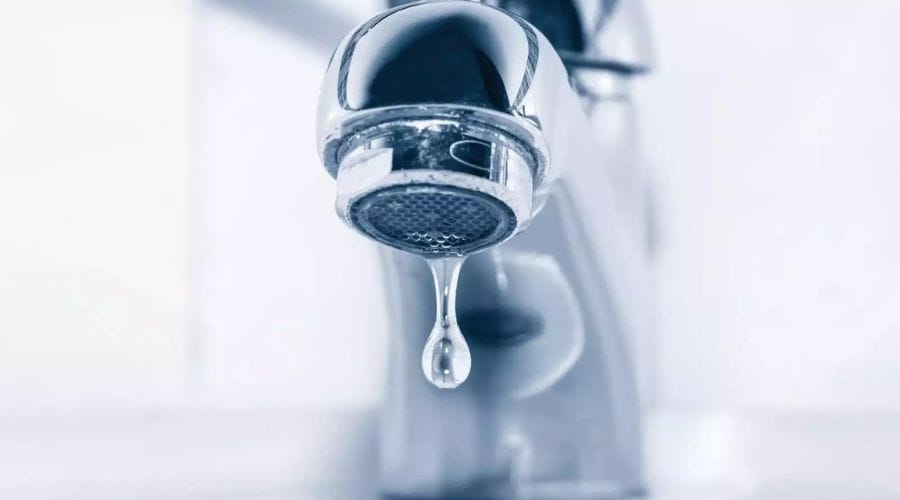
The aerator is the small threaded piece at the tip of the spout, and it is the last narrow passage water crosses. Inside it sit a fine mesh screen and a flow restrictor that mixes air into the stream and limits volume.
The limit is intentional: the Building America Solution Center notes that federal standards cap kitchen faucets at 2.2 gallons per minute at 60 psi, so a healthy faucet is not supposed to gush.
Trouble starts when grit or mineral flakes collect on the screen. Hard water is common in northern Utah, and the USGS explains that hardness is dissolved calcium and magnesium, which can build up as scale. Flakes of that scale, sand or bits of old pipe lodge in the mesh. Each blocked opening narrows the stream, so the change feels gradual.
Pull-Down Spray Heads, Check Valves and Hose Kinks
On pull-down and pull-out faucets, the spray head has its own spray face with small rubber or plastic nozzles, and scale can crust over them. When some nozzles clog, the stream turns uneven or sprays sideways.
Many spray heads also hold a check valve, a small one-way valve that keeps water from flowing back into the hose. Debris from the supply lines can catch there. Because its opening is so small, the check valve is a frequent source of kitchen faucet low pressure on pull-down models.
Under the sink, the hose itself can be the choke point. It hangs in a loop with a weight that pulls the spray head back into the spout. If stored cleaners, a trash can or the disposal press on that loop, the hose can kink and choke the flow.
Cartridges, Angle Stops and Under-Sink Filters
If the spout and spray head are clean, look inside the faucet body. Single-handle faucets use a cartridge that mixes hot and cold water and controls how much passes through, and scale can build up at its inlet ports and seals. When kitchen faucet low pressure affects hot and cold equally after the aerator is clean, the cartridge moves up the list.
Below the counter, each supply line starts at an angle stop, the small shutoff valve inside the cabinet. A stop turned partway during a repair and never fully reopened leaves that side weak. On older multi-turn stops, a worn washer can also restrict flow.
Many kitchens also have an under-sink filter. As its cartridge loads with sediment, flow at the tap it feeds drops. A weak cold side or filtered tap makes the filter a strong suspect. Water filtration service can sort out which cartridge feeds which tap.
Safe Steps to Clean the Aerator and Spray Head
These steps target kitchen faucet low pressure that starts at the spout. Keep a cloth, an old toothbrush and white vinegar handy.
- Close the drain first: set the stopper or lay a towel in the sink so small parts cannot fall into the drain or disposal.
- Remove the aerator: unscrew it counterclockwise by hand. If it sticks, wrap it in a cloth before gripping it with pliers.
- Note the order: lay the screen, restrictor and washer out in a line.
- Test the open spout: a strong stream with the aerator off means the aerator was the choke point.
- Clean the parts: rinse out loose grit, soak the pieces in white vinegar to loosen scale, then scrub gently and rinse.
- Check the spray head: unscrew the pull-down head while holding the hose, then run water into a bucket. One manufacturer's low-flow guide says good flow from the bare hose points to debris in the spray head. It suggests a soak in equal parts white vinegar and warm water.
- Reassemble and retest: refit the parts in order, hand-tight.
A Salt Lake City Scenario You Might Recognize
Picture a family whose pull-down kitchen faucet has faded to a weak stream over a few months, while the bathroom sink and the tub still run strong. The spray pattern looks ragged, with a few nozzles spitting sideways, and cleaning the aerator changes nothing.
With the spray head off, the bare hose fills a bucket with good force. Strong flow at other fixtures rules out the main supply, and strong flow from the bare hose rules out the cartridge, angle stops and supply lines, since all of that water passes through them.
The evidence points to the spray head itself: scale on the nozzles, debris at its check valve, or both. This kitchen faucet low pressure pattern is a spray head problem, not a piping problem.
When Low Pressure Points to the Supply Piping
If kitchen faucet low pressure remains after the aerator and hose check out, or if the bathroom sink and tub are weak too, look upstream.
- Every fixture is low: the cause is likely at the main shutoff, a pressure-reducing valve or the service line.
- Several nearby fixtures are low: a branch line feeding that part of the house may be restricted.
- The aerator clogs again within weeks: debris is arriving from somewhere upstream.
Some older homes here still have galvanized steel supply pipe. It corrodes from the inside, and rust and scale slowly narrow the bore. The same USGS page describes scale building up inside water pipes over time, leaving less room for water and lowering pressure. A new faucet will not solve that, because the restriction sits in the walls.
Safety Notes
- Shut off the angle stops first: turn both stops clockwise before disconnecting a hose or supply line. If a stop will not close, use the main shutoff.
- Do not force old valves: a corroded stop can snap at the pipe and release water at full pressure.
- Keep the disposal switched off: leave the wall switch off while you work under the sink.
- Use vinegar by itself: do not mix it with bleach or any other cleaner.
- Hold the hose: a pull-down hose can slide back into the spout when the spray head comes off.
- Flush on cold: run cold water into a bucket when testing a bare hose, since a loose hose can whip and spray.
When to Call a Professional
Call when an angle stop will not turn, drips at the stem, or feels stiff enough to break. Call as well when the cartridge needs replacing and you would rather not take the faucet apart, since part numbers vary by model.
Kitchen faucet low pressure that returns soon after a cleaning often means debris is coming from upstream, sometimes from aging supply pipe. Low flow at several fixtures, rusty water, or a faucet that stays slow after a new cartridge also deserve a closer look. That is a good time to have Towers Plumbing check the system. A kitchen plumbing visit can trace the restriction from the spout back to its source.
Frequently Asked Questions
Can I remove the flow restrictor to fix kitchen faucet low pressure?
Leave it in place, because the restrictor is part of how the faucet meets the federal flow limit. Clean it instead, and replace the aerator if the screen is torn or bent.
Will a water softener help?
A softener reduces the calcium and magnesium that form scale, so less new buildup collects in aerators, cartridges and pipes. It will not clear scale already stuck in the faucet, so clean those parts first. Learn how water softeners fit a home with hard water.
Why did the flow drop right after a new faucet went in?
Turning the water off and on during an install can knock loose debris inside the pipes, and it can land in the new supply lines or aerator. The manufacturer's guide above recommends flushing the supply lines after installation.
Your Next Step for a Weak Kitchen Faucet
Before you call, write down what a few quick tests show: whether flow returns with the aerator off, and whether the bare pull-down hose runs strong or weak. Note too whether hot, cold or both are low, and whether other fixtures are slow.
Add the faucet's age, whether you have an under-sink filter or a softener, and any recent plumbing work in the house. A photo of the cabinet and any model label helps too. For plumbing service in Salt Lake City, those notes help a technician go straight to the likely cause of your kitchen faucet low pressure. Reach Towers Plumbing through our contact page to set up a visit.