
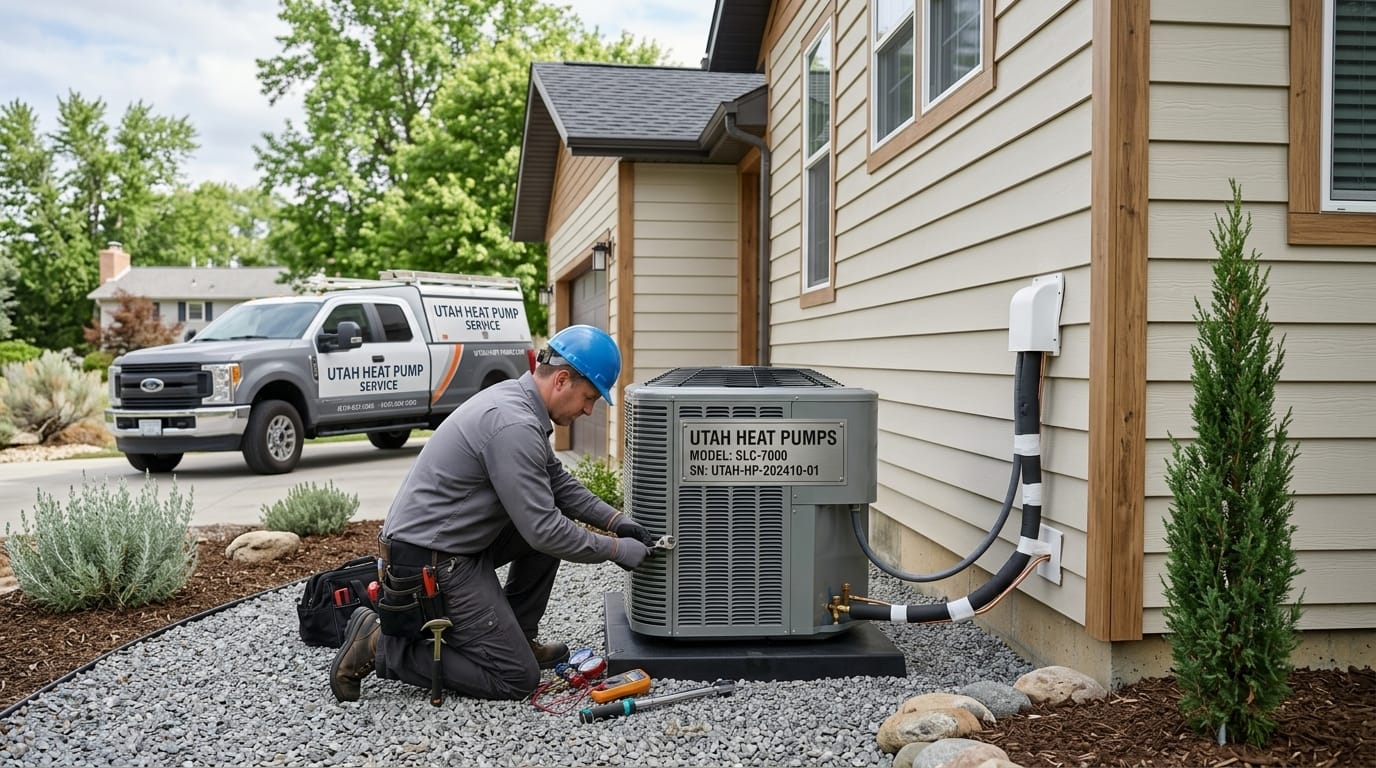
Heat pump defrost can temporarily change the sound and appearance of an outdoor unit in Salt Lake City. The system sends heat to its outdoor coil to clear frost, then returns to heating the house. A pause in the outdoor fan or visible water vapor can belong to that sequence. Persistent ice and declining indoor comfort require a different response.
The important distinction is whether the change completes its purpose. Sound alone does not tell you whether the unit has cleared frost, resumed heating or developed a fault. Compare the outdoor appearance with what happens indoors, without approaching moving equipment or opening a panel.
Why heat pump defrost warms the outdoor coil
In heating mode, refrigerant absorbs energy through the outdoor coil and releases it indoors. The coil can be colder than the surrounding air. Moisture can freeze on that cold surface, even when the air does not feel severely cold. Frost then interferes with the movement of air and transfer of heat through the coil.
A reversing valve changes the refrigerant flow so the outdoor coil receives heat. Sensors and controls manage when the system enters and exits defrost. Depending on the equipment, the outdoor fan may stop and supplemental indoor heat may operate during the transition.
Lennox's explanation of heat pump defrost describes this operating principle. It does not establish a universal schedule for every heat pump. Use your model's instructions and a professional assessment when interpreting a change from its usual behavior.
Completed heat pump defrost versus a continuing fault
A normal-looking sequence includes frost that clears and heating that resumes. Water or water vapor near the coil can result as frost melts. That observation becomes meaningful only when you also see the return to normal operation.
A coil that remains encased in ice, repeated transitions without clearing or a home that keeps losing warmth warrants service. Possible causes include a sensor problem, a control fault, restricted airflow or another system condition. A technician needs to distinguish them; a video of the outdoor unit cannot establish refrigerant charge or prove a reversing valve has failed.
Towers Plumbing's heat pump services are relevant when the heat pump fails to maintain comfort. Its cooling services provide related context because a heat pump uses shared refrigeration components in both modes. Tell the company the equipment is a heat pump when arranging the visit.
Contact Towers Plumbing for heat pump assessment when frost does not clear or comfort does not return.
A hypothetical change noticed from the kitchen
Imagine a homeowner in Salt Lake City looking through a kitchen window during a damp morning. The outdoor fan stops, a short change in sound occurs and water vapor rises around the unit. Later, the fan operates again and the home continues warming. That pattern is consistent with a completed defrost sequence, although equipment-specific instructions still govern.
Now change the scenario: the coil remains covered in heavy ice and rooms become cooler while the thermostat continues requesting heat. The visible change has not led to the expected result. That homeowner should arrange an assessment rather than label everything as ordinary defrost.
Avoid making a decision from the weather alone. Outdoor moisture, coil temperature and equipment controls affect operation. A calendar date does not determine whether a particular sequence is appropriate, and a mild afternoon does not explain a problem observed earlier.
How to make the service decision
If comfort remains steady and the unit returns to its normal operation, review the model documentation and watch for changes from the established pattern. If the home is not warming, persistent ice develops or the equipment repeatedly stops, describe the problem when arranging service.
A maintenance visit reviews condition and operation. A diagnostic visit investigates a specific abnormal pattern. Ask for the latter when loss of heat is already occurring. Record the sequence from normal use so the technician can assess heat pump defrost without guessing:
- Note the thermostat display and whether the indoor blower keeps operating.
- Observe from a safe distance whether outdoor frost clears and heating returns.
- Describe any persistent ice or loss of indoor warmth, without repeatedly changing settings to reproduce the event.
ENERGY STAR's maintenance checklist includes controls and airflow among professional checks. Accessible filter condition can matter as well, but follow the equipment guidance. The EPA air-cleaner guide explains why filter compatibility is part of selection.
Safety and common questions
Never chip ice from the coil, pour hot water over the unit or reach through the grille. Those actions can damage fins, wiring or tubing and place you near electrical and moving components. Stay clear of a unit with smoke, sparking or a burning smell and seek appropriate emergency assistance when needed.
Can defrost happen when the day feels mild?
Yes. The outdoor coil temperature can differ from the air temperature. Moisture can freeze on the coil under conditions that surprise a homeowner.
Does the outdoor fan pause prove the unit is broken?
No. A fan pause can be part of defrost. Failure to return to effective heating changes the significance of that observation.
Should I choose emergency heat to diagnose the system?
Use thermostat modes according to the manufacturer instructions. Mode changes do not diagnose the cause and can hide the sequence a technician needs to assess.
Contact Towers Plumbing to discuss heat pump operation in Salt Lake City. Explain whether frost clears and heating resumes, and arrange a professional assessment when the pattern no longer maintains comfort.