
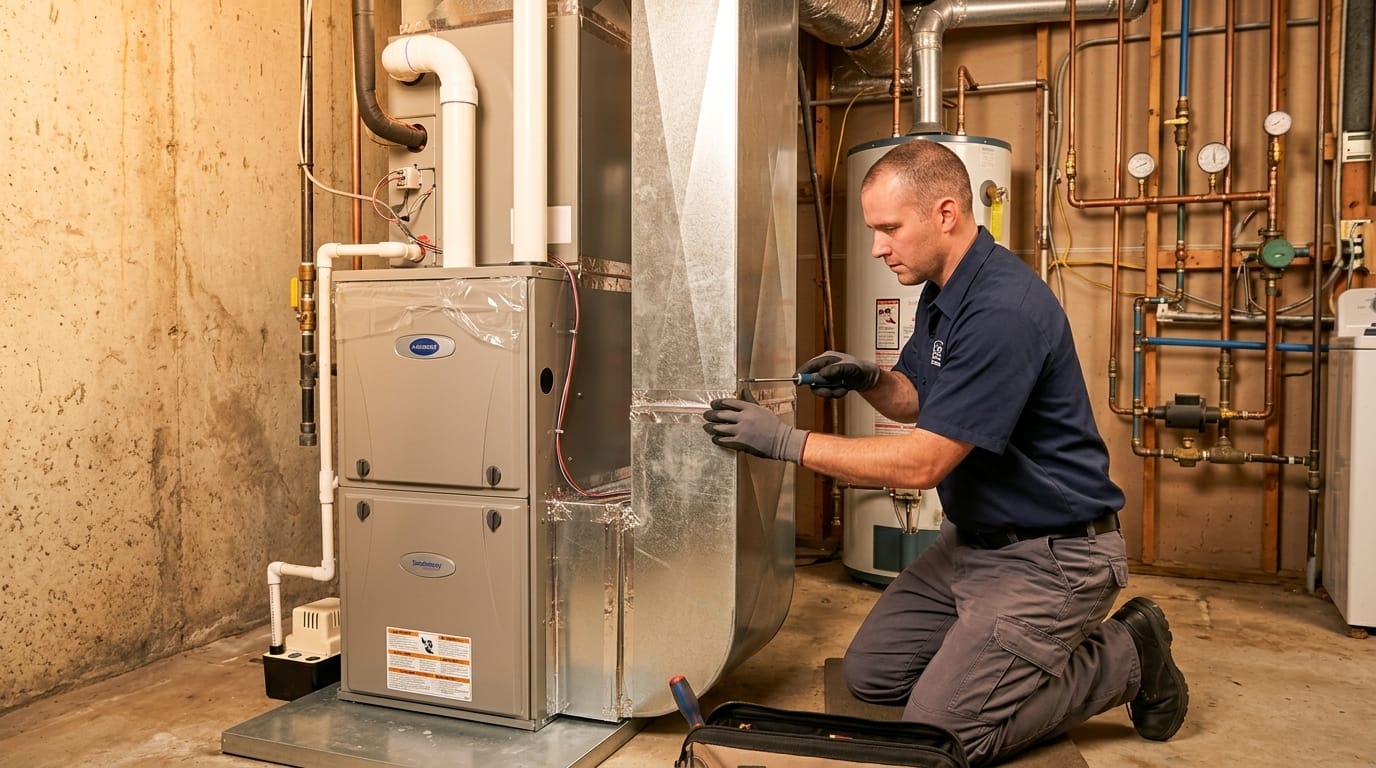
A winter storm passes, wind drifts snow against the house, and by morning the furnace has stopped heating. In many Millcreek homes, the cause sits outside: two white plastic furnace vent pipes near the foundation or on the roof, now packed with snow or ice. Here is why a blocked vent shuts a furnace down, how to clear it safely, and when to call a technician.
Why a Blocked Vent Shuts a High-Efficiency Furnace Off
Many newer furnaces are high-efficiency, or condensing, models. They extract so much heat from the combustion gases that the exhaust leaves cool and full of moisture, so it vents through PVC pipe instead of a metal flue. A two-pipe, direct-vent furnace uses one pipe for outdoor combustion air and one for exhaust.
When the thermostat calls for heat, a small fan called the draft inducer starts first, pulling air through the intake and pushing exhaust out the other pipe. A pressure switch, connected to the inducer housing by a rubber hose, senses that draft. Once the suction is correct, the switch closes, and the control board opens the gas valve and lights the burners.
Snow, ice or a nest in either of the furnace vent pipes weakens the draft. The switch stays open, so the burners do not light. If the vent blocks mid-cycle, the switch opens and the furnace shuts down. After several failed attempts, many furnaces enter lockout, a safety feature rather than a breakdown.
Snow, Ice and Nests: What Blocks Furnace Vent Pipes
Several things can obstruct the pipes during a Utah winter.
- Drifting snow: wind can bury pipes installed low on a side wall.
- Shoveled or blown snow: snow thrown from a driveway, walkway or snowblower chute can land directly on the pipes.
- Roof snow: snow sliding off the roof can bury side-wall pipes, and deep roof snow can cover roof vents.
- Ice at the exhaust: the exhaust carries water vapor, and on the coldest nights it can freeze into an ice ring at the opening.
- Nests and debris: birds, wasps or rodents may build in a pipe during the warmer months.
A Lennox user's information manual warns that after any heavy snow, ice or frozen fog event, furnace vent pipes may become restricted. The Department of Energy's Building America guideline recommends locating the vent terminal about one foot above the maximum snow level in snowy climates.
What You Can Safely Check From Outside
If the furnace stops during or after a storm, start outside.
- Find the pipes: look for two white PVC pipes on a side wall, or inspect the roof from the ground.
- Clear snow by hand: use a gloved hand or a soft broom to clear a wide space around both openings.
- Inspect the openings: look for an ice ring, packed snow or a nest, and brush away loose snow or thin ice.
- Restart the furnace: many furnaces retry at the next call for heat. Others need the thermostat or the furnace power switch cycled, as your owner's manual explains.
- Watch one cycle: listen for the inducer, then the burners igniting, then warm air at the registers.
What Not to Do When Clearing Vents
A few common moves turn a snow problem into a repair.
- Hitting the pipes: a shovel blade, ice chipper or snowblower can crack PVC, and a cracked exhaust pipe can leak combustion gases.
- Chipping ice from inside: a screwdriver or other sharp tool can crack a fitting or push ice deeper toward the furnace.
- Covering the openings: buckets, tarps or homemade caps restrict airflow just like snow does.
- Climbing a snowy roof: leave roof vents to a professional.
- Resetting over and over: repeated restarts will not clear a blocked vent and can hide a bigger problem.
- Bypassing the pressure switch: jumping or disconnecting a safety switch removes the protection that shut the furnace off.
A Millcreek Scenario You Might Recognize
Picture a family whose furnace ran normally through a windy evening of snow. By morning the house feels cool, though the thermostat still calls for heat. In the basement, they hear the inducer fan start, run briefly and stop. The burners do not ignite, and a status light on the furnace blinks a pattern.
Outside, wind has packed snow against the wall where two white pipes exit. The lower pipe is buried, and the other has a crust of ice around its opening.
That pattern points to a lost draft. The inducer is running, but the pressure switch does not close, so the control board keeps the gas valve shut. If clearing the pipes lets the furnace light on the next attempt, the vent was the cause. If it still will not fire, ice deeper in the pipe, a condensate problem or a failed switch becomes more likely.
Keeping Furnace Vent Pipes Clear All Winter
A simple routine keeps the pipes open through the heating season.
- Mark the location: place a tall stake or flag near side-wall pipes so you can find them after a heavy storm.
- Inspect after storms: check the pipes after each snowfall and each windy night.
- Aim snow away: keep the snowblower chute and shovel piles away from that wall.
- Schedule a fall check-up: ENERGY STAR recommends a pre-season heating check-up in the fall.
A furnace maintenance visit is a good opportunity to inspect the furnace vent pipes, their slope and their height. If they sit low enough to be buried every winter, raising them is a job for a professional, and furnace installation planning should account for snow depth at the vent.
Safety Notes
- Carbon monoxide alarm sounds: get everyone outside, then call 911 from outside.
- Gas smell: get everyone outside, then call 911 or your gas utility's emergency line from outside.
- CO alarm placement: NFPA advises carbon monoxide alarms outside each sleeping area and on every level of the home, tested at least once a month.
- No odor to warn you: NFPA describes carbon monoxide as an odorless, colorless gas, so a working alarm is essential.
- A cold house: if you cannot restore heat on a very cold night, treat it as urgent. The National Weather Service cold safety page has guidance.
- Damaged pipes: a cracked or separated vent pipe should be inspected by a technician before the furnace runs again.
When to Call a Professional
Call for emergency furnace repair when the pipes are clear and the furnace still will not light, or when it keeps shutting off mid-cycle. Call as well when ice has formed inside the pipe beyond easy reach, or when the pipes are on the roof.
A pipe that is cracked, sagging or separated at a joint also needs repair. Water dripping from the furnace cabinet can mean a plugged condensate trap or drain, which can trip the pressure switch just like a snow-packed vent.
A technician can read the blink code, test the pressure switch and its hose, and confirm the vent slopes back toward the furnace so condensate drains properly. Towers Plumbing handles heating work for homes in Millcreek and nearby communities.
Frequently Asked Questions
Why did my furnace shut off during a snowstorm?
Snow or ice probably blocked the intake or exhaust pipe, and the pressure switch then prevented the burners from lighting. Clearing the furnace vent pipes by hand often lets the furnace restart. If it does not, the cause is likely inside the equipment.
Can blocked vents let carbon monoxide into the house?
The pressure switch is designed to stop the burners when the draft is lost. Still, a partly blocked, cracked or disconnected vent can change that picture. That is why NFPA recommends clearing furnace vents of snow and keeping working CO alarms on every level.
Should I put a cap or cover over the pipes?
No. A cap or cover restricts airflow and can cause the same shutdown as snow. If your pipes need a guard or a taller termination, have a technician use parts approved by the furnace manufacturer.
Get Help With Blocked Furnace Vent Pipes
Before you call, note when the heat stopped, what the weather did overnight, and whether the pipes were buried, iced over or clear. Count the blinks on the furnace status light, and copy the model number from the rating plate inside the furnace door. Mention whether the furnace restarted after you cleared the vents.
Then reach Towers Plumbing through our contact page. With those notes, a technician can go straight to the likely cause, whether it is the vent, the condensate drain or the pressure switch.