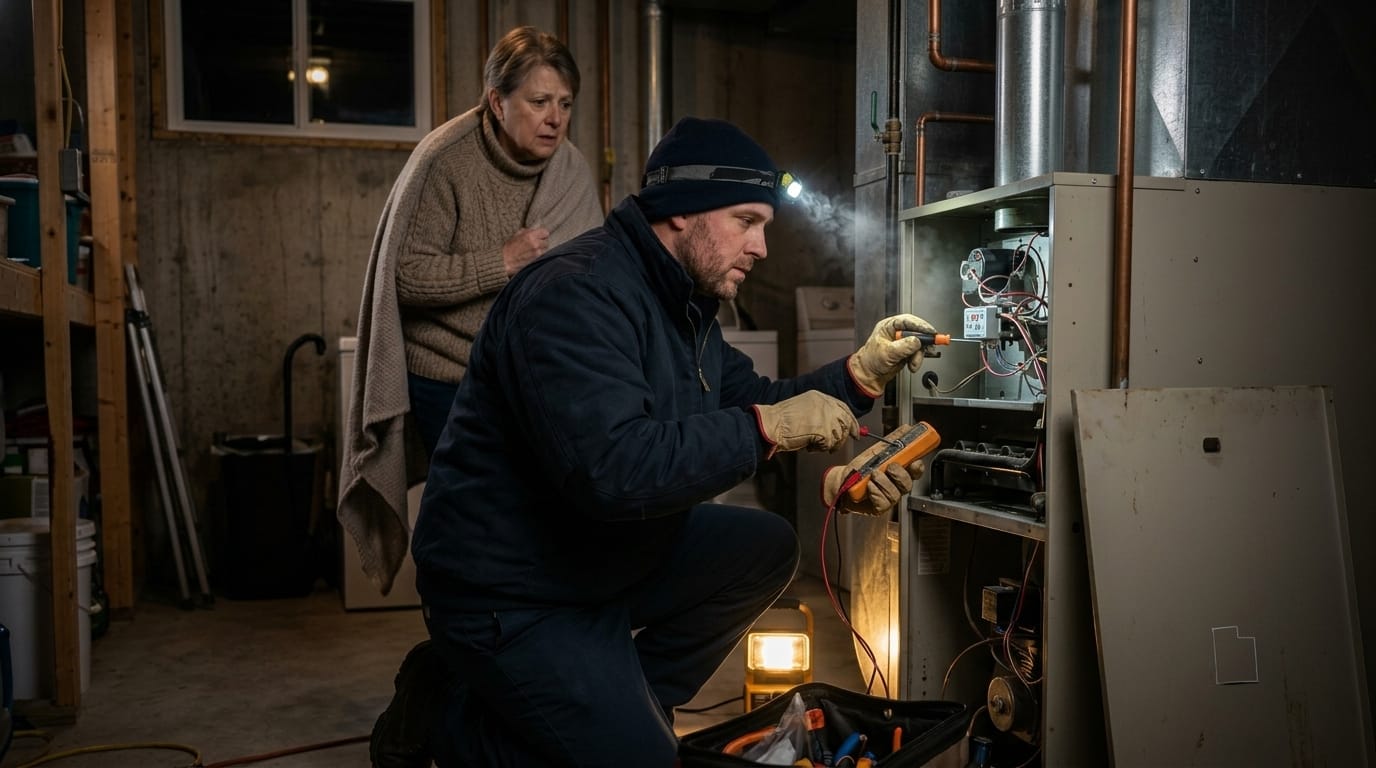
A furnace making noise in an Ogden basement usually gets noticed at night, when the house is quiet and the heat runs long. Some sounds are normal, while others point to a worn motor, a loose panel or burners that light late. This guide explains what each sound usually means, which ones are urgent, and what you can safely check before you call Towers Plumbing.
How a Gas Furnace Starts, and Why Timing Matters
Most gas furnaces start in the same order, and each step has its own sound. When the thermostat calls for heat, the inducer motor starts first, pulling air through the heat exchanger and pushing combustion gases out the vent pipe. A pressure switch confirms that draft, often with a soft click.
Next, the hot surface igniter glows, or a spark igniter snaps, and the gas valve opens. The burners light with a quiet whoosh, and the flame sensor confirms the flame. Once the heat exchanger warms, the blower starts and pushes air through the ducts.
Because each part runs at a set point in the cycle, timing is your best clue. A furnace making noise before the burners light points to the inducer, a noise at light-off points to ignition, and a noise after the blower starts points to the blower, cabinet or ducts.
Booms and Bangs: Delayed Ignition
A sharp boom right as the burners light is the sound to take most seriously, because it usually means delayed ignition. Gas flows into the burners but does not light right away, so a small pocket builds up and then ignites all at once with a bang.
Common causes include dirty or rusted burners, clogged burner ports and a partly blocked crossover, the channel that carries flame from one burner to the next. A weak igniter or incorrect gas pressure can also delay light-off.
Repeated delayed ignition can stress the heat exchanger and vent connections. The ENERGY STAR maintenance checklist notes that a dirty burner or cracked heat exchanger causes improper burner operation. If your furnace making noise sounds like a boom at light-off, turn it off at the thermostat. When that leaves the house without heat in January, call for emergency furnace repair.
Squeals, Whines and Hums: Blower and Inducer Motors
A furnace making noise at a high pitch usually has a motor problem. The blower motor spins a wheel, often called a squirrel cage, that moves the air. When its bearings dry out or wear, the motor squeals or grinds as soon as the blower kicks on. Some older furnaces use a belt between the motor and blower, and a worn belt squeals too.
A whine or rising grind before the burners light often points to worn bearings in the smaller inducer motor. If the inducer fails, the pressure switch will not close and the furnace will not light.
A steady low hum is often normal transformer noise, but a loud hum with no blower movement can mean a failing capacitor or a seized motor. ENERGY STAR lists lubricating moving parts as a contractor task, because friction makes motors work harder.
Rattles, Ticks and Pops: Panels and Ductwork
A furnace making noise only while the blower runs often has something loose. An access panel, a missing screw or a shifted vent pipe can buzz against the cabinet. A knock inside the blower compartment can mean a loose blower wheel or debris caught in it.
Ticking and popping in the ducts is usually thermal expansion. Sheet metal ducts grow slightly as warm air moves through them and shrink as they cool, so they tick at the start and end of a cycle. On the coldest nights, those sounds can be louder.
A loud bang from the ducts when the blower starts can mean restricted airflow. A dirty filter or closed registers raise pressure inside the ducts until a flat panel flexes. Heavy dust buildup is a separate issue that duct cleaning addresses, but it will not stop expansion pops.
What You Can Safely Check
A few checks need no tools and keep you away from gas and wiring.
- Filter: pull it and look. ENERGY STAR suggests inspecting, cleaning or changing it once a month, and a clogged filter restricts airflow.
- Registers and returns: open the supply registers and clear furniture, rugs and storage away from the return grilles.
- Timing: stay near the furnace through one full cycle and note whether the sound comes before light-off, at light-off, when the blower starts or after the cycle ends.
- Blower door: confirm the front panel is seated. Many furnaces will not run with it off, because a safety switch cuts power.
- Surroundings: move anything leaning on the cabinet, the ducts or the vent pipe.
Leave the burner compartment, gas valve and wiring alone, since those are service jobs.
An Ogden Scenario You Might Recognize
Picture a family whose basement furnace has started making a new sound this winter. On cold mornings, they hear a click, a short pause, and then a hard thump that shakes the return grille. After that, the house heats normally, and the ducts in the basement ceiling tick for a while.
The ticking comes after the blower starts and fades as the metal warms, which fits normal duct expansion. The thump happens at light-off, before the blower runs, which points to delayed ignition in the burner area rather than the ducts.
The thump is the part to act on. Letting a furnace making noise like this keep cycling does not clean dirty burner ports or fix a weak igniter. The better step is to stop running it and book a burner and ignition check.
Safety Notes
- Gas smell, smoke or a CO alarm: get everyone outside, then call 911 or the gas utility's emergency line from outside.
- CO alarms: the EPA's carbon monoxide page describes CO as odorless and colorless, and cites CPSC advice to have CO alarms on each level, outside each sleeping area.
- Booms at light-off: stop resetting the furnace and have the burners and ignition checked.
- Panels stay on: keep the burner and blower doors in place while the furnace can run.
- No heat on a cold night: treat it as urgent. The National Weather Service cold weather safety page covers winter cold risks.
- Clear space: keep storage, laundry and boxes away from the cabinet and vent pipe.
When to Call a Professional
Call right away for booms at light-off, grinding from either motor, a loud hum with no blower movement, or a furnace that clicks over and over but does not light. Many furnaces lock out after several failed ignition tries, so a furnace making noise and then shutting down needs a technician, not repeated resets.
Schedule a visit soon for a new squeal, a rattle you cannot trace, or duct bangs that continue after you change the filter and open the registers.
The EPA recommends having a fuel-burning furnace inspected and serviced before each heating season. A pre-season furnace maintenance visit is a good time to ask for the burners, igniter, flame sensor and motors to be checked. Towers Plumbing serves homes in Ogden and nearby communities.
Frequently Asked Questions
Is it normal for a furnace to make some noise?
A click, a soft whoosh at light-off, a steady blower hum and a few duct ticks are normal. A new sound, or one that grows louder or sharper, deserves a closer look.
Why does my furnace bang when it turns on?
A bang at light-off usually points to delayed ignition. A bang when the blower starts is more often a duct panel flexing from restricted airflow.
Why is my furnace squealing?
A squeal that starts with the blower usually means worn blower motor bearings, or a worn belt on older units. A whine before the burners light points to the inducer motor.
Can I keep running a furnace making noise?
For booms or grinding, turn it off and call for service. For a gas smell, smoke or a CO alarm, get everyone outside, then call 911 or the gas utility's emergency line from outside.
Write Down the Sound, Then Get It Checked
A furnace making noise is easier to diagnose with good notes, so spend one heating cycle near it before you call. Write down when the sound happens: before the burners light, at light-off, when the blower starts or after the cycle ends. Describe it in plain words, such as boom, squeal, whine or rattle, and note whether it happens every cycle or only on the coldest mornings.
Record your filter size and when it was last changed, and take a short phone video with sound if you can.
Then reach Towers Plumbing through our contact page. With those notes in hand, a technician can start at the right part of the system and explain what the sound means before any repair begins.