The first cool evening of fall arrives, someone turns up the thermostat, and a few minutes later the house smells scorched. A furnace burning smell at the first startup is common in Murray homes, and most of the time it is dust burning off after months of sitting idle. Some smells mean something else. Here is how to tell harmless dust from an electrical, gas or exhaust problem, and what to do about each.
How a Furnace Burning Smell Starts
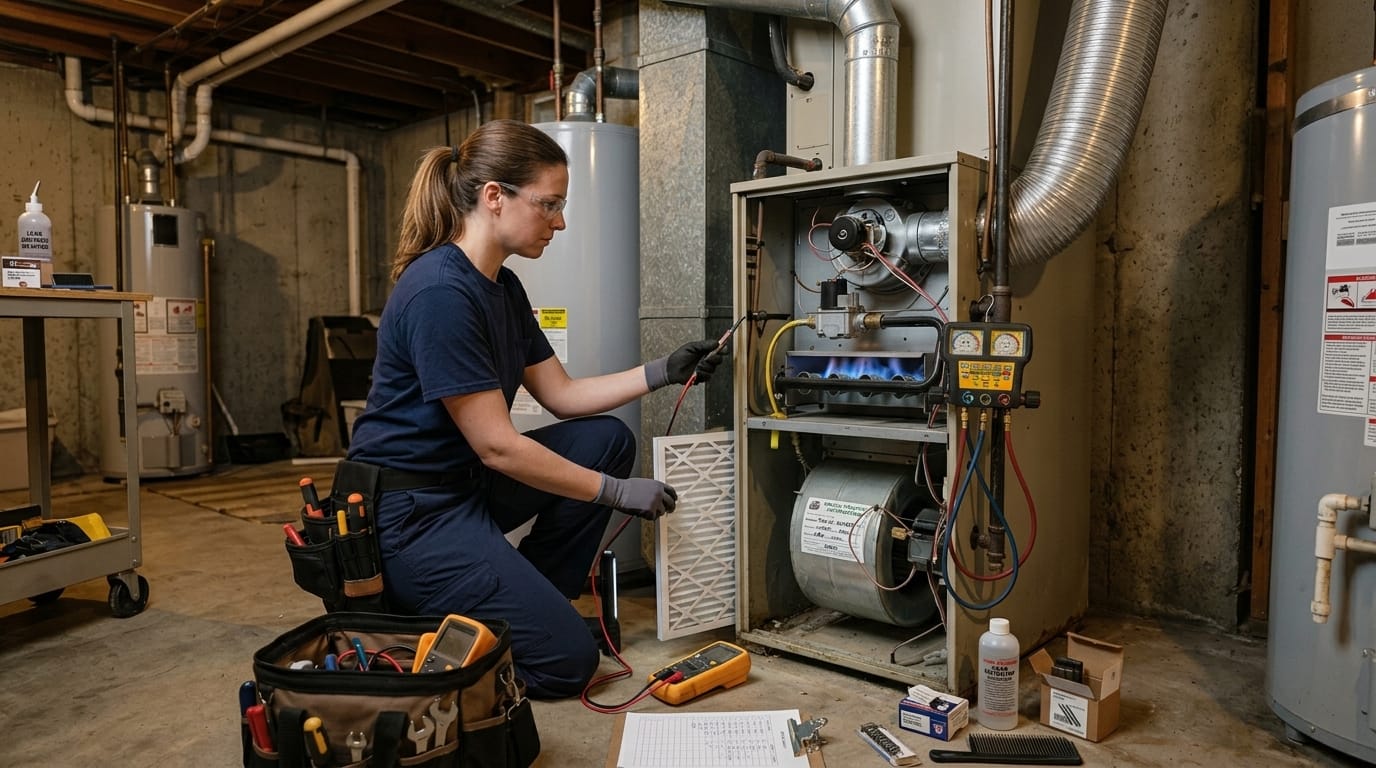
Through the warm months, a gas furnace mostly waits. Fine household dust drifts into the burner compartment and settles on the burners and the outside of the heat exchanger. If the system also runs central air, the blower pushes air across the heat exchanger all summer, and dust that slips past the filter can cling to it.
On the first call for heat, the igniter lights the burners and the heat exchanger warms quickly. That thin film of dust scorches. After a short delay, the blower starts and carries the odor through the supply ducts to every register. That is why a furnace burning smell seems to fill the whole house at once.
Heat pumps and dual-fuel systems do the same thing in a different spot. The electric heat strips in the air handler collect dust too, so the first time auxiliary heat comes on, it can give off the same scorched smell.
Normal Dust Burn-Off or a Smell That Lingers?
Normal burn-off has a clear pattern. The smell is faint and dry, like burnt dust or toast, and it shows up in the first minutes of the first run. One manufacturer's guide to HVAC smells says this dusty smell should go away in 10 to 15 minutes. A trace may return on the next cycle or two.
A furnace burning smell that returns every cycle for days is a different story. Common causes include:
- A loaded filter: a clogged filter restricts airflow, so the heat exchanger runs hotter, and a filter that bows or slips lets dust around its edges.
- Stored items too close: boxes, laundry or cleaning supplies stacked against the furnace or its vent pipe can scorch as the metal warms.
- Debris in a duct: a smell from just one register suggests something has dropped into that duct run, such as a toy or paper.
Smells That Mean Shut It Off or Get Out
Three smells do not belong to a normal startup.
- Hot plastic or electrical: this sharp, acrid smell often comes from wiring insulation overheating at a loose connection, or from a blower or inducer motor running hot as its bearings wear. The same guide says to shut the system off and call for repairs, so turn the furnace off at the thermostat. If you see smoke or the smell keeps growing, get everyone outside, then call 911 from outside.
- Rotten eggs or sulfur: natural gas has no odor of its own, so gas companies add one that smells like rotten eggs. Get everyone outside, then call 911 or the gas utility's emergency line from outside.
- Exhaust or a sharp metallic smell: a furnace sends combustion gases out through its vent pipe. A blocked or disconnected vent, or a cracked heat exchanger, can let those gases into the house. Get everyone outside, then call 911 from outside.
NFPA's carbon monoxide page describes carbon monoxide as an odorless, colorless gas created when fuels burn incompletely, so a working CO alarm matters more than your nose. Once the home is safe, our emergency furnace repair service can find what caused it.
What You Can Check Safely Before the First Cold Night
Testing the heat early in fall, on a mild afternoon while everyone is home, turns the first furnace burning smell of the year into a planned check instead of a bedtime surprise.
- Fresh filter first: switch the furnace off, slide out the old filter, and install a new one with the airflow arrow pointing toward the furnace. ENERGY STAR's maintenance checklist suggests inspecting filters monthly. Our air filter replacement service can help if you are unsure which size fits.
- Clear the space: NFPA's heating safety page advises keeping anything that can burn at least 3 feet from heating equipment, including the furnace.
- Test the CO alarms: press each alarm's test button and replace weak batteries.
- Run a full cycle: raise the thermostat enough to call for heat and stay nearby while it runs.
- Note where the smell is strongest: at the furnace, at every register, or at a single register.
Leave the burner compartment, gas valve, igniter and wiring closed up.
A Murray Scenario You Might Recognize
Picture a family whose basement furnace runs for the first time on a cool fall evening. A dusty, scorched smell drifts from every register, then fades before the first cycle ends. That part is ordinary burn-off.
A week later, a new smell appears. Each time the blower starts, a faint hot-plastic odor rises near the furnace, and the blower hums louder than it did last spring. The filter is new, and nothing is stored near the furnace.
That pattern points away from dust. A smell tied to the blower, strongest at the furnace and paired with a new noise, suggests a motor running hot or a wiring connection overheating nearby. The sensible move is to turn the furnace off at the thermostat and have it inspected before it runs again.
Safety Notes
- Gas smell: get everyone outside, then call 911 or the gas utility's emergency line from outside.
- CO alarm or exhaust smell: get everyone outside, then call 911 from outside.
- Smoke or a growing burning smell: get everyone outside, then call 911 from outside.
- Hot plastic with no smoke: turn the furnace off at the thermostat and leave it off until it has been checked.
- Power off for filters: switch the furnace off before opening the filter slot or the blower door.
- Leave sealed parts alone: the burners, gas valve, igniter, flame sensor and wiring are technician work.
- Keep vents clear: NFPA advises clearing snow from furnace vents during and after a snowstorm, which matters here later in the season.
When to Call a Professional
Call for service when a furnace burning smell outlasts the first few cycles, even with a fresh filter and a clear area around the furnace. Call as well for any hot plastic or electrical smell, a new noise from the blower, or soot around the furnace or its vent pipe.
Some situations cannot wait. A gas smell, a CO alarm or an exhaust odor means leaving first, then calling 911 or the gas utility from outside. Once responders clear the home, Towers Plumbing can inspect the furnace before it runs again.
For everything else, a yearly check-up gives a technician the chance to spot problems early. ENERGY STAR recommends servicing heating equipment in the fall, and a typical check covers gas connections, gas pressure, burner combustion and the heat exchanger. Our furnace maintenance visits are built around that kind of fall tune-up.
Frequently Asked Questions
Is a furnace burning smell normal the first time the heat runs?
Usually, yes. A faint smell of burnt dust at the first startup of the season comes from dust scorching on the heat exchanger or heat strips. It should fade within the first run or two. If it keeps coming back, or it smells like plastic, gas or exhaust, treat it as a problem.
Why does the smell come back every time the furnace starts?
A repeating smell points to a clogged filter, items stored near the furnace or vent pipe, or debris inside a duct. If those check out, an overheating motor or wire is the next suspect, and that needs a technician.
Can I open the windows and keep running the furnace?
For light dust burn-off, airing out the house is reasonable. For a hot plastic smell, turn the furnace off instead. For a gas smell, an exhaust smell or a CO alarm, get everyone outside, then call 911 or the gas utility's emergency line from outside.
Get a Furnace Burning Smell Checked
Before you call, write down what the smell is like: dust, hot plastic, rotten eggs or exhaust. Note where it is strongest, whether it starts with the burners or with the blower, and how many cycles it has lasted. Add the date you last changed the filter, the rough age of the furnace, and any recent work on it, such as a new thermostat or a moved vent pipe.
Then reach Towers Plumbing through our contact page to schedule a visit. We serve homes across Murray and nearby communities, and your notes help a technician go straight to the likely source. If the smell is gas or exhaust, or a CO alarm is sounding, get everyone outside and call 911 first.