On some of the coldest winter mornings, a high-efficiency furnace can start, hum for a minute, then quit without making heat. In a Bountiful home with a condensing furnace, one likely suspect is a frozen condensate line. These furnaces make water, and it leaves through a small plastic drain. When ice blocks that drain, a safety switch stops the burners. Here is why it happens, what to check safely, and how to prevent it.
How a Frozen Condensate Line Shuts Down Your Furnace
A high-efficiency gas furnace, often called a condensing furnace, has two heat exchangers. The second pulls so much heat from the flue gases that their water vapor turns to liquid. ENERGY STAR notes that certified furnaces have higher Annual Fuel Utilization Efficiency ratings than standard models.
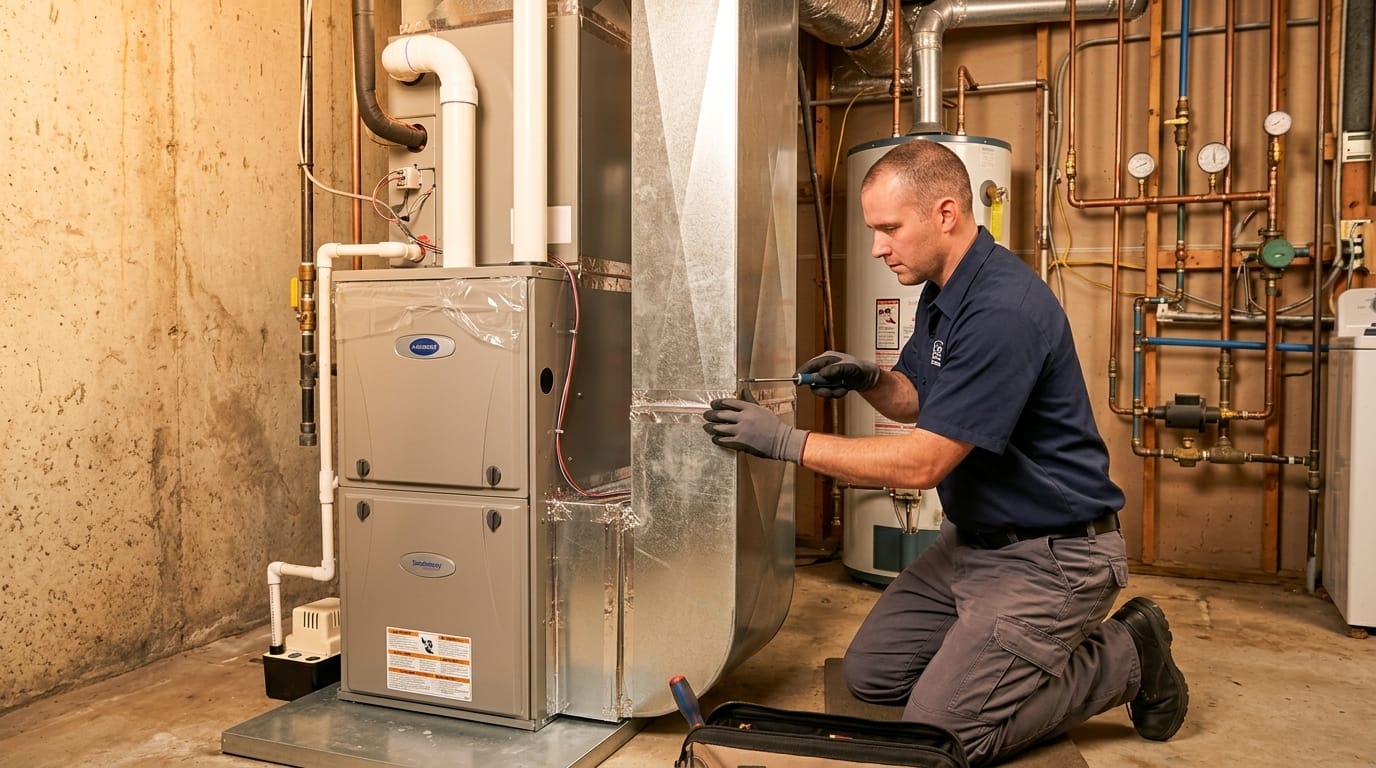
That water collects in the collector box, runs to a condensate trap, and leaves through a PVC drain line. The trap holds a little water as a seal against flue gases.
When ice plugs the line, water backs up into the trap and collector box. The inducer motor still runs, but the pressure switch cannot sense a normal draft. The switch stays open, and the control board will not light the burners. With a condensate pump, a full reservoir can trip its float switch instead. Either way, a frozen condensate line becomes a full furnace shutdown.
Where Condensate Lines Freeze in Utah Homes
A condensate line freezes only where it passes through cold air. Trouble starts when the drain, or a pump's discharge tube, leaves heated space.
- Exterior discharge: a line that drips outside can build an ice cap at its open end.
- Garages and attics: a furnace in an unheated space puts the trap and drain in freezing air.
- Rim joists and cold rooms: a line near a drafty rim joist or unheated storage room can freeze in one short section.
- Sags and low spots: a line without a steady downward slope holds standing water, which freezes first.
Instructions for one manufacturer's condensate freeze protection kit warn that skipping freeze protection may result in furnace operation stoppage and frozen water pipes during cold weather. The ENERGY STAR maintenance checklist includes checking the furnace condensate drain, and a fall furnace maintenance visit is a good time to trace its full path.
Signs of a Frozen Condensate Line
A frozen condensate line rarely leaves just one clue. Look for a pattern:
- Short tries, no heat: the inducer starts, runs briefly, and shuts off before the burners light.
- A blinking status light: the control board shows a fault code, often one tied to the pressure switch.
- Gurgling sounds: water backing up in the trap or collector box can bubble inside the cabinet.
- Water at the cabinet: a trap or hose can overflow and leave a puddle under the furnace.
- A full condensate pump: the reservoir sits full, or the pump runs without moving water.
- Ice outside: ice forms at the end of the drain line or as a frozen drip on the siding.
Symptoms that clear on a sunny afternoon and return overnight point to cold weather, not a worn part.
What You Can Check Safely
Gather clues without opening sealed parts of the furnace.
- Confirm the basics: check that the thermostat is set to heat and the furnace power switch is on.
- Read the status light: if your furnace has a sight window, write down the blink pattern and match it to the label on the door.
- Check the pump: see whether the reservoir is full or its tube is kinked.
- Walk the drain path: follow the line to its end, noting any section in a garage, cold room or outside wall.
- Look outside: check the end of the line for ice, and brush loose snow off the white PVC intake and exhaust pipes by hand.
If the outside end has a small ice cap, warm water from a watering can may thaw it. If the line refreezes the next night, the lasting fix belongs to a technician.
A Bountiful Scenario You Might Recognize
Picture a family whose basement furnace drains through a PVC line that exits the foundation wall into a side yard. After several nights of hard freezing, the house feels cool at breakfast. The furnace hums, runs its inducer for a minute, and shuts off without lighting.
The status light blinks a code tied to the pressure switch, and a faint gurgle comes from the cabinet. Outside, the end of the drain line is capped with ice. That pattern points to a frozen condensate line, not a failed igniter or gas valve.
Water cannot leave, so it backs up toward the collector box, and the pressure switch will not close. Thawing the end may bring heat back for the day, but the same weather can freeze it again by morning.
Safety Notes
- Leave safety switches alone: do not bypass or jump the pressure switch or float switch.
- Keep sealed parts closed: do not disconnect the trap, the pressure switch hose or the vent pipes.
- Skip open flames: do not use a torch, heat gun or space heater on plastic drain lines.
- Power off first: switch off the furnace before handling a condensate pump, since it sits near wiring and water.
- Gas smell or CO alarm: if you smell gas or a carbon monoxide alarm sounds, get everyone outside, then call 911 or the gas utility's emergency line from outside.
- A cooling house: if the house keeps losing heat on a very cold night, treat it as urgent. See the National Weather Service cold weather safety page.
Long-Term Fixes for a Frozen Condensate Line
Thawing brings heat back, but it does not change why the line froze. Lasting fixes change the drain's route or temperature.
- Reroute to an inside drain: ending the line at a floor drain, standpipe or laundry sink keeps the whole run in heated space.
- Use a condensate pump: where no drain sits nearby, a pump can lift water to an indoor drain point.
- Insulate the line: pipe insulation near a rim joist or in a cold room slows heat loss.
- Add heat tape: where the trap or line must sit in cold air, a technician can add heat tape. The kit instructions call for a properly installed receptacle, plastic ties and fiberglass insulation.
- Fix the slope: a steady downward pitch with no sags lets water leave before it freezes.
For a furnace in a garage or attic, furnace installation planning should include a drain path that stays warm.
When to Call a Professional
Call for help when the line refreezes after you thaw it, when you cannot find the frozen section, or when water leaks inside the furnace cabinet. Call as well if the status light shows a fault you cannot match to the drain, or if the pump runs but water does not move.
A furnace that stays locked out during a cold snap puts water pipes at risk too, so do not wait for a thaw. Towers Plumbing offers emergency furnace repair for homes across Bountiful when heat loss cannot wait. A technician can clear the trap and collector box, confirm the pressure switch reads normally, and check the vent pipes and drain before the furnace goes back into service.
Frequently Asked Questions
Can a frozen condensate line damage my furnace?
The shutdown is a safety response, so the furnace stops before backed-up water spreads. The bigger risks are a leak at the cabinet and a cold house. A trap or line that freezes solid can also crack and leak once it thaws.
Why does my furnace work in the afternoon but not at night?
Afternoon sun and warmer air can thaw a short outdoor section of line. Overnight, the water refreezes and blocks the drain again. That daily pattern points to ice, not a worn part.
Is heat tape a do-it-yourself job?
It is better left to a technician. The tape has to be the right type, wrapped and tied the way the manufacturer specifies, and plugged into a properly installed receptacle. The kit instructions warn that poor installation can create shock and fire hazards.
Get Your Furnace Draining Again in Bountiful
Before you call, write down what you noticed. Note the blink code, when the furnace stopped, and whether it runs on warmer afternoons. Note where the drain line ends, whether you saw ice there, and whether a condensate pump is part of the setup. A photo of the outside end of the line and the furnace's model label helps too.
Then reach Towers Plumbing through our contact page. With your notes in hand, a technician can go straight to the drain and confirm whether a frozen condensate line is the cause. From there, they can walk you through rerouting, insulating or protecting the line so it is less likely to freeze on the next cold night.