
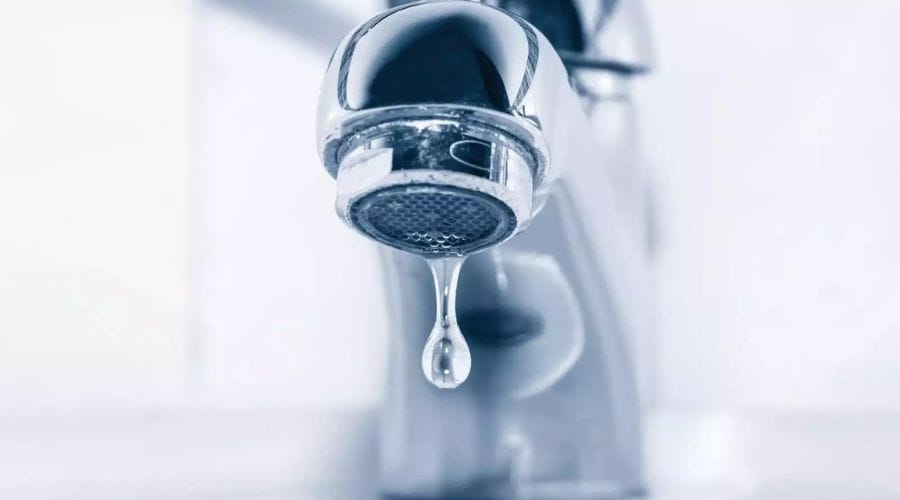
You fill a glass at the kitchen sink and the water looks milky, almost white. Cloudy tap water is unsettling, but the usual causes in Salt Lake City homes are simple: dissolved air, hardness minerals or loose sediment. A two-minute glass test tells them apart. Here is what each pattern means, what you can check yourself, and when the water heater needs a closer look.
Why Tap Water Turns Cloudy
Water in the street main and your supply pipes travels under pressure, which lets it hold more dissolved air than it can at an open tap. Cold water also holds more gas than warm water. When water leaves the faucet, the pressure drops at once, and the extra air escapes as millions of tiny bubbles. The glass looks milky white.
This effect can be stronger in early spring, while supply water is still cold, and after a water main repair or plumbing work pushes air through the lines.
Minerals behave differently. Hard water carries dissolved calcium and magnesium, which the USGS explains are the main causes of hardness. When hard water is heated, calcium carbonate can form solid scale. Scale and sediment are real particles, so they sink instead of rising, and that difference is what the glass test reads.
The Glass Test You Can Do Safely
Fill a clear glass from the cold tap, set it on the counter and watch it for two or three minutes. Then repeat at the hot tap, letting it run until the water is hot.
- Clears from the bottom up: the haze lifts from the bottom first while bubbles rise. That is dissolved air, a cosmetic effect of pressure and temperature.
- Stays hazy or settles: fine grit or a cloudy layer that sinks to the bottom means particles, such as scale or sediment.
- Leaves a white ring: let a glass sit out until it dries. A chalky ring or film points to hardness minerals.
- Shows color or odor: a tan, rusty or gray tint, or an odd smell, is not an air problem.
Then note where it happens. Cloudy tap water at both hot and cold taps points to the supply, such as air in the lines. When only the hot water turns cloudy, look at the water heater. A single faucet points to that fixture, often a clogged aerator or an under-sink filter.
White Flakes, Film and the Water Heater Dip Tube
White bits in hot water usually come from one of two places inside the tank. The first is scale. Heated hard water drops calcium carbonate, which settles as sediment on the tank bottom. Some of it breaks loose and clogs aerator screens and showerheads.
The second is the dip tube, the plastic tube that carries incoming cold water to the bottom of the tank. An aging or defective dip tube can crumble and shed white or gray plastic flakes into the hot lines.
A simple check tells them apart. Drop a few flakes from an aerator into white vinegar. Scale is mostly calcium carbonate, so it fizzes, softens or dissolves, while plastic stays firm and may float. Either result is a good reason to have the water heater inspected, since sediment and a broken dip tube both hurt how the tank performs.
A Salt Lake City Scenario You Might Recognize
Picture a family whose kitchen glass of cold water looks milky for a minute, then turns clear from the bottom up. That part does not worry them. What does is the bathroom sink, where the hot side sputters and the aerator fills with small white flakes every few weeks. The cold side stays clear.
That pattern splits into two separate findings. The milky cold glass is dissolved air, which needs no repair. The flakes appear only in hot water, so they start inside the water heater, not in the supply. If they fizz and shrink in vinegar, scale buildup is the likely source. If they stay firm and float, a deteriorating dip tube becomes the main suspect.
When to Test Your Water
Air clears on its own, and the USGS describes hardness as a nuisance rather than a health concern. Other cloudy tap water deserves a closer look, especially when the haze does not clear, comes with color, odor or grit, or starts suddenly.
Start with your water supplier. EPA requires community water systems to send customers an annual water quality report listing what was found in the local supply. Utah's Division of Drinking Water also offers a lookup showing who supplies your water and details about that system.
EPA's page on secondary drinking water standards lists substances that can make water look cloudy or colored, such as iron and total dissolved solids. For a private well that may be contaminated, EPA advises testing by a certified laboratory.
Filtration and Softening Options
Treatment should match what a water test finds, since no single system handles every cause of cloudy tap water.
- Hardness minerals: a water softener exchanges calcium and magnesium for sodium or potassium ions, which limits scale in the water heater, fixtures and pipes. See our water softener page.
- Sediment and grit: a whole-home sediment filter traps particles before they reach faucets and appliances.
- Taste and odor: activated carbon filtration targets chlorine taste and many odor-causing compounds.
- Air bubbles: no treatment is needed, because the bubbles leave on their own.
A whole-home water filtration system can pair a sediment stage with carbon and work alongside a softener. A new carbon cartridge can release fine gray dust at first, so flush it as the manufacturer directs.
Safety Notes
- Let hot water cool: hot water can scald, so let a hot glass cool before handling flakes.
- Close the faucet first: before removing an aerator, shut the faucet fully and lay a towel in the sink to catch small parts.
- Use plain vinegar only: do not mix vinegar with bleach or other cleaners for the flake test.
- Leave the tank closed: replacing a dip tube means shutting off water and relieving tank pressure, which is a job for a trained technician.
- Gas smell near the heater: get everyone outside, then call 911 or the gas utility's emergency line from outside.
- Read public notices: if your water supplier issues a notice, EPA advises reading it carefully and following its instructions.
When to Call a Professional
Call when cloudy tap water shows up only on the hot side and the glass test shows flakes or grit, or when aerators keep clogging after cleaning. Those signs point to sediment or a failing dip tube. The same goes for a tank that rumbles as it heats, hot water that runs short, or water around the heater base.
Cloudiness at a single faucet that returns after you clean its aerator may point to debris in the valve or a worn cartridge. In an older home with galvanized steel supply pipe, rusty or gritty water at several taps can point to corroding pipe. Towers Plumbing serves homes across our Salt Lake City service area, and a technician can trace where the particles start and review treatment options.
Frequently Asked Questions
Why does my tap water look milky and then clear up?
Milky water that clears from the bottom up within a minute or two is dissolved air. Water under pressure in the pipes holds extra air, which forms tiny bubbles at the open tap. Cold supply water holds more air, so the effect can be stronger in early spring.
Why is only my hot water cloudy?
Heating releases some dissolved air, so briefly milky hot water can be normal. If the haze settles as grit, or white flakes gather in the aerators, the source is inside the water heater. The vinegar test helps separate scale from dip tube plastic.
Will a water softener fix cloudy tap water?
Only when hardness is the cause. A softener limits scale and the white film hard water leaves on glasses. It does nothing for air bubbles, and sediment calls for a filter.
Next Steps for Cloudy Tap Water
Before you call, run the glass test at a cold tap and a hot tap, and write down what you see. Does the haze clear from the bottom up, settle as grit, or leave a white ring? Note whether it happens at hot, cold or both taps, and at one faucet or all of them.
Save a few flakes in a small bag and note how they react to vinegar. Write down the water heater's age from its label, how long the cloudy tap water has been happening, and any recent plumbing work nearby.
Then reach Towers Plumbing through our contact page. With your notes in hand, a technician can go straight to the likely source and explain the options before any work begins.