
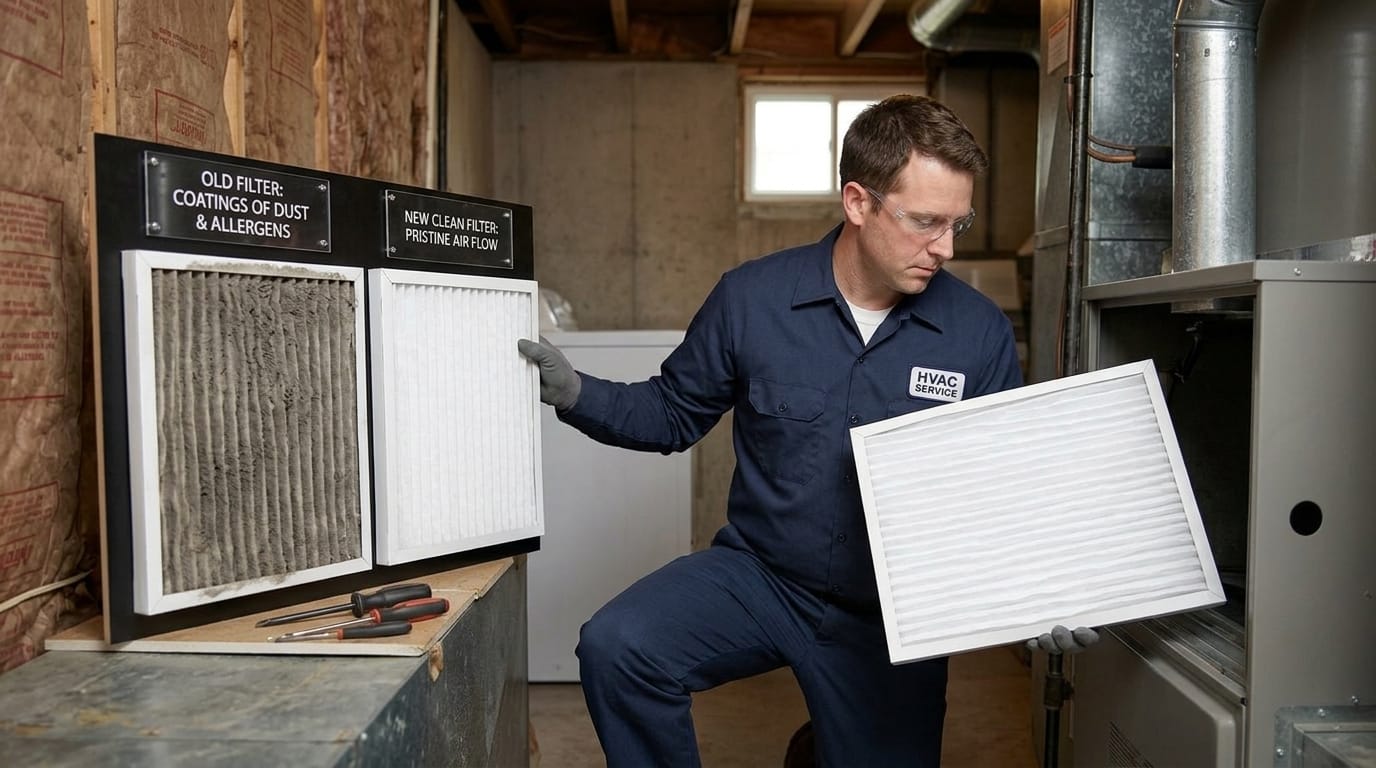
Air filter fit matters as much as the capture rating in a Salt Lake City heating system. A filter that does not seal within its rack can let air bypass the media. A filter that restricts the system's airflow can change heating operation even when it captures particles well. The useful choice balances fit, equipment compatibility and the purpose of filtration.
A rating describes a filter under specified test conditions. It does not establish that the product fits your rack or that your blower can move the required air through it. Start with the equipment instructions and the filter location, then discuss suitable filtration with a professional if those requirements are unclear.
Capture rating and airflow answer different questions
MERV, or Minimum Efficiency Reporting Value, describes particle capture performance. The EPA's explanation of MERV provides the rating's purpose. It is useful for comparing capture, but it is not a complete specification for a particular home.
The blower must move air through the return duct, filter and equipment before air reaches the supply ducts. Each part contributes resistance. A filter's construction, size, depth and condition influence the resistance it adds. Products with similar capture ratings can still behave differently in a system.
Dust buildup changes that resistance over time. A filter that was compatible when clean can become restrictive as it loads with particles. The installation and maintenance guidance therefore matter alongside the rating printed on the packaging.
How poor air filter fit allows bypass
Air tends to follow available paths. If a filter leaves a gap around its edge, some air can travel around the filtering material. That bypass makes the printed capture rating a poor description of what happens to all the air in the home.
A filter forced into the wrong slot can bend or fail to seat. An improperly secured access cover can also affect the arrangement. Do not assume a nominal size printed on an old filter proves that every similarly labeled replacement fits the equipment correctly.
The air filter replacement service from Towers Plumbing provides the service context for filter and furnace airflow questions. The cooling services page is also relevant when the same return system serves air conditioning. A restriction in a shared air path can affect operation beyond the heating season.
Contact Towers Plumbing to schedule air filter replacement service when a new filter does not seat correctly or changes furnace airflow. Share the equipment model and the filter dimensions, depth and rating so the technician can compare the product with the rack and equipment requirements.
A hypothetical upgrade that changes the sound
Imagine a Salt Lake City homeowner replacing a basic filter with a product advertised for greater particle capture. The new filter appears to fit, but the return grille starts whistling and the furnace behaves differently during ordinary heating. The homeowner notices the change immediately after installation.
That sequence makes filter compatibility relevant, but it does not prove the furnace is healthy or that the filter is the only cause. A professional can assess fit, the filter's specified resistance and the system's airflow. The useful decision is whether that product suits the installed arrangement, not whether its package has a higher rating.
In another hypothetical home, a replacement filter slides loosely and leaves a visible edge gap. Better capture media does not compensate for bypass around it. Correct seating and a suitable rack need attention before comparing filtration performance.
Air filter fit is one part of a dust assessment
Visible dust does not automatically mean the filter should have the highest available rating. Dust can come from activities indoors, outdoor air, disturbed surfaces and bypass at the filter. A professional may need to examine the filter rack, blower and accessible duct arrangement to understand the pattern.
The EPA guide to air cleaners discusses selection within the limits of the fan and filter slot. ENERGY STAR's maintenance checklist reinforces that controls and other equipment tasks remain separate from filter care. Filtration is part of system operation, not a substitute for examining it.
Keep these safety limits when checking an accessible filter:
- Follow the manufacturer instructions and turn equipment off as directed before routine replacement.
- Keep electrical and burner compartments closed; contact with energized parts or a moving blower can injure you.
- Do not stack filters, force a product into the slot or improvise a seal that blocks equipment access.
Contact Towers Plumbing for professional assessment if the furnace repeatedly shuts down, the filter distorts or the correct fit is unclear. A restricted air path can overheat the furnace, so do not keep resetting it to restore heat.
Questions about choosing a filter
Does a higher MERV always mean a better choice?
It indicates different particle capture performance. Whether that filter is appropriate depends on equipment compatibility, airflow and installation.
Does a filter that fits loosely still work normally?
Gaps can allow air around the media. Correct fit and seating are necessary for the installed filter to do its intended job.
Should a filter be changed on one universal schedule?
Follow the equipment and filter instructions and the conditions in your home. Loading differs with use and the particles entering the air path.
Contact Towers Plumbing to schedule an air filter fit and airflow assessment in your Salt Lake City home. Keep the filter packaging and equipment model available, and explain whether whistling or repeated furnace shutdown began after replacement. Ask the technician to check seating, air bypass and filter compatibility before choosing a replacement product.