An AC unit making noise it never made before is an early warning. In Sandy, many people first hear it on the first hot afternoons of early summer, when long cooling cycles start again. Here is what causes each sound, which sounds mean shut it off, and what you can check without opening a panel.
Why an Air Conditioner Starts Making New Sounds
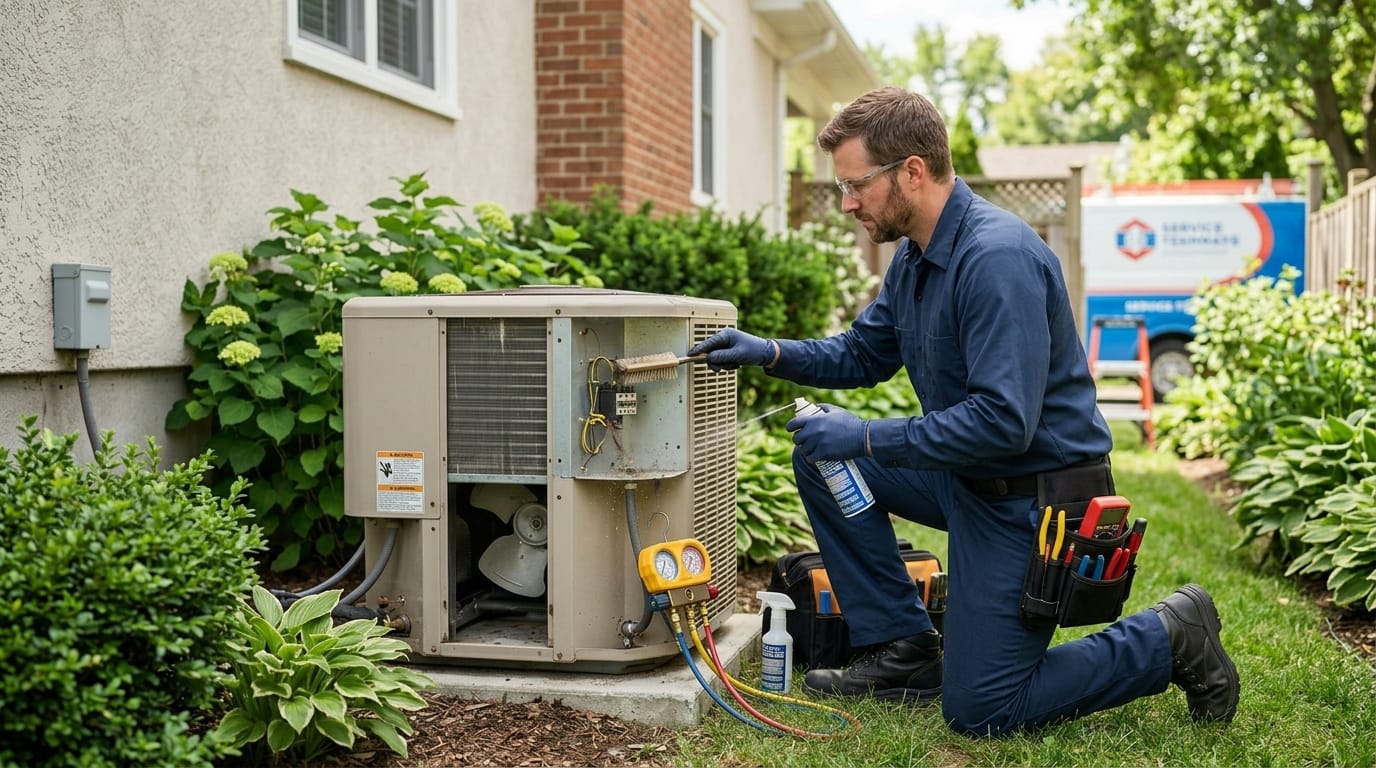
A central air conditioner is a set of motors, switches and a sealed refrigerant loop. Outdoors, the compressor pumps refrigerant while a fan pulls air across the condenser coil. An electrical switch called the contactor powers both, and a run capacitor helps their motors start and keep turning.
Indoors, the evaporator coil often sits on top of the basement furnace, and the furnace blower pushes house air across it. A condensate line carries away the water the coil pulls from that air.
Each part fails with its own sound. Electrical trouble buzzes or chatters. Worn bearings squeal or grind. Loose metal rattles, and escaping gas or air hisses and whistles. So an AC unit making noise is pointing at a specific part.
Outdoor Buzzing, Humming and Contactor Chatter
A low, steady hum while the system runs is normal. An outdoor unit making noise like a loud buzz while the fan blades sit still is not. That pattern usually points to a weak run capacitor or a seized condenser fan motor.
Power reaches the motor, but it cannot start turning. The windings buzz and heat up until an internal overload shuts them off, and the cycle repeats. One manufacturer's fan troubleshooting page lists a low humming sound among the signs of a faulty run capacitor.
A rapid buzz or clatter at the contactor is called chatter. A small electromagnet, powered by the thermostat's low-voltage circuit, pulls the contacts closed. A loose thermostat wire, weak control voltage, pitted contacts or insects between them can keep it from closing firmly. The contacts then arc and pit further. Towers Plumbing handles both problems through AC repair.
Outdoor Rattles, Squeals, Bangs and Hisses
- Rattling: loose panel screws, a twig caught in the fan, copper lines vibrating against the cabinet, or a unit settled unevenly on its pad. One manufacturer's guide to HVAC sounds also lists the fan, fan motor and compressor as rattle sources.
- Squealing or grinding: usually worn bearings in the condenser fan motor. The ENERGY STAR maintenance checklist notes that parts lacking lubrication cause friction in motors. Many newer fan motors have sealed bearings, so a squeal often means a new motor.
- Banging or clanking: a metallic bang inside the cabinet, especially at startup, can mean a loose part inside the compressor or a compressor straining to start.
- Hissing: the sounds guide says hissing near the indoor coil or outdoor refrigerant lines may mean a large refrigerant leak.
Indoor Squeals, Duct Rattles, Whistles and Gurgles
An indoor unit making noise usually traces back to the blower or the air it moves. A squeal from the furnace cabinet often points to worn blower motor bearings, or a slipping belt on an older belt-driven blower.
The sounds guide calls ductwork pinging as it expands and contracts normal, but a steady rattle usually means a loose duct joint, a loose damper or a register vane vibrating in the airflow.
Whistling means air is squeezing through a small opening. The same guide links a high-pitched sound at the furnace to a dirty or too-restrictive filter. Closed registers can whistle too.
Gurgling comes from the condensate drain. Water from the evaporator coil drips into a drain pan and leaves through a trap in the condensate line. When that trap dries out or partly clogs, the blower can pull air through it. ENERGY STAR notes that a plugged drain can cause water damage, and AC maintenance includes checking it.
What You Can Check Safely, and When to Shut It Off
These checks need no tools and no open panels. Set the thermostat to off before you look closely at the outdoor unit.
- Clear the outdoor unit: pull leaves, grass clippings and seed fluff away by hand.
- Look through the top grille: check for sticks on the fan and for a bent or broken blade.
- Check the filter: replace it if it looks gray and packed. ENERGY STAR suggests inspecting filters monthly.
- Open the registers: make sure furniture is not blocking return grilles.
- Look at the drain: check for standing water in the pan or a full condensate pump.
Turn the system off at the thermostat and leave it off if you hear buzzing with the fan stopped, grinding, a metallic bang or a steady hiss. A sudden loud noise from a system that was quiet yesterday belongs on that list too. The sounds guide gives the same advice: shut it off and call for repair.
A Sandy Scenario You Might Recognize
Picture a family in Sandy on the first hot afternoon of June. The thermostat calls for cooling, and a steady buzz comes from the side yard. Through the top grille, the fan blades sit still. After a few minutes the buzzing stops, then starts again.
That pattern points to the condenser fan motor getting power but failing to spin. A weak run capacitor is the first suspect, and a seized fan motor is the other likely cause. The pause is the motor's overload tripping from heat, then resetting. An AC unit making noise this way should not keep running, because the compressor can overheat without the fan. The right move is to switch cooling off at the thermostat and leave the blades alone.
Safety Notes
- Keep panels closed: access panels cover line-voltage wiring, and a capacitor can hold a charge after the power is off.
- Do not start the fan by hand: a stick through the grille puts you near moving blades and live terminals.
- Burning smell or smoke: if you smell burning or see smoke from any part of the system, get everyone outside, then call 911 from outside.
- Hissing with a rotten-egg smell: near the furnace, that can mean a gas leak. Get everyone outside, then call 911 or the gas utility's emergency line from outside.
- Leave refrigerant alone: EPA Section 608 rules prohibit intentionally venting refrigerant during service.
- Heat at home: if the AC fails during a hot spell, treat it as urgent. See the National Weather Service heat safety page.
When to Call a Professional
Call when a safe check does not explain an AC unit making noise, or right away for any sound on the shut-off list. Buzzing with a stopped fan, contactor chatter, squealing bearings and banging all involve line-voltage parts or the sealed compressor. A hiss at the refrigerant lines means a leak that should be found and repaired before any refrigerant is added.
Indoors, call when a blower squeal continues after a filter change or when water collects in the drain pan. ENERGY STAR notes that faulty electrical connections can cause unsafe operation, which is one reason a tune-up includes tightening them.
If the system is off and the house is heating up, Towers Plumbing offers emergency AC repair for cooling failures that cannot wait.
Frequently Asked Questions
Is it normal for an air conditioner to make any noise?
Yes, some. A steady hum and the whir of the outdoor fan are normal, and some systems are loud when they start and stop. What matters is change: a new sound, or a familiar one that gets louder, needs a closer look.
Why is my AC unit making noise only at startup?
A hard thump, buzz or screech at startup can point to a weak capacitor or a compressor straining to start. If the sound is new, have it checked before the part fails.
Can I keep running the AC if it buzzes?
Not if the outdoor fan is stopped. A compressor running without the fan to carry heat away can overheat. Switch cooling off and call for service.
Why does the indoor unit gurgle?
Usually it is the condensate drain, where air pulled through a dry or partly clogged trap makes the bubbling sound. Water in the drain pan or a tripped float switch means the drain needs service soon.
Next Steps for an AC Unit Making Noise in Sandy
Before you reach out, write down a few details. Note whether the sound comes from the outdoor unit or the indoor unit. Describe it as a buzz, chatter, rattle, squeal, bang, hiss, whistle or gurgle. Note when it happens: at startup, while running or right after shutdown. Record whether the outdoor fan spins and whether the house still cools, and mention if you already switched the system off. A short phone video from a safe distance helps too.
Those notes let a technician test the most likely part first. Towers Plumbing serves homes across Sandy and nearby communities. Send your notes through our contact page to set up a visit.