
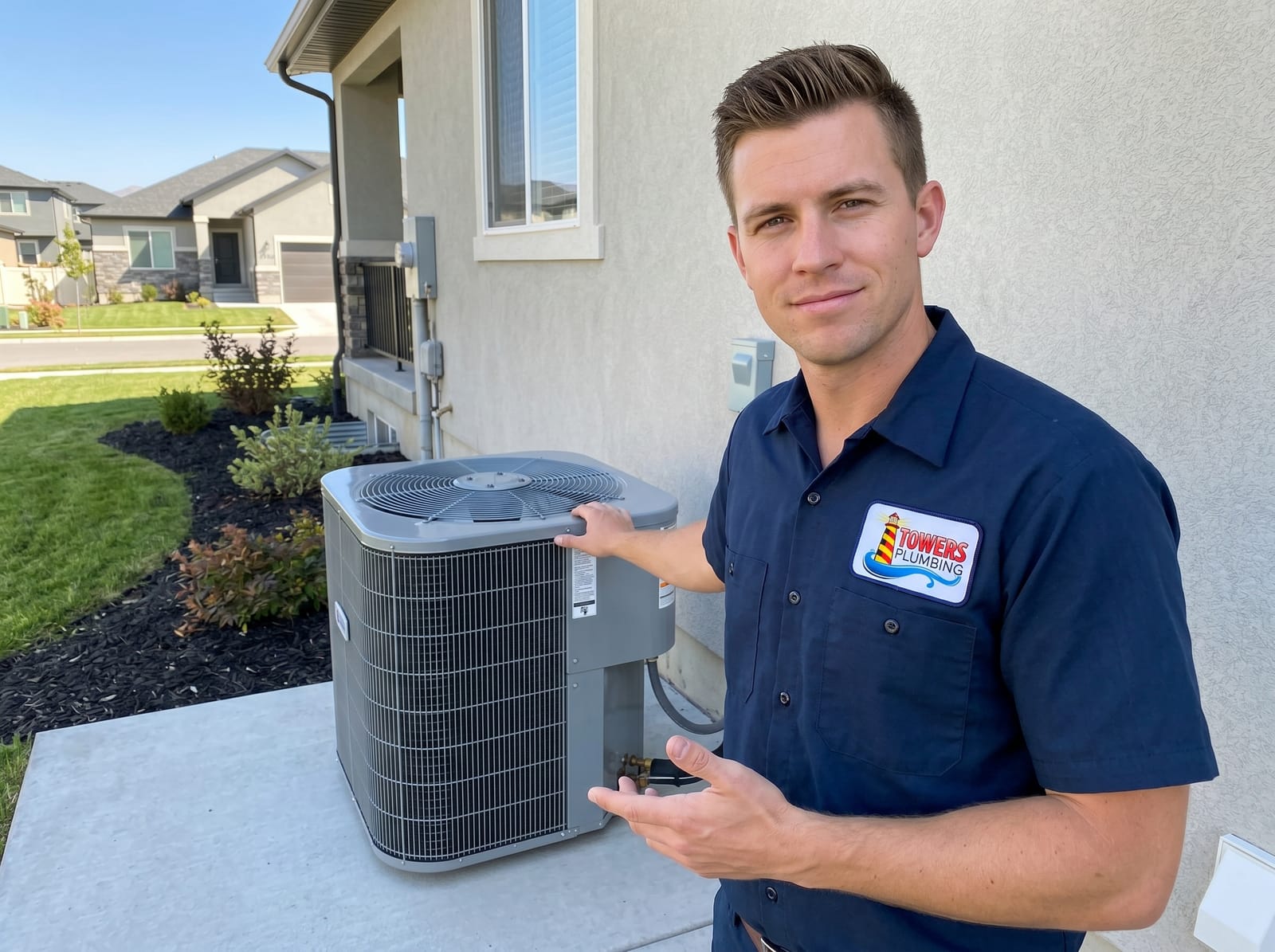
Ice on an air conditioner in June seems backward, but it sends a clear signal. If you find your AC freezing up in Ogden, you may see frost on a copper line outside, weak airflow at the vents, or water near the furnace. Here is what makes the coil freeze, how to thaw it safely, and when the fix belongs to a technician.
How an Evaporator Coil Ends Up Covered in Ice
In many northern Utah homes, the evaporator coil sits in a cabinet on top of the furnace, often in the basement. Refrigerant enters that coil through a metering device as a cold, low-pressure mix. As the blower pushes warm house air across the fins, the refrigerant absorbs the heat and boils into vapor. It returns outside through the larger, insulated suction line.
A healthy coil runs cold but stays above the freezing point of water. Moisture in the air condenses on the fins and drips into the condensate pan. When the coil drops below that point, the moisture turns to frost instead.
Frost blocks airflow, so less warm air reaches the coil, and the coil gets colder still. That loop is what freezing up really means. Frost thickens into solid ice that can creep along the suction line outdoors.
Airflow Problems That Starve the Coil
The coil needs a steady stream of warm air to carry heat into the refrigerant. Anything that weakens that stream can start the coil freezing up.
- Dirty filter: rule this out first. ENERGY STAR's maintenance checklist recommends checking filters monthly and warns that a dirty filter can damage equipment. Our air filter replacement service covers sizing questions.
- Too restrictive a filter: the EPA's page on MERV ratings advises choosing as high a rating as your system fan and filter slot can accommodate.
- Blocked returns and closed registers: furniture over a return grille, or supply registers shut in spare rooms, can choke airflow.
- Blower problems: a dirty blower wheel, a weak motor or a failing capacitor moves less air than the system needs.
- Dirty coil: dust that slips past the filter coats the evaporator fins like a second clogged filter.
Low Refrigerant Means a Leak, Not a Top-Off
Refrigerant is not fuel. It circulates in a sealed loop and should not run low with age. When the charge drops, the pressure inside the evaporator drops with it, and so does the coil temperature. A system with a leak can keep freezing up even with a clean filter and open returns.
So adding refrigerant alone is only half a repair. Unless the leak is found and sealed, the charge keeps falling and the ice keeps coming back.
Under Section 608 of the Clean Air Act, the EPA prohibits intentionally venting refrigerants, including HFCs, during service. Its technician certification page explains that technicians who service equipment that could release ozone-depleting refrigerants must be certified. Finding the leak and restoring the charge is work for AC repair, not a homeowner project.
What You Can Check Safely
A few checks need no tools and no panels removed.
- Look at the suction line: find the larger insulated copper line at the outdoor unit. Frost on it, or ice on the coil cabinet, confirms the system is freezing up.
- Pull the filter: hold it up to a light. If little light passes through, replace it.
- Walk the returns: make sure nothing blocks a return grille, and reopen supply registers you closed.
- Feel the vents: weak airflow at every register points to the filter, coil or blower. Weak airflow in one room points to that duct.
- Check the condensate drain: make sure the floor drain or condensate pump it empties into is not overflowing.
Later in the summer, in years when wildfire smoke drifts in, filters can load up faster than usual, so check them more often.
How to Thaw a Frozen AC and Why It Refreezes
To thaw the coil, set the thermostat to OFF and switch the fan to ON. The blower moves warm house air across the ice without the compressor running, melting it faster. A heavy block can take several hours.
Expect a lot of water. The condensate pan and drain line may not keep up, so lay towels around the furnace and coil cabinet. Many systems have a float switch in the pan or drain line that shuts cooling off when water backs up. If it tripped, the AC will not restart until the water drains.
Restarting as soon as the ice is gone often brings it right back, because the cause is still there. Running a frozen coil can also let liquid refrigerant reach the compressor, which is built to pump vapor. If the system starts freezing up again anyway, stop and call.
An Ogden Scenario You Might Recognize
Picture a family whose upstairs bedrooms feel warm on the first hot afternoon of the season, even though the AC has run all day. The vents push only a weak, cool breeze. Outside, the larger copper line at the condenser is white with frost, and a small puddle sits beside the furnace in the basement.
The filter is only a month old, and every return is open. That pattern points away from a simple airflow problem and toward the refrigerant side, most likely a slow leak. A blower that is not reaching full speed is the other suspect, since both leave the coil too cold. Either way, their AC freezing up is a symptom, and another filter will not fix it. Thaw first, then book a diagnosis.
Safety Notes
- Cut power before opening panels: turn the system off at the thermostat, then at the furnace service switch or breaker, before removing any access door.
- Do not chip or scrape ice: the coil fins and copper tubing are thin, and a puncture releases refrigerant. Leave refrigerant fittings and valve caps alone too.
- Skip heat guns and hair dryers: melt water and electrical tools do not mix. Let the fan do the work.
- Keep water away from controls: if melt water reaches the furnace control board or wiring, leave the power off until it has been checked.
- Smoke or burning smell: get everyone outside, then call 911 from outside.
- Dry wet areas quickly: the EPA's guide to mold and moisture says to dry water-damaged areas and items within 24 to 48 hours to prevent mold growth.
When to Call a Professional
Call when the coil refreezes after you have replaced the filter and cleared the returns. At that point the likely causes are low refrigerant, a weak blower, a dirty coil or a duct problem. Each needs testing with gauges.
Also call when you see oily residue on refrigerant fittings, hear hissing near the lines, or notice the outdoor unit running while the house keeps warming. Water inside the furnace cabinet or a float switch that keeps tripping are good reasons too.
A Towers Plumbing technician can measure pressures, check airflow and temperature split, and locate the leak before adding refrigerant. To keep a coil from freezing up next season, a pre-season AC maintenance visit is the time for the checks ENERGY STAR lists, such as cleaning the coils, adjusting blower parts and checking the refrigerant level.
Frequently Asked Questions
Can I keep running my AC while it is frozen?
No. A frozen coil cools poorly, and running it can push liquid refrigerant toward the compressor. Set the thermostat to OFF, run the fan, and let the ice melt before cooling again.
Why is my AC freezing up when the filter is clean?
A clean filter rules out only the easiest cause. Low refrigerant from a leak, a weak blower motor, a dirty evaporator coil or a blocked duct can all drop the coil below freezing.
Is ice on the outdoor unit normal in summer?
Not in cooling mode. Frost on the suction line or outdoor valves in summer means the indoor coil is running too cold. A heat pump in heating mode can frost over in winter, and its defrost board clears that on its own.
Get a Frozen AC Diagnosed
Before you call, note what you saw: where the ice formed, whether it covered the indoor coil, the suction line or both, and how long the system ran before the vents went weak. Write down the filter size and when it was last changed, and whether the float switch shut the system off. A photo of the frosted line helps.
Then thaw the system with the thermostat OFF and the fan ON, and leave cooling off until someone looks at it. If the ice came back after a filter change, say so, because that points toward refrigerant or the blower. Start with our page on heating and cooling service in Ogden, then contact Towers Plumbing to schedule a visit. With your notes in hand, a technician can start at the most likely cause instead of from scratch.